“I haven’t been that silent for ages..”
“I felt claustrophobic, walking around there, dark, locked in!”
“I didn’t think about anything, I just walked and watched my feet.”
“That was awesome.”
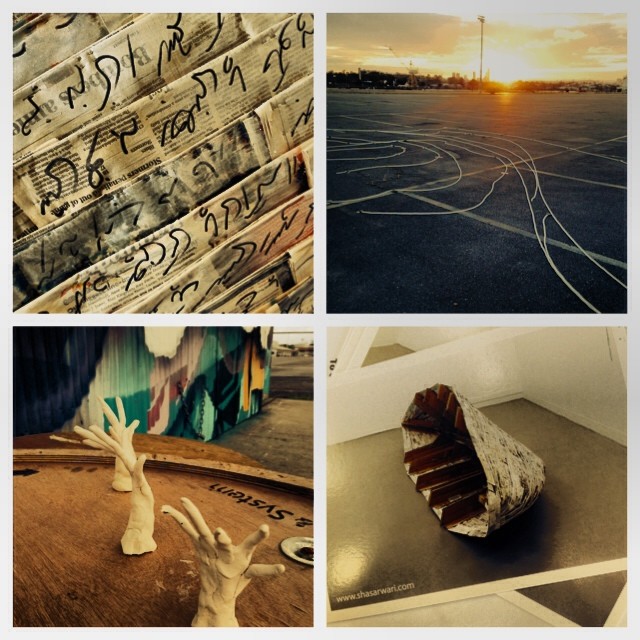
These comments after the multi modal art installation event last night are the short stories of deeply personal experience and exposure to Sha Sawari’s refugee story and his representative boat sculpture. They were also peoples’ responses to walking the labyrinth and processing their responses to Sha and to the broader deeper issue of how asylum seekers are treated in Australia. And they are stories of being embedded in mystery and silence. Sha’s story had particular poignancy on this Australia day weekend. The labyrinth is a well known meditative walking ritual which I chose to include into the first 2014 White Silence event at The Shed. [Hamilton North Shore, Brisbane].

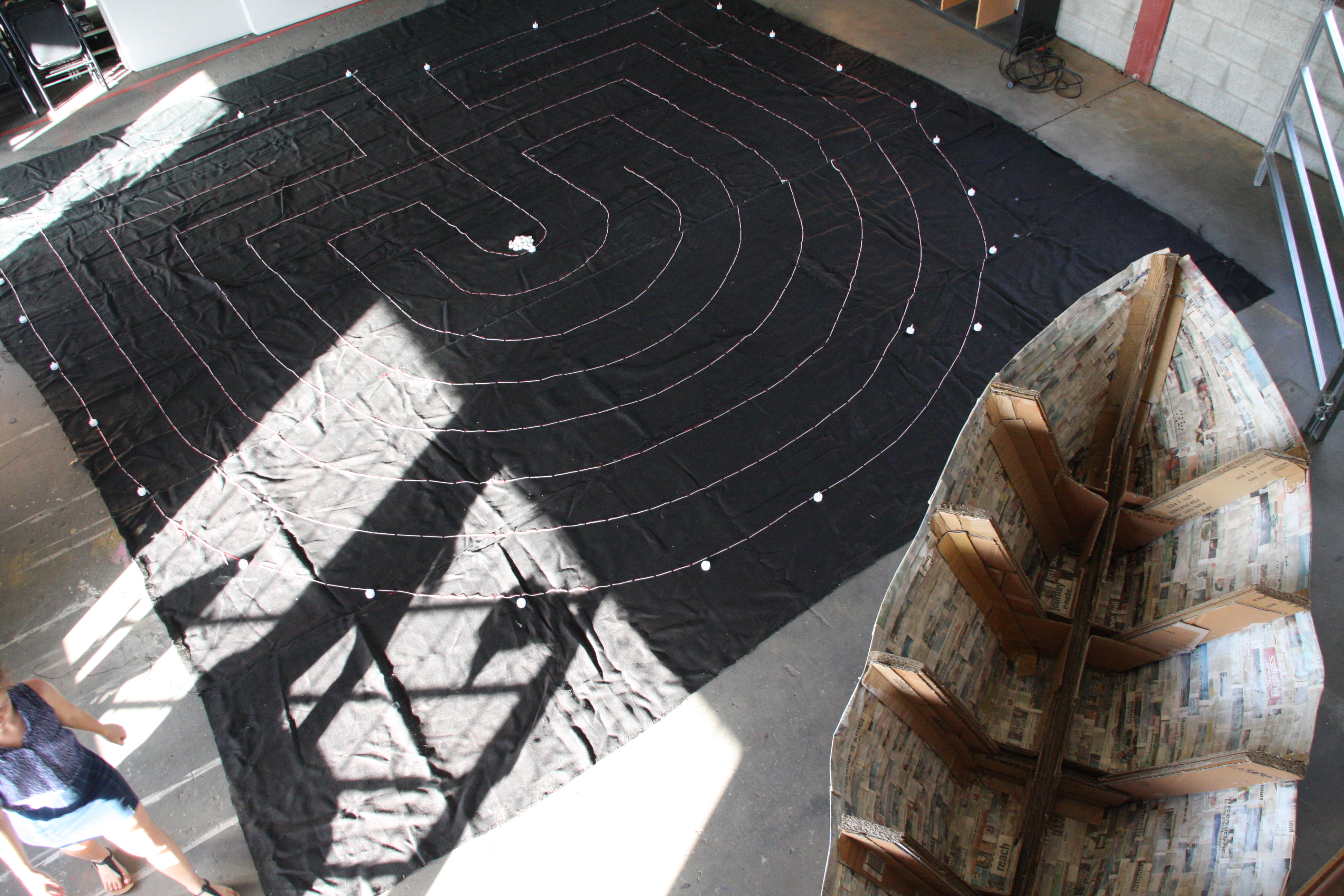
We stood around Sha’s paper and cardboard boat sculpture [built as partial requirement for his Queensland College of Art fine art degree] as he confidently but carefully shared part of his story as a fleeing Hazara [Afganistan] to Indonesia, ending up in an Australian detention centre.
“It’s not the Australian people who have rejected us, it has been the Government’s policy that has driven us to despair. I have felt accepted by Australians. I was devastated when the Labour Party introduced their new asylum seeker policy before the last election. When I made this boat as part of my fine art degree I thought that that would be the end of my journey from Afghanistan to Australia. I am an Australia citizen now but the current situation and my work as an interpreter has shown me that my journey has not finished. I am not sure I will ever feel like at Australian citizen or that my journey will ever finish.”
I have never had to flee like Sha. I worked in Phnom Penh [Cambodia] in the lead up to the Pol Pot rule and atrocities [1975] but I could leave and be welcomed home. In our group at The Shed was one whose grandparents had come by boat to Australia as refugees from Russia but Sha was the only one whose experiences we had very little resonance with. The final 30 minutes of the night took us on a slow single file walk on the labyrinth laid out on stitched Hessian on the concrete floor as a means of processing our response to Sha’s story – told and untold . To attempt some kind of context we projected visual images of rolling angry seas on the shed wall overlaid with ocean sound scapes. Arvo Paart’s mesmerising “Alina” then weaved his magic.
When all the walkers had exited the labyrinth and picked up their white stone of hope, we found ourselves standing in a huddled group, staring down or out towards the sculpture for close to 20 minutes without moving. The silence bound and kept us bound in a kind of transfiguring hypnotic state. There was a sense of the sacred as if the silence was too precious to break and as we eventually began to move our words were short and whispered to each other.
What had just happened there?
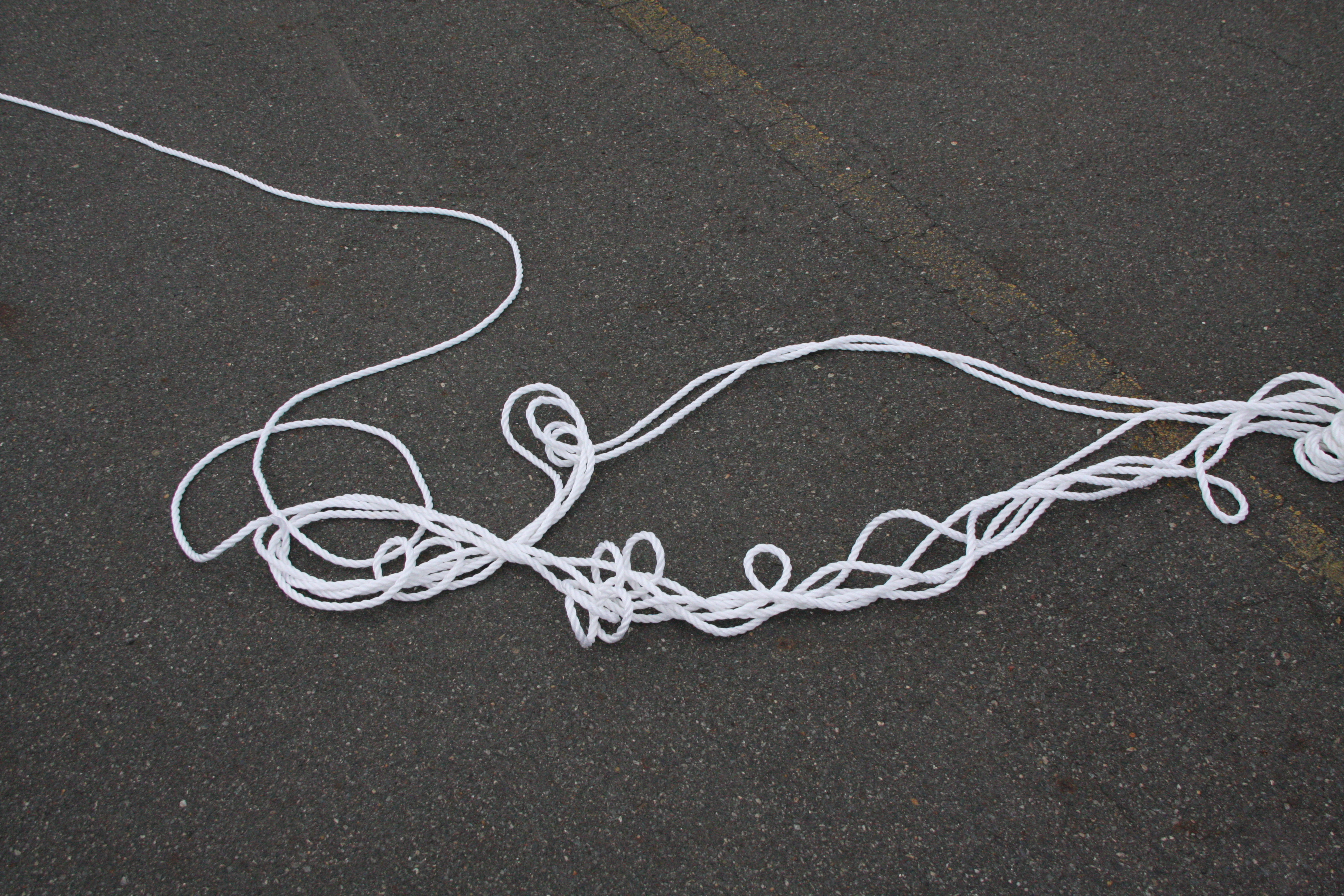
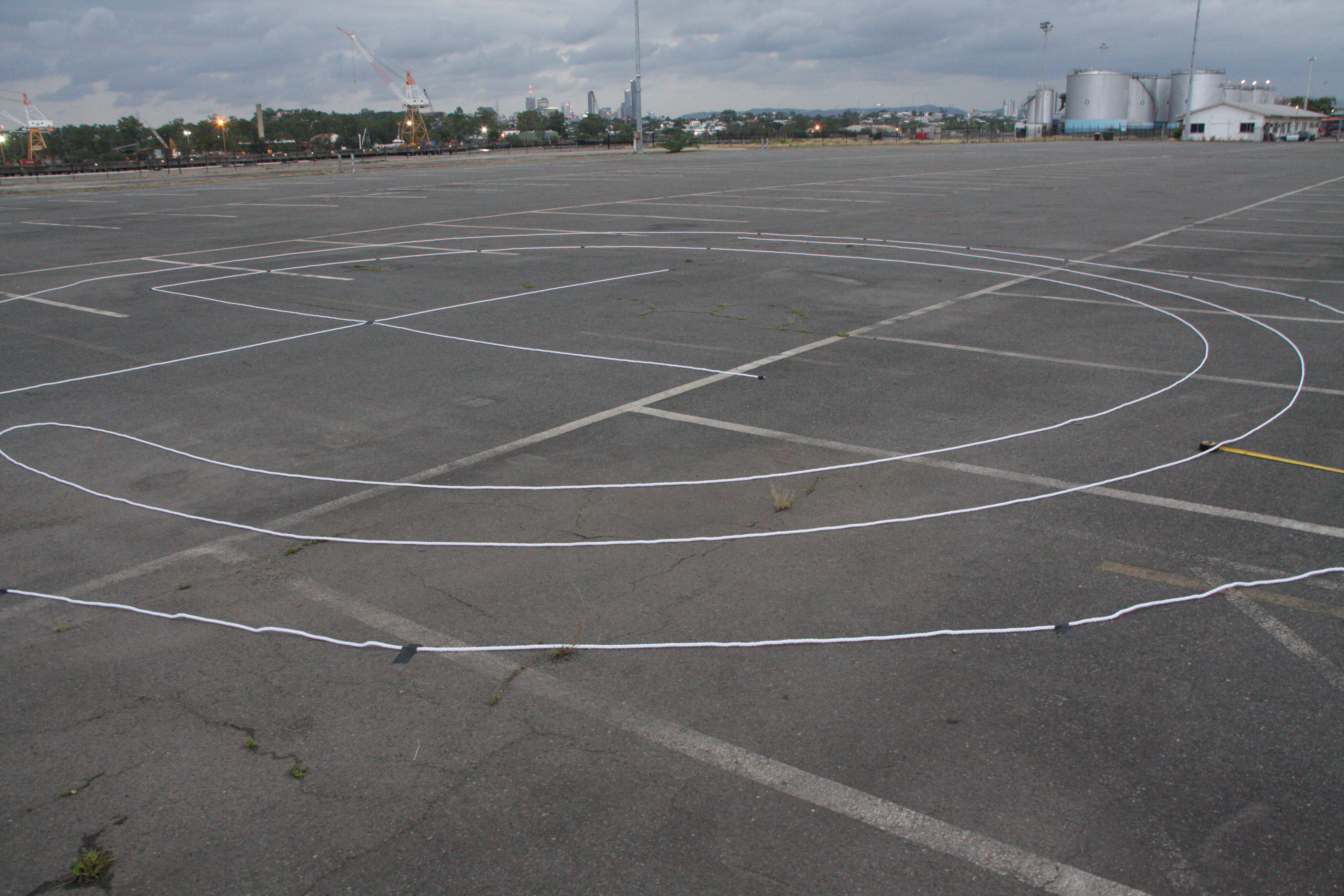
After Shah’s presentation and before the walk in the shed around the labyrinth, we had been working with clay and taking in the cityscapes outside the shed as well as trying to make sense of the first labyrinth we laid down. This labyrinth had been the original plan for the event but it now had seen better days after the Thursday afternoon storm ripped it from its taped moorings. The silhouetted white shirts – some standing, some walking and some sitting began to frame the beginning of the rest of the response to the site and the story. For me the city of Brisbane blinked its welcoming party lights, all prosperous and welcoming on this eve of Australia Day weekend knowing full well that there were policies and people who did not want us to be reflecting or for Sha to be here at all.
What part does art have to play is raising awareness around matters of injustice? What has happened to art as protest where it is more than illegal graffiti? This White Silence was another attempt to meld art practice as a response to other multi-modal art forms and in this case, with an art piece referencing injustice and bravery that is politically current and affecting millions of people and dividing a nation. One person prepared herself for the installation by watching the SBS series “Send them back to where they came from.”
I would like to think that if nothing else we were, in our exposure to beautiful and confronting art carried into a silent space in our souls that will be revisited and that can evoke a new way of seeing justice and the world.
A film of this event will be released by http://www.blueroomproductions.org; https://vimeo.com/ablueroomproduction by early February, 2014.
 Peteskibreen's Blog