
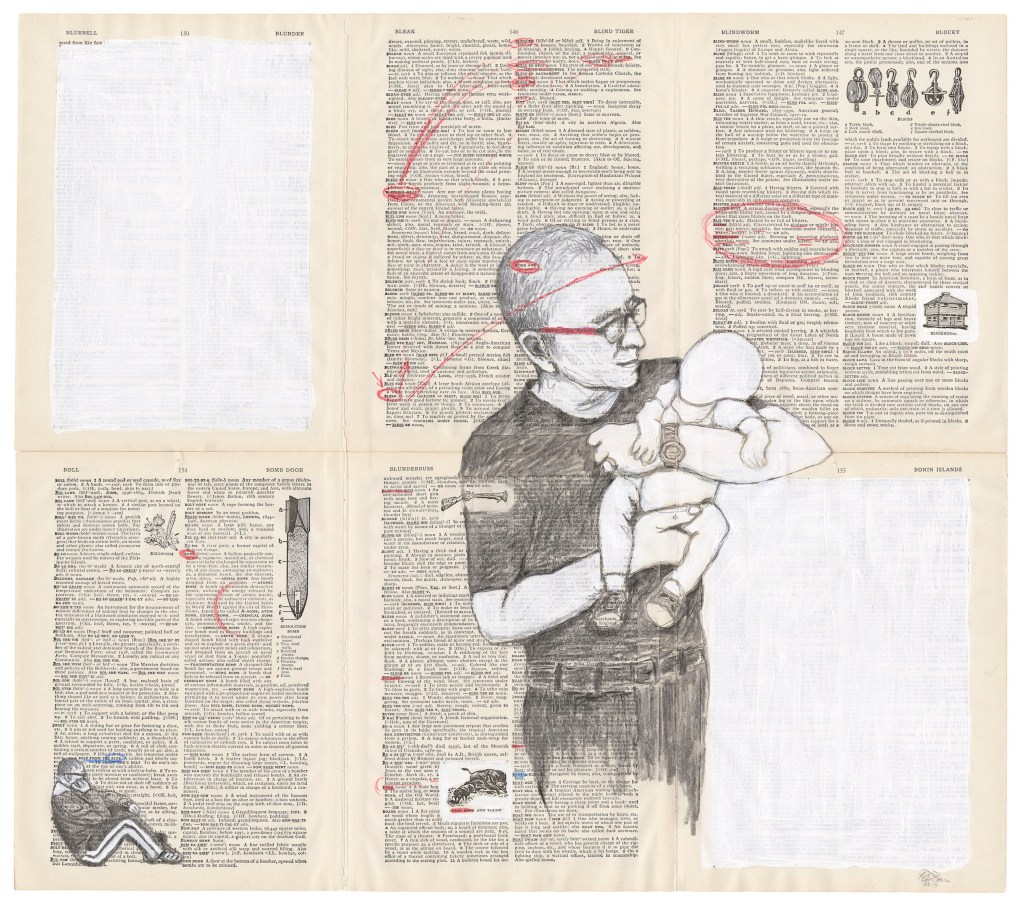
Blessings of the blithesome Charcoal, ink, pencil on old book pages. Peter Breen 2017
| I apply all of these during my daily life and have done over the years as the black dog circles occasionally. One of the most effective for me is the regular [daily] exercise and never taking my smart phone or lap top to the bed room. I am currently reducing smart phone/app time significantly. Peter Breen. When feelings of sadness or feeling ‘down’ last more than a few weeks, and start to impact your daily life, it may be a sign of depression. It can lead to feeling irritated, hopeless or worthless, and affect energy, sleep, appetite and relationships. Depression is a mood disorder that can be caused by a variety of factors, including genetics, stress from life-changing events, serious illness, substance use and even certain medications. Depression can range from moderate (having a significant impact on daily life) to severe (making daily life almost impossible). Currently, men are less likely to seek help for depression, and 3x more likely to die from suicide. Below are some strategies which may make a difference: Mind Your Thinking Reality check your thinking so that overly negative thought patterns do not become a habit. Your mindset matters and can affect your health. Talk to yourself like you would talk to a friend or how your favourite coach or teacher would talk to you. Set “SMART” Goals Achieving goals can boost your mood. Setting goals that are unrealistic can lower your mood and sense of self-efficacy. Set “SMART” goals that are specific, measurable, achievable, relevant and time-bound. If you are having trouble meeting your goals, try making them smaller or asking for help. Small steps can lead to big change. Do Things on Purpose Find activities that give you a sense of meaning. Do not avoid all uncomfortable situations. You can do hard things. Get Active 80% of Australian men believe physical activity has a positive effect on their mental health. Physical activity triggers feel-good endorphins, while reducing symptoms of stress, anxiety and mild-to-moderate depression. Research shows that 30 minutes of moderately intense activity 2-3 times per week can help if you keep it up for at least 9 weeks. Make moving your body a habit. Remember, any activity is better than none. Sleep Better Learn what you can do to improve your sleep: avoid screen-time one hour before bed, have a consistent wake time, and reduce your caffeine intake. Manage your worries during the day so your thoughts don’t keep you up at night. Aim for 7-9 hours of quality sleep per night. Eat Healthier Choose whole foods more often like fruits, vegetables, whole grains and lean proteins. These foods are packed with vitamins and nutrients essential for brain health and can boost your energy and overall sense of wellness. Drink Less Many people who experience depression may turn to alcohol for comfort or fun. However, alcohol is a depressant drug. It slows down parts of your brain involved in thinking, behaving, and even breathing. Long-term overuse of alcohol can trigger or worsen symptoms. Any reduction in alcohol use is beneficial for your physical and mental health. |
Used witih permission
Copyright © 2024 EapAssist, All rights reserved.
Eap Assist Subsribers List
Our mailing address is:
EapAssist
101 Collins Street
Melbourne, Vic 3000
Australia
 Peteskibreen's Blog