SPIRITUALITY
I find it difficult to describe or explain spirituality.
It feels a bit like this work by Peter Kozak [ Winner of the Jugglers Art Space Marie Ellis OAM Prize for Drawing in 2012]. The words don’t satisfy and a description is impossible. The puzzled look and my own confusion continue to draw me back into reclusion, meditation, drawing and silence.
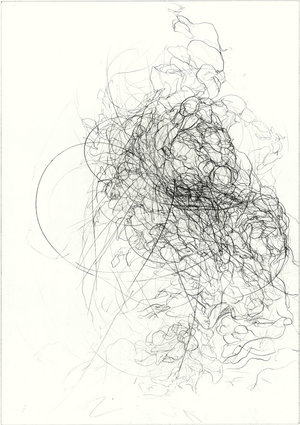
I recently watched a U-Tube clip of an interview with psychoanalyst Carl Jung towards the end of his life where the interviewer asked him if he believed in God. Jung came from a religious background where his father was a village pastor in Switzerland but in answering this question he paused and responded with: “…do I believe in God now? Difficult to answer. I don’t need to believe…I know…I know.” I resonate with the sentiment and would hand the interviewer a copy of Kozak’s drawing while never being as erudite or sure as Jung.
Spirituality and art have a long history. I would suggest that they are inseparable and always have been. I am not a fan of categorising the creative impulses that labels artists as “creatives” so that it immediately becomes local lingo and art colleges now award a Bachelor of Creative Industries – as if art was an industry. Of course that is the case in capitalism’s consumerist value base, living off a productivity commission’s research recommendations.
But creativity is descriptive of the core of what it means to be human, as is spirituality. Art has been and continues to be a way of attempting to find a way of making sense of the self and experience, of the world and it’s endless complexities. It is no wonder poetry is near the best form of finding some kind of meaning in the necessary dive into the dark spaces between, while somewhat inexplicalby linked to spirituality.

#untitled Ink, charcoal on paper. Artist: Peter Breen
As with art and consumerism, spiritualithy has been ambushed by religion and the church so that as with Jung, one has to move out from belief to the floating fog of knowing/unknowing.
Richard Rohr
“In his 2016 book The Divine Dance, [Fransican Priest Richard] Rohr suggests that the top-down hierarchy of Western Christianity since Emperor Constantine has held ecumenical traditions back for centuries and that the future of people of faith will have to involve a bottom-up approach.Rohr maintains what he would call prophetic positions, on the “edge of the inside” of a church that he sees as failing to transform people, and thus increasingly irrelevant. Rohr explains:
To live on the edge of the inside is different than being an insider, a “company man” or a dues paying member. Yes, you have learned the rules and you understand and honor the system as far as it goes, but you do not need to protect it, defend it or promote it. It has served its initial and helpful function. You have learned the rules well enough to know how to “break the rules” without really breaking them at all. “Not to abolish the law but to complete it” as Jesus rightly puts it (Matthew 5:17). A doorkeeper must love both the inside and the outside of his or her group, and know how to move between these two loves.” Richard Rohr, Wikipedia.
As you know I took time out of the inside of “my group” in 2002 and have been an outisder outsider ever since, exploring spirituality and creativity as an arts administrator, a late beginner artist and a very irreverent reverend . I now find panentheism a very helpful overarching description to use to make some sense of what I was and what I am now becoming as a mystic lover and wanderer around unknown metaphysical geographies.
“In his 2019 book The Universal Christ, Rohr says he is a panentheist. He goes on to state that panentheism is the true position of Jesus and Paul:
But Paul merely took incarnationalism to its universal and logical conclusions. We see that in his bold exclamation, “There is only Christ. He is everything and he is in everything” (Colossians 3:11). If I were to write that today, people would call me a pantheist (the universe is God), whereas I am really a panentheist (God lies within all things, but also transcends them), exactly like both Jesus and Paul.” Richard Rohr, Wikipedia.

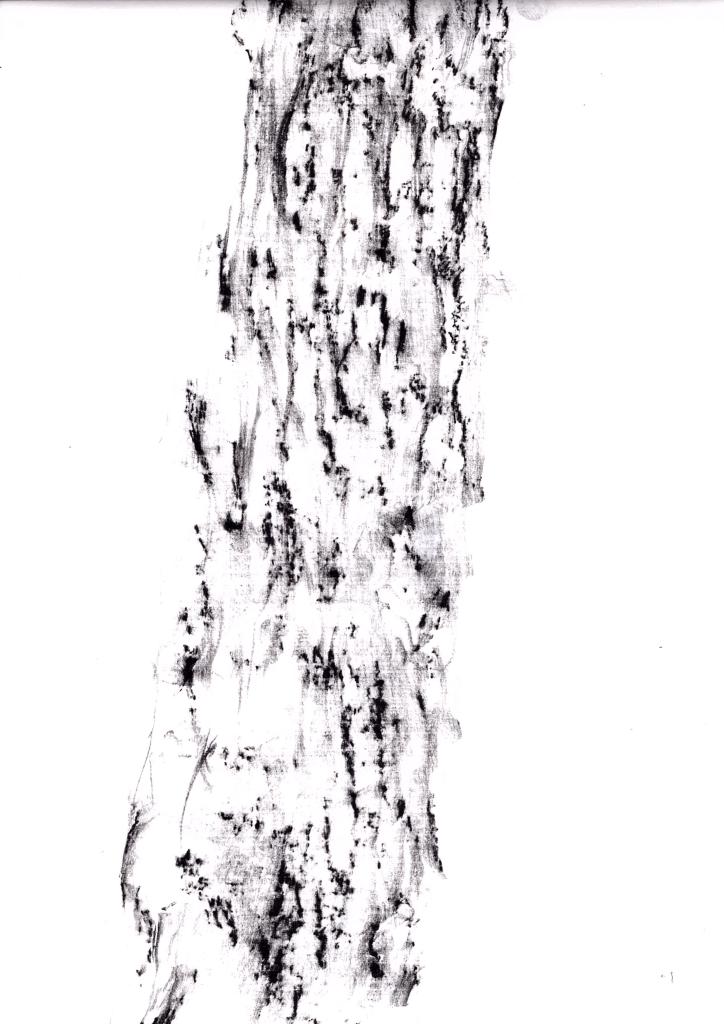
White Silence – Queensland Univiersity of Technology, Southbank, 2015.
I am currently reading “The Creative Act: A Way of Living” by Rick Rubin. Canongate, 2023. It’s the kind of book that makes sense of spirituality and art in a way that a systematic theologian could never do. I’m sure Jung would “get this.”
“Awareness
In most of our daily activities we choose the agenda and develop a strategy to achieve the goal at hand. We create the program. Awareness moves differently. The program is happening around us. The world is the doer and we are the witness. We have little or no control over the content. The gift of awareness allows us to notice what’s going on around and inside ourselves in the present moment. And to do so without attachment or involvement. We may observe bodily sensations, passing thoughts and feelings, sounds or visual cues, smells and tastes. Through detached noticing, awareness allows an observed flower to reveal more of itself without our intervention. This is true of all things. Awareness is not a state you force. There is little effort involved, though persistence is the key. It’s something you actively allow to happen. It’s a presence with, and acceptance of, what is happening is the eternal now.
As soon as you label an aspect of Source, you’re no longer noticing, you’re studying. This holds true of any thought that takes you out of presence with the object of your awareness, whether analysis or simply becoming aware that you’re aware. Analysis is a secondary function. The awareness happens first as a pure connection with the object of our attention. If something strikes me as interesting or beautiful, first I live that experience. Only afterward might I attempt to understand it. “
Artist and film maker the late David Lynch suggested that if we get an idea for a drawing or a film or a photo or a poem that we must write it down as we will soon forget it. This is being strongly linked to awareness.
How can we cultivate awareness and reduce analysis?
Peter Breen, April 16, 2025.
 Peteskibreen's Blog