Love can be slow to grow.
As in art, love can be sudden and full of madness, or slow and full of strategic intention. My experience in love is both and in respect of understanding difference has certainly been slow. The following is the text of my homily given at St Mary’s in Exile in 2018. I present it with some trepidation.
HOMILY
SMX
October 13,14, 2018
AGAINST THE FLOW OF MY CONSTRUCTED SELF
LOSING MY RELIGION
READINGS:1 Kings 19 : 9-13Psalm 22: 1,2 Mark 10:17-31
The Centre for the Less Good Idea statement of purpose*
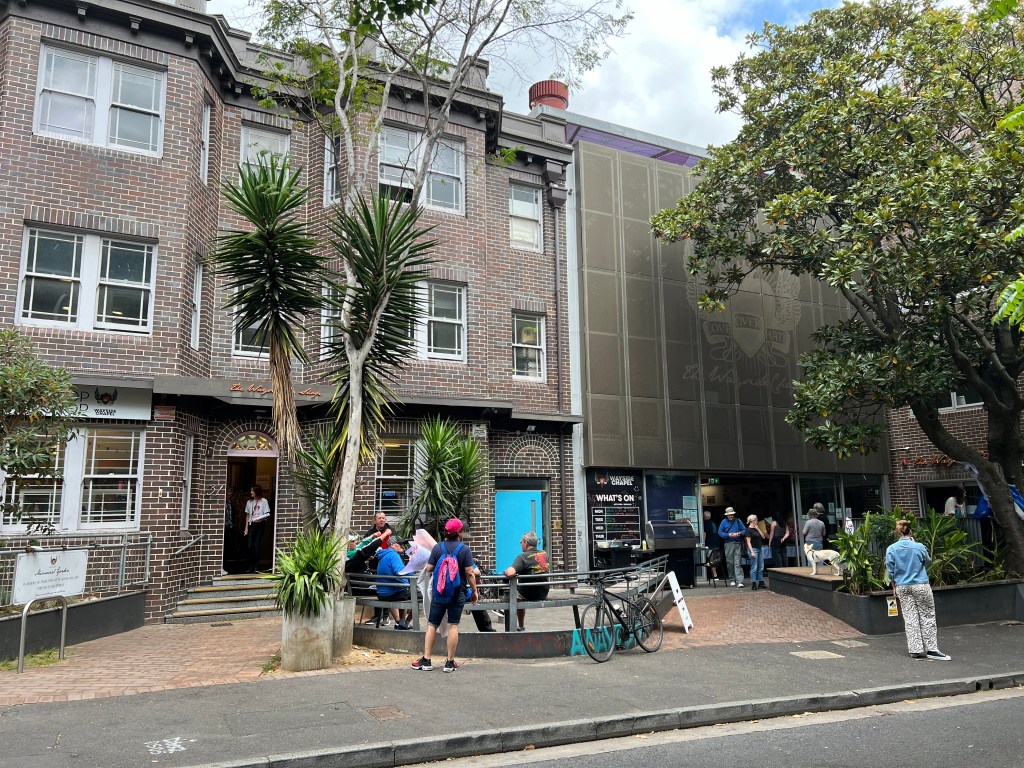
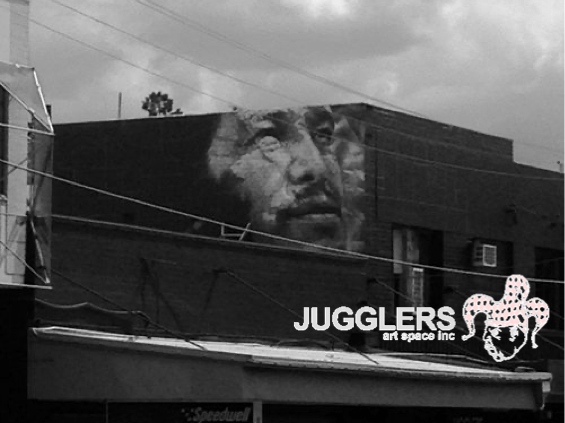
In March last year I hosted “Hang Dada” an exhibition in the upstairs space at the Jugglers building by a young Brisbane artist who referenced on line gay porn in the production of his vibrant multi coloured sensual and confronting screen print exhibition.
On the opening night Jugglers was full of a very energetic and enthusiastic crowd of party goers supporting this nervous young artist in a space where he felt affirmed and free to express part of his journey story in his chosen art medium.
In 1994 the United Nations “International year of the Family” a pastor in a regional Qld town led a public march of a few hundred people against the ABC’s screening of the Gay and Lesbian Mardi Gras in prime family viewing time and marched to the local ABC Station with a petition expressing their concerns about the impact of that ABC decision on family values. That pastor was me.
In 2008 I joined a Sydney Baptist pastor’s group – 100 Revs – who marched in The Gay and Lesbian Mardi Gras to express solidarity with the gay community and to say sorry for the church’s lack of welcome towards the gay community.
This year – 2018 – I voted yes to the Marriage Equality Act Postal Vote
When I was six years old I ran home from a birthday party and hid under my bed when I saw what I thought was the delivery of beer to the party. It was Coca Cola.
In 2000 as a 50 year old pastor I had my first beer in Amsterdam and felt an overwhelming sense of distress by the experience such was the conditioning of my conscience. Thinking I was a progressive Christian made no difference to how my inner constructed self-felt.
However that distress soon shifted as I later went on to become a happy Licencee /Publican at Jugglers.
But then my distress returned when I had an online Facebook confrontation this year with a former parishioner of mine who was shocked at what I was saying about my disillusionment Christianity:
Greg re being an ex-pastor and knowing the truth but denying it: I have been reflecting on both of these and read the thread of this post. In the formal sense yes I was a pastor ( and was yours at one point) That is no longer the case – I have finished with that organisation and do not “serve/minister” within any formal structure/organisation now. Re knowing the truth and denying it: I used to think I knew it and never denied it. Now as I am in the final third of my life I do not claim I know what “it” is except this: love towards people that is extended when it is very demanding to do so and which might look like kindness, welcome and listening. My assessment of my success at this endeavour is – only occasional. As well – I am drawn at every moment of my living into a hunger for seeing/knowing god( ground of being) which is not the domain of one religion- Xn or other. I used to think it was. I am not an atheist and do believe that a Jesus person lived but the Xn religion with all the good it has done is not for me ( in the traditional construct) and that plays into my aversion to most social constructs. The mind controls and systems in education, religion and politics including The Greens, ALP and LNP are systems that are “playing” out under the shadow of horrors present and future that fill me with hope, sadness and anger. And so I make art. With respect.
What is it that makes us what we are, that conditions and constructs us?
Why is real change out of belief systems so fraught?
If nothing else, it seems that our being is so deeply constructed that the response to change can be unbelievably visceral – even to the point of illness. This past week has been Mental Health week and some of us know what the effect of change, trauma or grief can have on our minds, emotions and personal inner stability.
Pastors and priests are not gods, are not robots and are not immune to change, to the effect of religious systems that suddenly begin to collapse around them as they begin to see things differently, sometimes because of burnout and political forces within the religious group.
Once I left formal pastoral responsibilities in 2002 after 20 years in denominational leadership and 52 years of never ending exposure to church growth, evangelism, missionary activity, triumphalism, prayer meetings, church politics, exegesis, hermeneutics and sermon after sermon – I began to see differently as the collapse increased.
Of course there were positives in all those years and in all my life’s chapters, there were wonderful people full of love and of remarkable understanding. There have been ventures full of positive outcomes. And for that I am very grateful.
But I left the predictable, unbending and unforgiving religious system.
The reality now is that even though I am seeing differently after leaving my religion there are elements of lostness that I dwell in and that dwell in me.
Conversely, there are liminal threshold spaces that I would never have stumbled on if I had remained in that very conservative fundamentalist protestant evangelical system.
These liminal threshold spaces continually and gently invite me to risk another step, another forward movement away from literalism, exclusion and fear into metaphor, inclusion and beauty.
And then there is the never ending still small voice, maybe similar to what Elijah heard, present from before I can recall that gently prods me to love the other, the friend, the enemy and the difficult person.
And a second – the incessant constant desire for silence, solitude and stillness and for what it might reveal.
Old Testament prophet Elijah’s epiphany in the desert came after his heroics as a high achieving prophet and after he fled in a state of burnout and was cornered by his god, and his hunger. He was in a liminal threshold space. All kinds of things happened in those moments: light shows, cyclones and roaring winds but it was the whisper that satisfied his hunger and revealed his god to him for that moment. And from there the lights came back on, the energy returned and he knew what he had to do. This continues to be a kind of personal metaphor for me.
The orthodox fundamentalist evangelical religious system that I have left is at its core inconsistent with the Christian Scriptures as far as I can see.
It pronounces that evangelicalism – and therefor pure Christianity – is “convertive piety” according to author Stanley Grenz in his book “Renewing the Centre” .
That is, in good old Billy Graham terms, evangelicalism involves quite simply that like buying a car, one is to be converted by making a decision for Jesus, repenting of all sin and so be saved from hell, be sure of heaven for ever because of that decision. To make sure that happens the convert needs to go to church every Sunday and spend the rest of life keeping oneself pious and pure from all that is sinful through holy living, bible reading and prayer and avoiding being tainted by the world.
Each generation of evangelicals changes the language of this convertive piety but never the exclusive dualistic notion of their system.
They don’t look the same but they are the same.
For me that paradigm was a construct I walked away from.
I am still not free of being a judgmental negative person. I probably should wear camel’s hair and eat locusts and wild honey. The external false self is still very much alive but it is dying. The still small voice is becoming louder than the cyclone.
The true self, the god self, the ground of being that I am convinced the Jesus person was at one with is slowly coming to life in me. It always has been but I have allowed the external false self to dominate, held in by the restricting external religious system . Now, in this second half of life as Richard Rohr reminds us, there is nothing to lose by killing off the false self. And even if it should have happened 50 years ago – it didn’t.
Thomas Merton said once:
“If I had a message to my contemporaries it is surely this: Be anything you like, be madmen, drunks, and bastards of every shape and form, but at all costs avoid one thing: success . . . If you are too obsessed with success, you will forget to live. If you have learned only how to be a success, your life has probably been wasted.” Thomas Merton, Love and Living
In attempting to continue down this non-success path that Merton encourages and to let the external false self die while the inner god- self comes to life I am waging a war against the flow of my constructed self
Being intentional about this is hard work and is easily threatened.
But it is necessary and the only path I can choose if the true self is to grow.
Being intentional about it is a bit like being a part of artist William Kenbridge’s artist centre in Johannesburg “The Not So Good Idea”. It is a safe and secure place where it’s normal and acceptable to fail in the first instance so that the second and third “not so good idea” is actually the best idea driving the new art project in community.
For me to be intentional about the death of the false self so that the god self can emerge out of the constructed self needs that kind of environment, that kind of community, that kind of church.
*“The Centre is a physical and immaterial space to pursue incidental discoveries made in the process of producing work. Often, you start with a good idea. It might seem crystal clear at first, but when you take it to the proverbial drawing board, cracks and fissures emerge in its surface, and they cannot be ignored. It is in following the secondary ideas, those less good ideas coined to address the first idea’s cracks, that the Centre nurtures, arguing that in the act of playing with an idea, you can recognise those things you didn’t know in advance but knew somewhere inside of you…The Centre…is a safe space for failure, for projects to be tried and discarded because they do not work.” Peter Breen 2018 ©
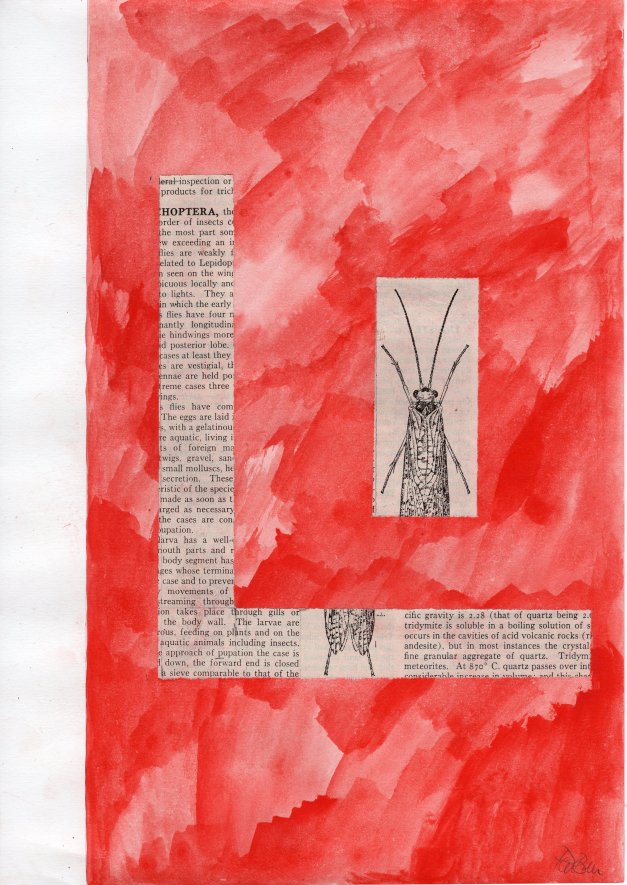
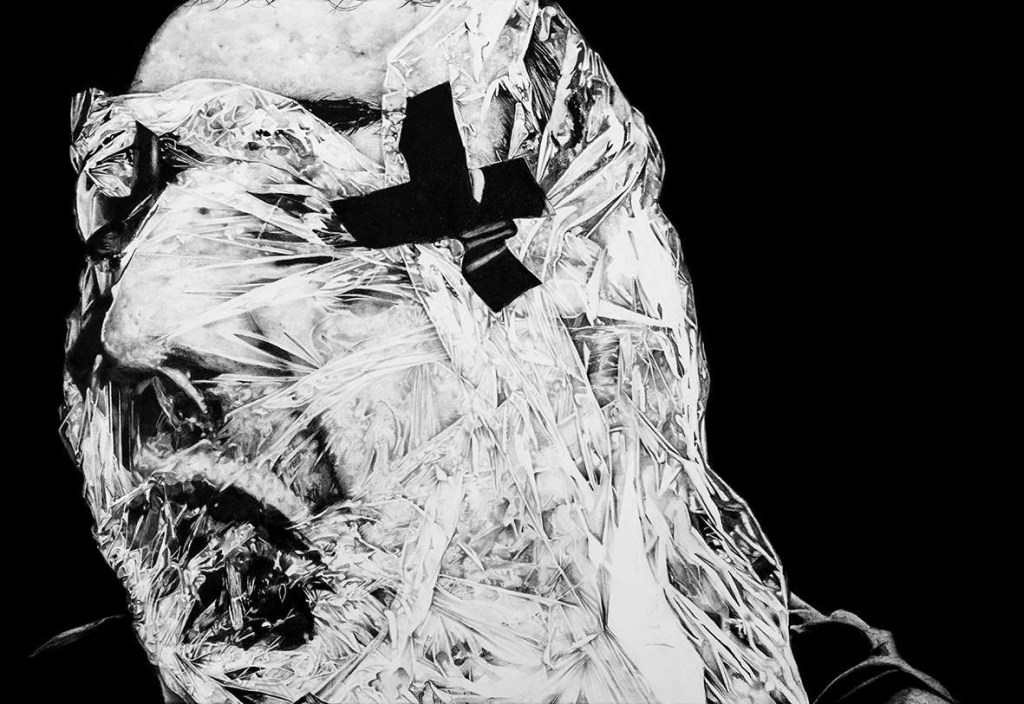
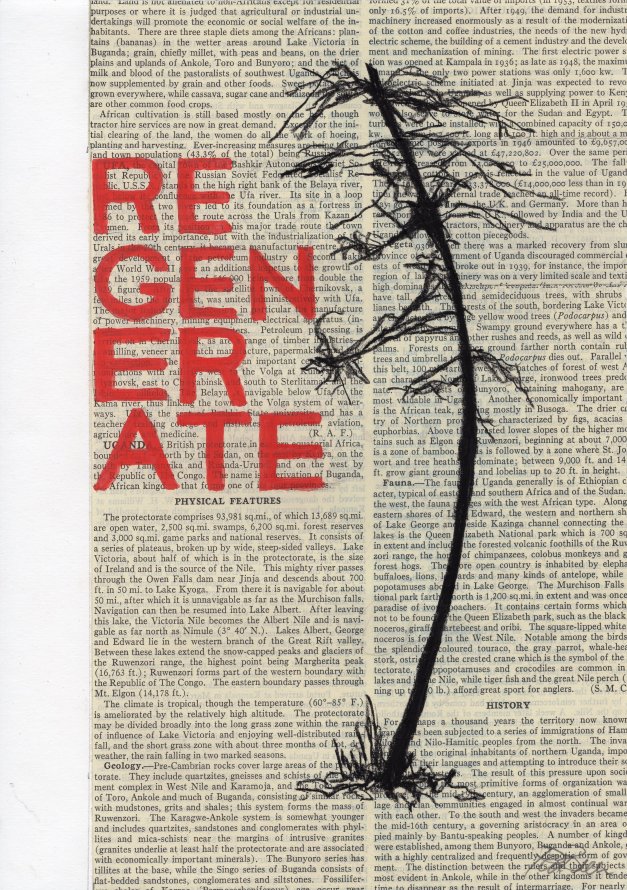
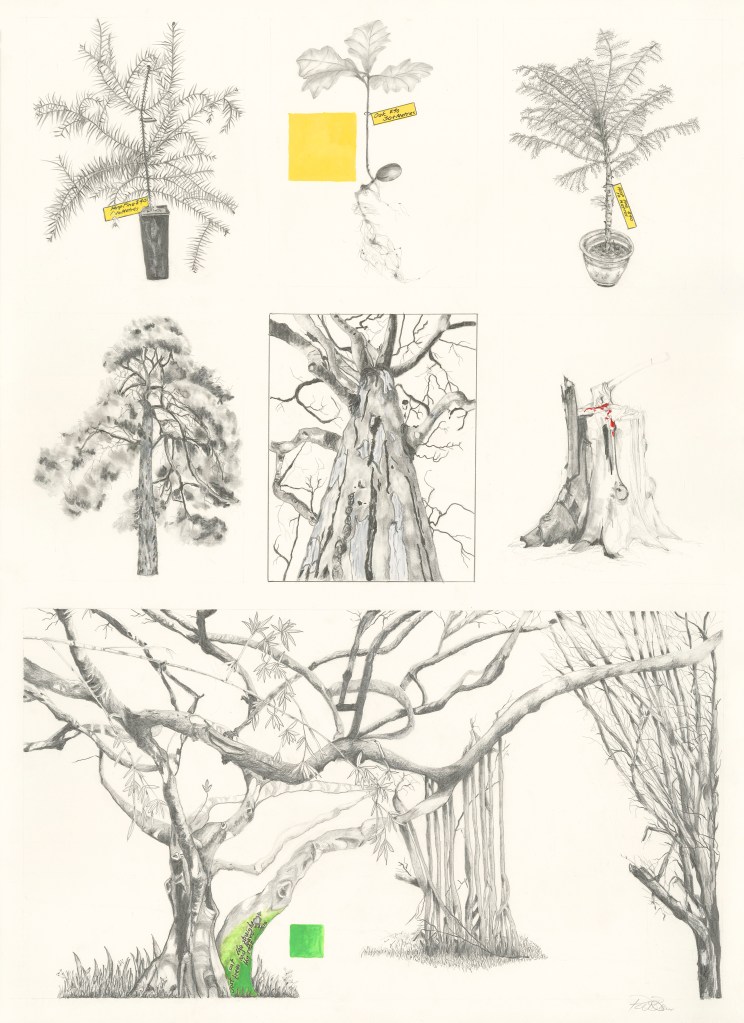
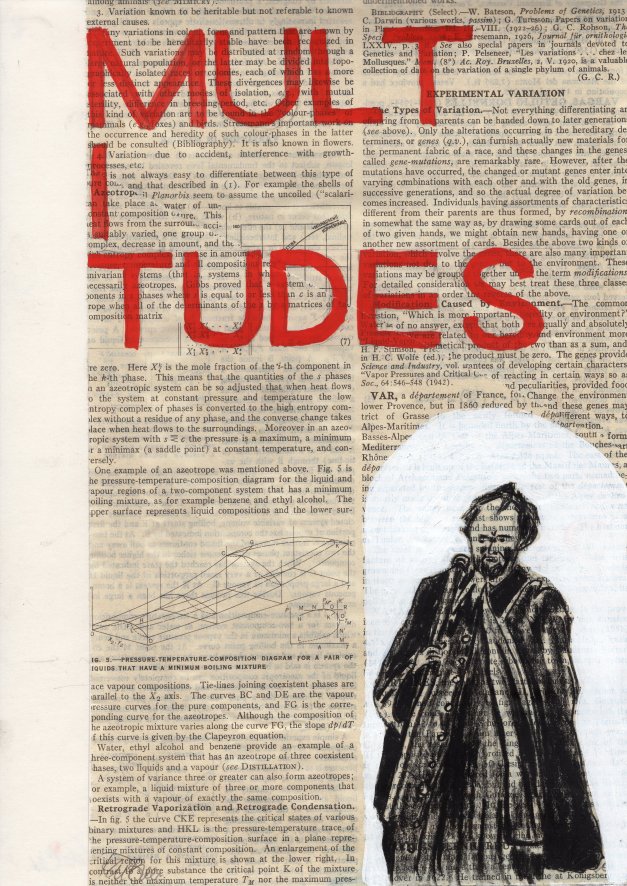
Artist: Peter Breen, 2025 Mixed media on ageing found paper. Original works now part of “Body and Soul, Berlin, Artist Magazine, Issue #45” August 2025. Prints available. Please DM Peter Breen pbreen@bigpond.net.au

















 Peteskibreen's Blog