I’ve been writing short responses to my days experiences – things heard and seen, news delivered – since Decembeer 1, 2023. The plan is to keep it going until Decembeer 24. This discipline is enjoyable and helps focus my mind on the writing and whatever it is that has grabbed my attention.
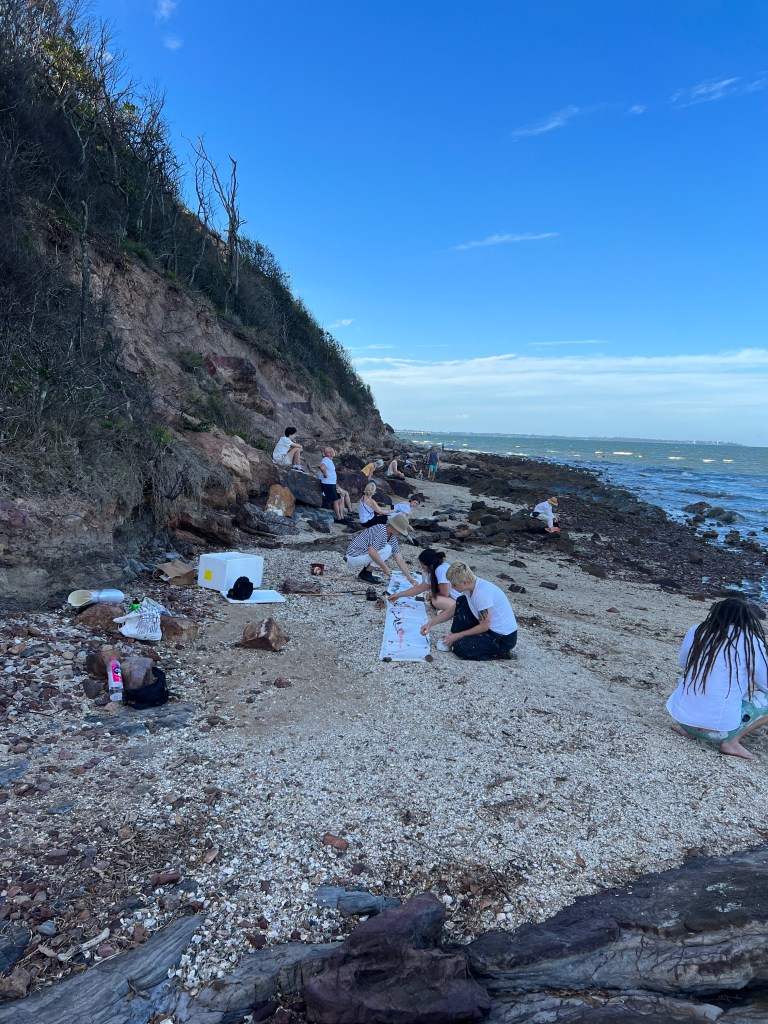
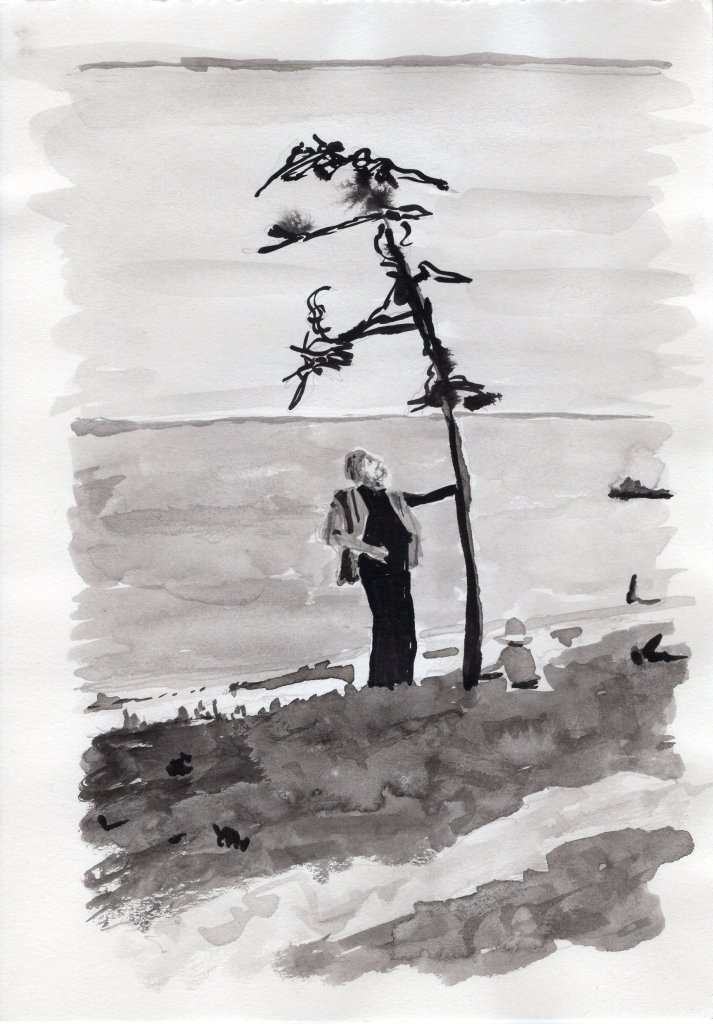
White Silence – Shorncliffe Beach, Moreton Bay, South East Queensland.
Sunday afternoon December 3, 2023.
In the days after Damien [Wamud] Kamholtz’s and Cameron Eaton’s funerals a friend suggested that a White Silence event might be be a positive grieving and healing ritual for family and friends and for those who didn’t make the 2 hour trip to Gympie for Damien’s farewell. Marissa Lindquist has been a regular participant in White Silence since 2012 and a Jugglers’ Board member. She knew Damien from White Silence and along with many others was deeply affected by his presence and untimely death. Would a White Silence ritual help family and friends?
In the book “Personal Grief Rituals” Paul Martin, [2023, Routledge] – grief counsellor and psychologst – unpacks grief and how some experience it, the path to healing and the impacts of temperament and family of origin parenting in that process. It is a book Damien recommended to me and, as he drew closer to his own death, found it too confronting to finish.
Martin in concerned in this book about the ineffectiveness of some funeral rituals to open some kind of healing grief process in a range of societies and cultures around the world, particularly in the USA. We could say that he would be unimpressed with the ineffectiveness of some funeral services and religious pastors in Australia in respect of grief and healing. Even the rush to move people from a chapel for the next funeral service at the local crematorium is indicative of something less than respectful of the grieving and the dead. However many many funeral services need to be scheduled, time for conversation and centering down should not be rushed at the place where the dead are finally farewelled.
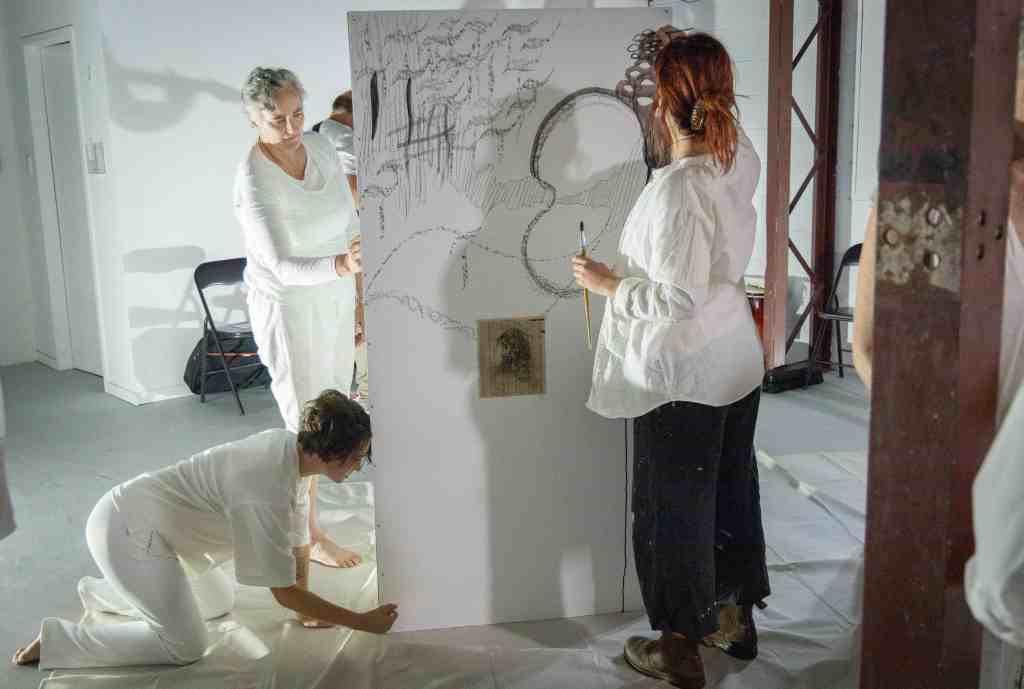
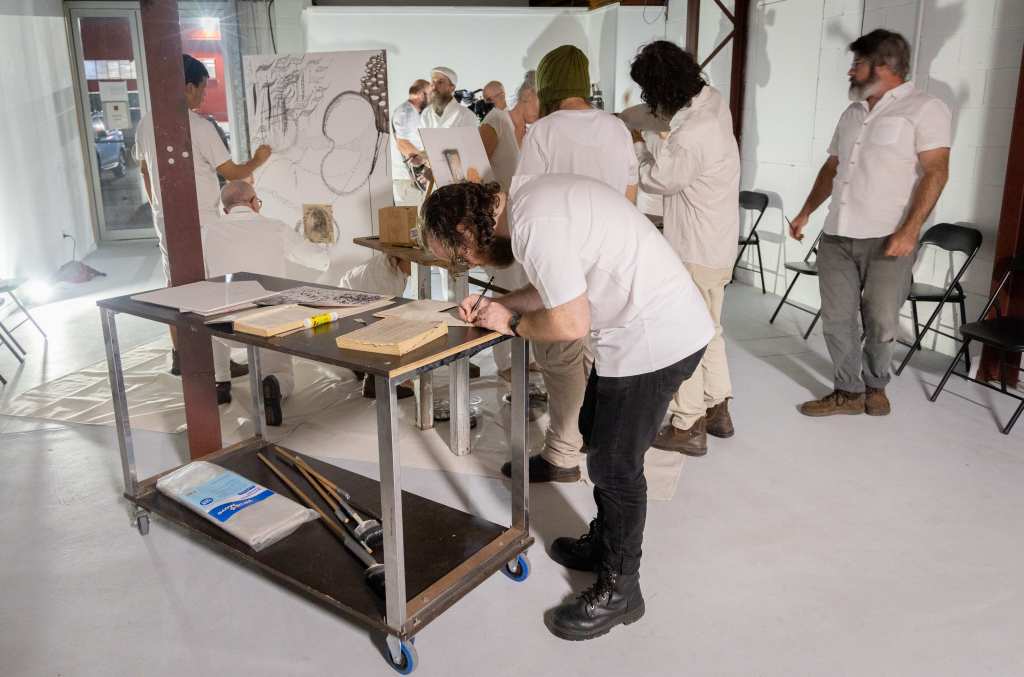
Both funerals and following wakes – Damien’s and Cameron’s – were, in my view, affecting and positive spaces and times. They allowed for very strong emotions, deep grief and remembering lives of beauty and impact. From my experience of hosting and leading funerals and attending wakes, they were up there with the best. White Silence at Shorncliffe Queensland beach curated by Marissa with family and frends – in the presence of these two men – was a grief ritual I hoped would enable some degree of comfort through wordless silence, mark making and immersion in the sacred beauty of the space. I think it did that. At the end of the day we walked to the Full Moon Hotel and sat facing the twilight effect on Moreton Bay eating chips and drinking beers.
The cloud formation over the small inlet during our beach based canvas mark making seemed to spell out DAM[ien] or CAM[eron] before it disappeared on the wind. This appearance was not lost on us.
Martin’s book [ Personal Grief Rituals] suggests “creating unique expressions of loss and meaningul acts of mourning in clinical or private settings” was, I sensed with feedback and conversation , achieved for family and friends of both men. It was not a clinical setting in the strictest sense but one that was tailored to the White Silence schema, the knowledge of the men who had died and the families who had agreed to attend.
“Those who are let down by what culture offers can opt to play a more active role in their own journey through mourning. The individual can harness creativity and design personal grief rituals that meet specific needs and affirm what was unique about the relationship they had with the deceased. Personal grief can create activities through which the bereaved embody a more meaningful experession of what has been lost. They can be tailored to facilitate whichever feeling states require further venting. And they can help achieve absence-and-presence by countering whatever is impeding so that the bereaved can move forward while also maintaining a meaninful connection to those they still love. Lastly, the individual who takes the reins and guides themselves through mourning is more empowered for having articulated what the subjective experience of loss means to them, what it is they need in order to heal, and how to give oneself what they once depended upon culture to provide.” Martin, p75.
I am hopeful that what we curated on the beach on December 3 in some small way approached the vision of Martin’s to build on the funeral rituals and strengthen “absence-and-presence” for the grieving families and friends.
We are all dying but that’s a bit depressing, but it’s the reality of being which begs the question of what’s it all about. And how to think and worry about it less especially in the face perhaps of our working life – maybe as an oncologist or maybe as we move into lower mobility and retirement. We are here and we will go. The rather crass mantra of what is certain – “death and taxes” – makes little impact on rising anxiety or meaning making.
Last week I led the funeral service for a 46 year old artist friend who died of prostate cancer. One of my sons is 46. This is too young. How do we make sense of this one person who has gone too soon in this time when babies are being killed in the middle east and children are starving to death in Africa? How do we remain in some way outward focussed on the marginalised sisters and brothers while the call of indulgence and entitlement continues via consumer rhetoric and inoculation?
In the previous month another artist friend died of cancer at 51 leaving behind a partner and two teenage children. Damien Kamholtz [ 46] and Cameron Eaton [51] artists, wonderful men, partners and fathers. Making sense is maybe only possible for moments caught in silence. Here is the talk I gave at Damien’s funeral last week that comes out of my own reflections on living and being as demands on life continue and while a deep desire continues to make something of my life that must be completely devoid of “power and greed and corruptible seed.”
In April, 2023 with Damien Kamholtz on my right and his eldest daughter Lilly at White Silence in Brisbane.
Photo Credit: David Kapernick
A L S O
Damien Michael Kamholtz/ Wamud
November 8, 2023
Gympie, Queensland
As we prepare for Damien’s/ Wamud’s committal, here are some words for Rachel, Lily, Jarrah and Esh, Alwyn and Bernie, Chantal and Rebecca …And for us all.
How do we make sense of living, on days like this or on any given day?
ALSO is an acronym I have been using as a kind of personal signpost in attempting to answer this question – how do I make sense of living in these times of unanswerable questions.
Art:
Art is what we are born for.
It was what Damien/Wamud was born and lived for.
We are born for seeing and dreaming.
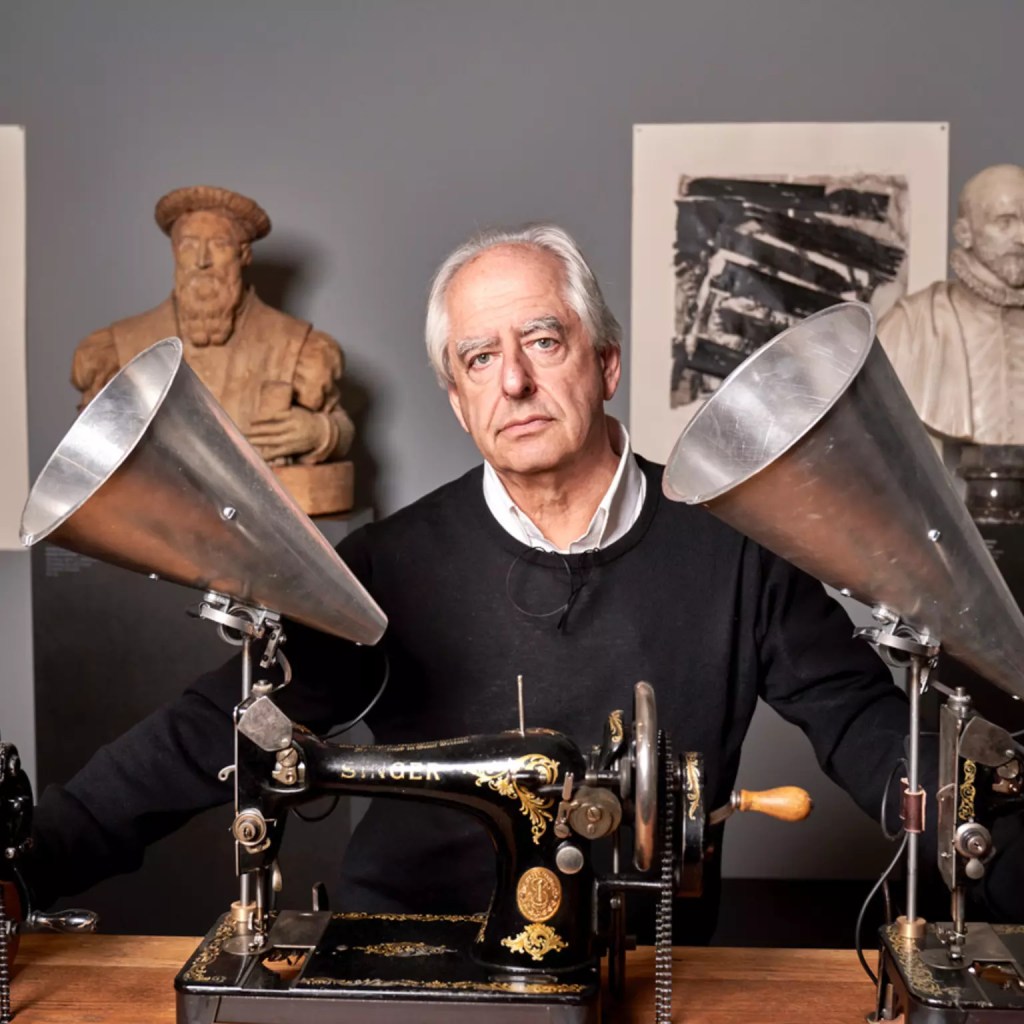
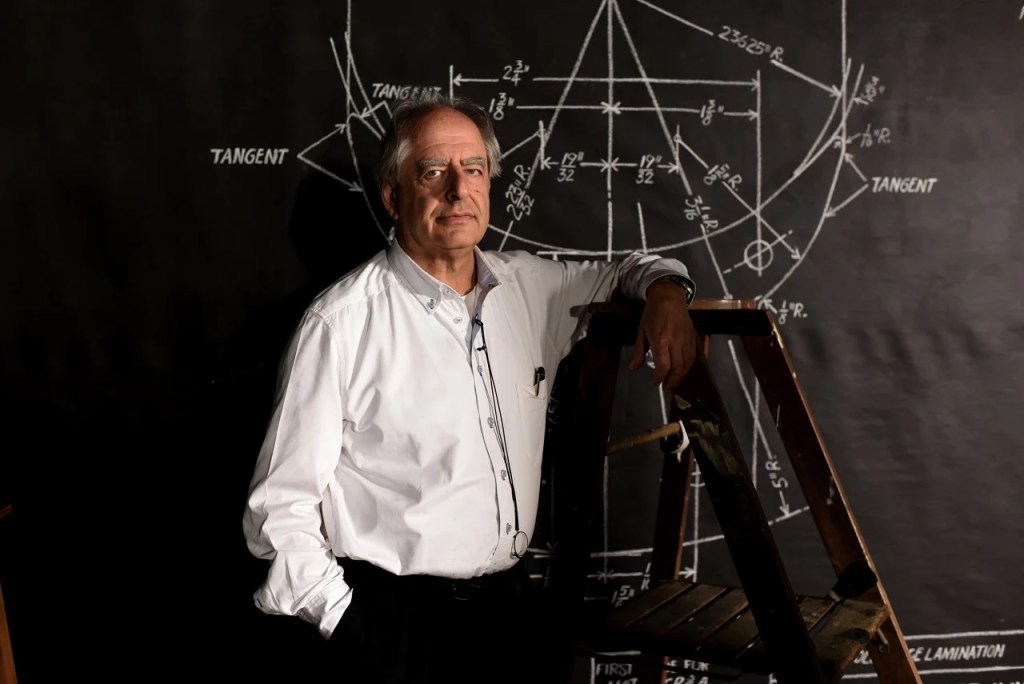
We are born for mark making and as William Kentridge says – we must make marks because that is what it means to be human.
Finding our way as mark makers is often in the spaces between the obvious, in the bits we have left as junk – drawings left on the table, dance movements we have discarded, steel we have dropped at the dump. But sometimes it’s there that we return to and find that these discarded works have life and with some work and renovation become works that make our souls fly.
In watching Damien/Wamud work he was always looking for the spaces between the obvious along with his masterful work as a painter and draughtsman.
Art making, art conceiving, art embracing is core to being human.
The big question of course is how to make a living as an artist as a performer as a musician as a comedian, as a sculptor.
Too many – maybe all of us here – have been tempted to sell our souls and core creative selves when we haven’t earnt enough to pay the bills.
But if we can feed our hearts and intuitive seeing and nurture our hearts and souls then we will be closer to being fully human and fully alive and will find the spaces between and the path to new work from our souls. And that I think is one reason why we were so drawn to Damien/Wamud.
But I offer no miracle cure for paying the rent.
LOVE
I felt loved every time I met with Damien/Wamud. Many of you here would say the same. It is a sense of being welcomed of almost being part of him.
Love is a feeling of being embraced and valued unconditionally but it is more than a feeling.
I am still learning that love is the never ending decision to love the other, of standing in his shoes, of being present to understand a bit more, to understand what partnering and help really is. And imbedded in love is justice, kindness and humility – the core values of joyful community.
Not aggression, power and ego.
To love is to be present to the other, to the other situation and as Cornel West says love in the public arena is working for justice for the poor and marginalised and standing in solidarity. Even with our enemies. And because as humans we are one with our enemies we can begin to try and understand them by responding to them and their values with our art making in the spaces between.
SPIRITUALITY
My life has been one of inquiring into declarations of spirituality and experiences of spirituality.
I’ve come down on the side of experience because there are too many walls put around the declarations.
My spirituality includes 3 things
Silence
Solitude and
Stillness.
The late Irish Poet John O’Donohue talked about these elements as being the disciplines that bring us into more exposure to and experiences of mystery, life, spirit and insight. And these are the artist’s path to being and making and the framework of White Silence.
ONENESS
When I walk or sit in silence, solitude and stillness in a space free of loud industrial noise and human chatter I begin again to find the flow of oneness with spirit and mystery and people and country. Awareness is born yet again in me. And art ideas are born there.
Today in this moment of remembering, reflection, silence and death we are one in spirit with each other and with Damien/Wamud.
The darkness of our world sometimes overwhelms:
Bob Dylan sings “…power and greed and corruptible seed, seems to be all that there is…”
But there’s another and better way, the ALSO Signpost way, Wamud’s way and as he has flown he is with us as in the words of John O’Donohue:
The dead are not distant or absent. They are alongside us. When we lose someone to death, we lose their physical image and presence, they slip out of visible form into invisible presence. This alteration of form is the reason we cannot see the dead. But because we cannot see them does not mean that they are not there. Transfigured into eternal form, the dead cannot reverse the journey and even for one second re-enter their old formto linger with us a while. Though they cannot reappear, they continue to be near us and part of the healing of grief is the refinement of our hearts whereby we come to sense their loving nearness. When we ourselves enterthe eternal world and come to see our lives on earth in full view, we may be surprised at the immense assistance and support with which our departed loved ones have accompanied every moment of our lives. In their new, transfigured presence their compassion, understanding and love take on a divine depth, enabling them to become secret angels guiding and sheltering the unfolding of our destiny.
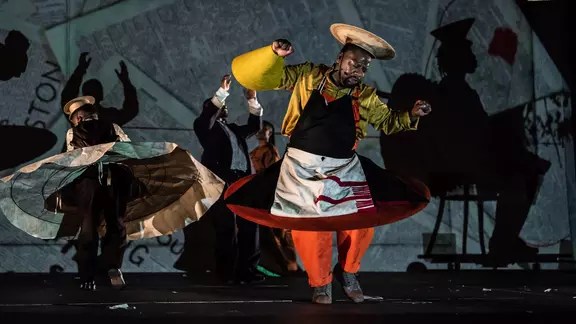
I happened upon the promo for William Kentridge’s Opera “Waiting for The Sibyl” at the Sydney Opera House by algorithm fluke and have now secured tickets. I had hoped to also hear and see the great man in his pre-show talk on November 3 but it had sold out. Maybe you will be lucky with a cancellation, I was told, but I will see the opera in the Dame Joan Sutherland theatre at 7.30 and will probably line up at the pre-show talk room just in case. I have and treasure the wordless drawing book he produced for this opera in the pre covid days and immerse myself regularly in it’s profound simplicity.
“Waiting for The Sibyl” has toured the USA and Johannesburg – where Kentridge lives – in the last two years, after Covid. It is a significant creation and event and to have it come to Australia needs to be seen as the highlight it is. Kentridge has been represented by Annandale Galleries [ Sydney] since 2004.
Quote below: “The Saturday Paper” September 9, 2023
“Kentridge is refreshingly open and respectful about how his work should be perceived. Is there anything, I ask, that he would very much like Australian audiences to have in their mind heading into a performance of Sibyl?
He pauses. “I suppose the key thing is that there’s not an answer,” he says. “There’s not a single meaning I’m trying to give, there’s not a key to the text that emerges. It’s to allow their eyes and their ears to do the thinking. To see if ideas or associations are provoked by the music and the texts and what they’re seeing, rather than feel there’s a correct interpretation which they’re either getting or missing.”
He smiles. “Relax into the performance,” he says. “And the performance will do its work, and you will meet it halfway.”
“Hear from the world-renowned visionary artist
William Kentridge, whose work never ceases to mesmerise, describes himself as an artist who makes drawings which sometimes are made into animated films. And sometimes there are performers in front of the animation and the work becomes theatre and opera – a drawing in four dimensions, in space, and extending over time.
With Sibyl, Kentridge has somehow captured the zeitgeist, tapping into our deepest uncertainties about the future. What process allows this to happen?
In his work, the ideas traverse in multiple directions from an initial impulse – an image or a phrase – to drawing, to idea, to metaphor, to image, and back again. His Johannesburg studio becomes an embodiment of these processes of discovery and the artist works – often in collaboration with fellow South African artists, musicians, dancers, and actors – toward a penetrating and resonant vision of our world. It’s work where ambiguity and contradiction are not just “mistakes at the edge of understanding, but the way in which our understanding is constructed.
In this lecture with stunning visuals, William Kentridge invites us on the journey of his artistic practice through the making of Sibyl, and other works.”
Sydney Opera House presents:
“An evening divided into two parts: The Moment Has Gone, a short film with live piano and chorus, and Waiting for the Sibyl, a chamber opera based on the ancient Greek priestess who wrote prophecies on leaves to scatter in the wind. Taken together, they bridge the gap between the ancient and the modern in a story of searching for certainty in an uncertain world.“
One thing is recurring in my mind and it’s the presence or absence of an interventionist God/god – and who, in the words of Nick Cave – doesn’t exist. That is, doesn’t intervene. Exists but doesn’t intervene, answer desperate prayer or the smallest non-desperate prayer. The interventionist stories and myths in the Bible with this view of Nick’s need to be carefully reframed as myths or at a stretch historical oral stories that were embellished over centuries to prop up interventionist god systems. Cave has good reason to abandon a saving god in this life after losing two children in separate tragic circumstances.
This creates world view challenges for me and yet it is essential for peace of mind to own my two-mind doubts while unpacking what about the belief system I still hold – or that hold me – that I have juggled with for years. “Against the flow of my constructed self” is a persistent undercurrent.
A while back I wrote a piece about my experience in pre-Pol Pot Cambodia, working in Phnom Penh on a medical team, narrowly missing injury and death a few times and maybe more than I knew about. Here it is to provide more context for my reflections on this theme of escape, salvation, justice and inevitable death.
The Bomb Went off Before I Arrived
– a personal reflection
Phnom Penh 1974 – 1975
Peter Breen
Former radiographer – World Vision Intl
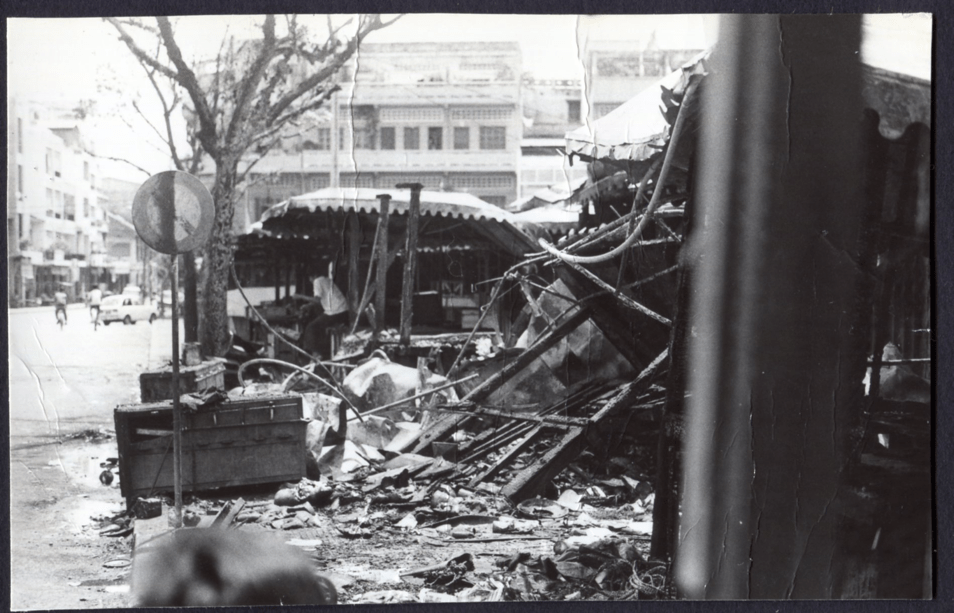
Rocket damage – Central Phnom Penh, March 1975
Photo Credit: Lindsay Nicholls
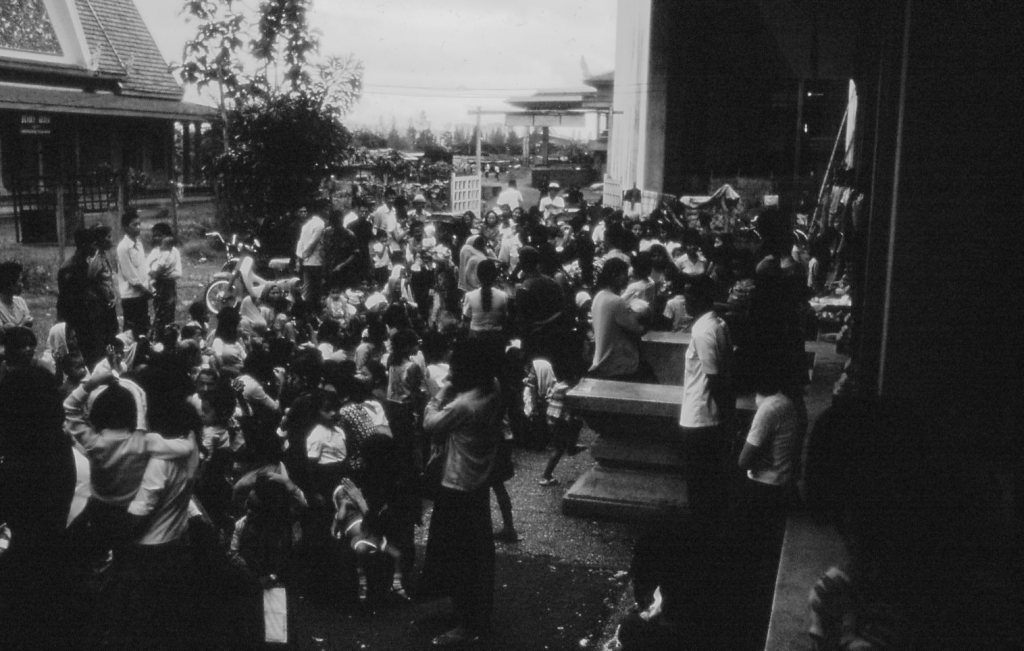
Body parts and cyclo bits littered the intersection. I vaguely remember yellow plastic shards from the Vietnamese plastics bomb that blew this family into bloody bits in the morning traffic rush hour one day in February 1975. I was on my way to the kids’ hospital on the other side of Phnom Penh on a 125CC Honda and skirted around the carnage. The horror remains etched in my brain.
So why wasn’t I riding by 15 minutes earlier?
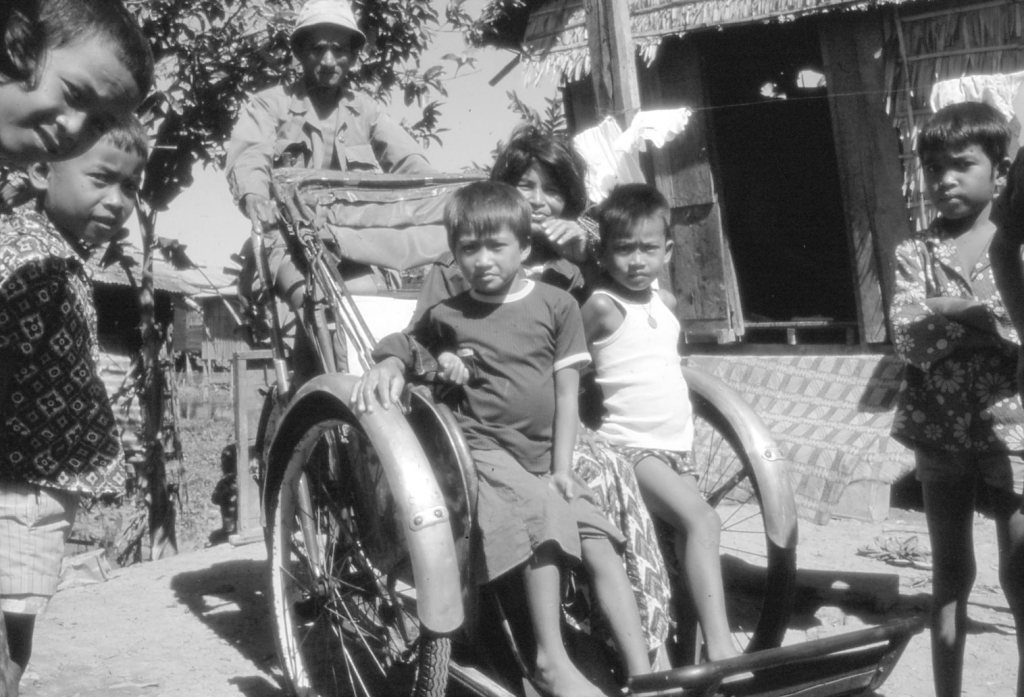
Cambodian Cyclo similar to the one in the bombing
Credit: Peter Breen
Phnom Penh World Vision children’s Nutrition Centre at Toul Kouk
my destination the morning of the cyclo plastics bomb explosion
Photo Credit: Peter Breen
A few of us were standing on the steps of our French colonial villa home at #10 Keo Chea, Phnom Penh after dinner when we heard the screaming whistle and scrambled into our bomb shelter – the loo – while the Red Cross two doors down took the hit on their reinforced concrete porch roof. The thing is, in “rocket alley” where we lived – across the Mekong River from the Khmer Rouge rocket launcher – why did that thing land 50 metres down the road and not on us?
Front entrance and medical team morning gathering – my home for 3 months with the loo bomb shelter inside.
I was shopping during a break in downtown Phnom Penh when I decided to turn back for something in the shop. It was in that moment that a direct hit landed on the footpath outside.
That was the life I decided on in 1974, leaving my pregnant wife back in Australia to attempt to bring professional compassion and training to a decimated country where the “killing fields “were yet to arrive via as a violent and murderous ideology. Driven compassion can mean a naïve energy that fails to recognise ideological realities where increased risk means increased risk.
Evacuated early – twice – I was flying out for the last time, as Pol Pot advanced on Phnom Penh, in a CIA DC3 with a massive sunlight catching golden painted tail pitching and lurching our way across the Khmer Rouge held Cambodian jungle to finally land in Bangkok with 2 exhausted and relieved pilots. It was not, however, the end of memories or questions for me.
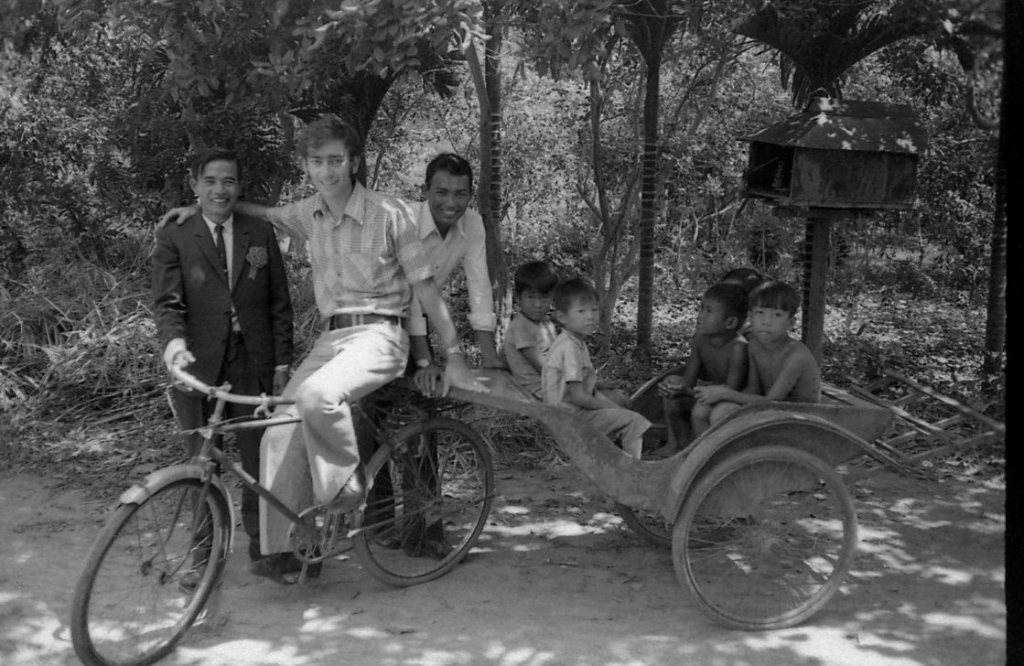
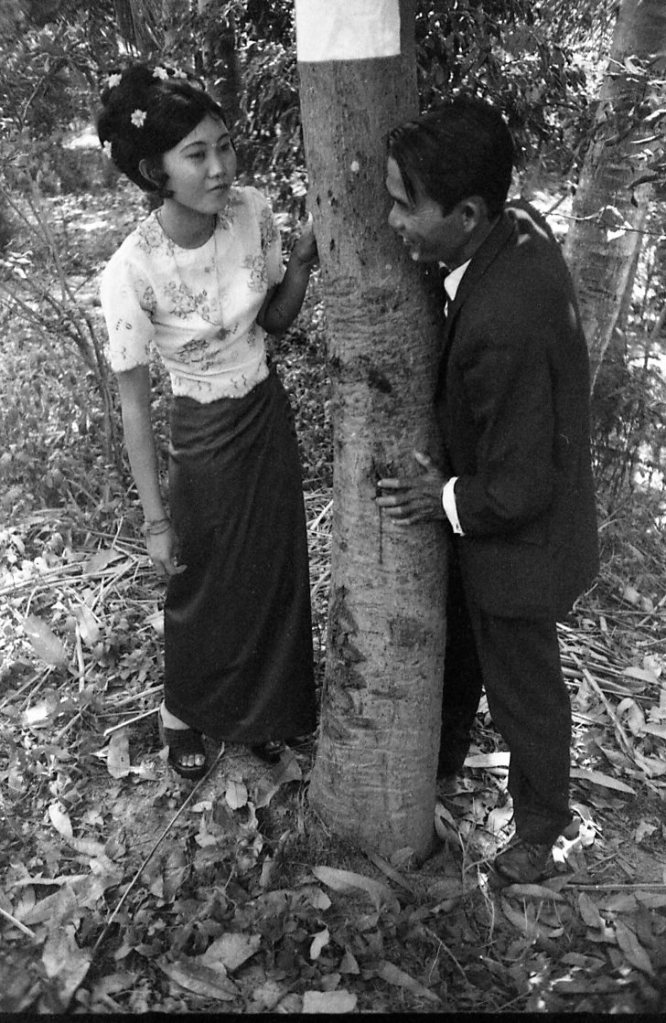
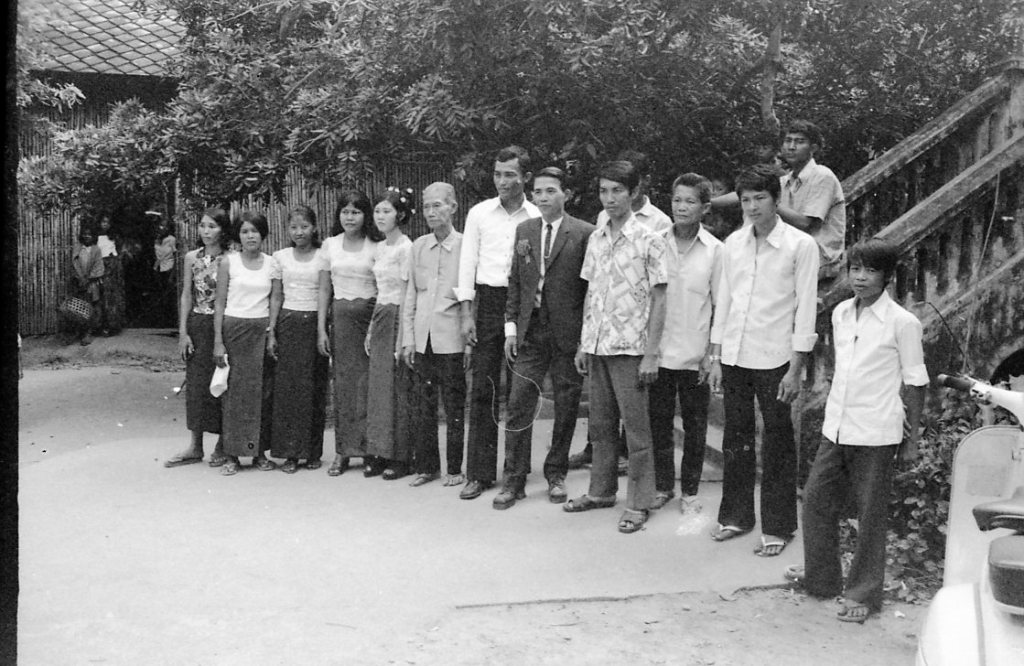
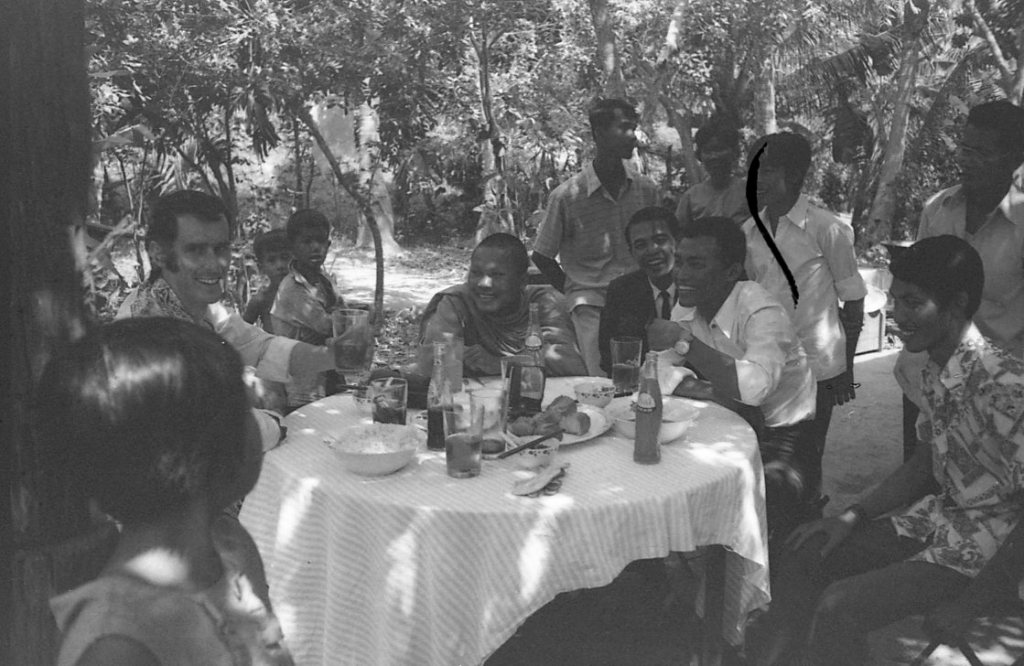
Before finally heading home via the golden tail plane to Bangkok, Lindsay Nicholls World Vision Medical Team administrator and I drove out of Phnom Penh to attend the wedding of one of our house guards. We had no a clue about where the Khmer Rouge were but knew that the further we drove out of the city and the closer we were to the village where the wedding was the greater the risk of violent encounters. We had an extra guard with his AK47 to increase our confidence and naïve bravado. The wedding was a gentle relaxed few hours as the couple and their family sought to maintain some degree of romance, love, custom and commitment in the midst of dark threats and an unknown future too soon to be realised.
For the record, there were no land mines, random rockets or plastics bombs on this wedding trip. It begs the question about timing, risk and place.
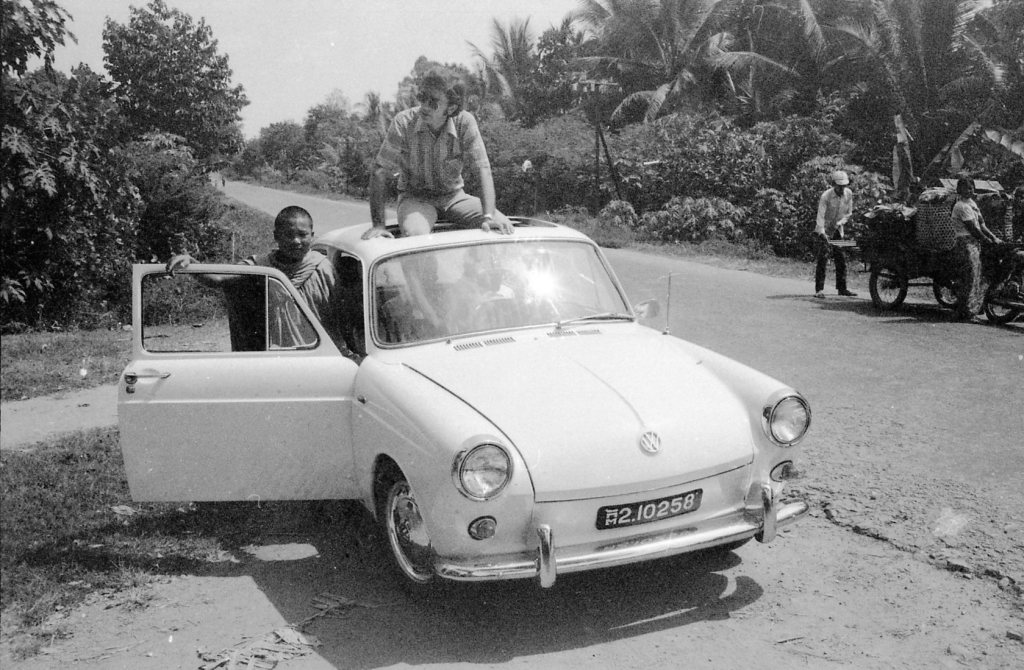
Target practice for the unseen Khmer Rouge on our way to the wedding with my Buddhist monk friend – Sauli.
Photo Credit: Lindsay Nicholls
World Vision Medical Team guard’s wedding day with Peter B and another armed guard on the outskirts of Phnom Penh in Khmer Rouge country – December 1974.
Photo Credit: Lindsay Nicholls
The Couple
Photo credit: Peter Breen
Wedding guests
Photo Credit: Peter Breen
Convivial after wedding feast
Photo Credit: Peter Breen
The World Vision Outpatient clinic Phnom Penh – in the unfinished Sihanouk Hotel on the banks of the Mekong River activated as an outpatient clinic. The X Ray machine and dark room were set up here where I trained two Cambodian lads in basic radiographic positioning, exposure factors and dark room processes. With the influx of refugees, Phnom Penh’s population had risen to 2.5million by the time the Khmer Rouge took the city. Pre-war figures were something like 250,000. Marasmus, Kwashiorkor and TB were rife.
Photo Credit: Peter Breen
Every weekday morning the medical team would drive somewhere in the city to clinics, orphanages and hospitals. Some nights we visited the Australian Embassy or local restaurant.
CEO, nurses, radiographer, administrator and pathologist from Australia, New Zealand and the USA, the head team doctor from the UK and a team of Cambodian/Khmer doctors, clinicians, nurses and trainees.
Nurse [ Sharon] and pathologist [Barbara] Khmer assistant to Lindsay Nicholls [ Boun Hou] and two orphaned children at the children’s’ hospital
Solid state XRay machine – Tube, factor setting knobs and transformer all in one! The mobile forerunner!
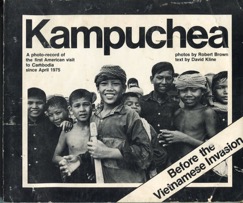
A couple of years ago I found this book in a Salvation Army thrift shop in Brisbane. “The Documentation Centre of Cambodia” seems to be a kind of Holocaust museum. “The Killing Fields”, “Cambodia Year Zero”, Netflix “First they killed my father” [Angelina Jolie] build the story I experienced in embryo form in the mid 1970’s.
What happened to Bonaeu and Mondera the two lads I trained and Buddhist monk friend Sauli? The probability of survival is about zero given what we now know. I emailed “The Documentation Centre of Cambodia” only to be asked for the lads’ employment records with World Vision. Helpful but impossible. I suppose a revisit post the Vietnamese invasion and liberation would have been an idea in the early 1990’s but it never happened.
Another book was given to me in 1979 in the heady years of anti-American imperialism and the boomer hope of a glorious new socialist state somewhere in the world. It is selective reporting with stunning photography but as with any inquiry that has an idealistic/ ideological agenda, Cambodia Year Zero was yet to emerge from the skull filled torture centres.
Then there is Nixon. The empire and legacy maniac who, like Putin, had religious Quake affiliations but who in an effort to stop the “yellow peril” and the domino stack collapse on the West had the Americans bomb the hell out of Cambodia to win at all costs in Vietnam and in doing so, enabled the Khmer Rouge.
I was in Phnom Penh for about 12 weeks and then I left, as rescuers do, travelling home to family, new work and a middle class kind of living as a young father. What kind of good was done, what kind of legacy? Maybe all my beautiful young Cambodian friends and Buddhist monks were slaughtered, victims of the Khmer Rouge’s hatred of American capitalist expansionist superiority. The Cambodian pastor who worked with us had the opportunity to leave with his wife from Pochentong Airport but at the last minute decided to stay and was murdered by the Khmer Rouge.
There is no sense in war, no value in violence for egos swollen with power soon fall, either on their own sword or on the swords of justice. Recalling wars never ends them or brings back the dead. The determination to be a pacifist will not see the powerful change or swords beaten into ploughshares. Tribes rise and fall and call for new believers trampling on the lives and loves of millions. Another and more will rise again with violence to preach empire and legacy bringing another cold heart into our streaming services for a few years more and then again.
I am a poor mediator, a hater of conflict and a lover of beauty. I am some kind of an artist immersed in visions and ideas that sometimes arrive but mostly fall over. The greatest work must be however to work intelligently for real peace and an all encompassing justice founded on a kindness that sacrifices the self for the common good. But is that really so and possible? Is it worth the effort? I dare to suggest it is. I know those who have been such and dream for those who will be the new intelligent and passionate peace and justice workers. However, what if all one can do in this rough and rowdy world is to take an extra moment to listen unhinged from a scrolling addiction to that spouse or child or friend – or aggressive work colleague – without words, judgement or categorising until they say “Thankyou for listening….it helped?” I think that if that is all I can do then I am part of an answer to a hope that wants to see “justice flow down like a river.” It is part of the peace making process. I am still unable to listen without butting in, forming opinions, wondering why they are in such a mess and wishing they would let me be. But I have decided again – and again – to give it a go.
Every story is waiting to be heard.Every story is a voice into life’s unfolding. A place. A space. An attempt. Pain, joy, growth, death, rebirth, disappearance, evolution, surprise, love or the inexplicable return. The stone, the cancer patient, the cliffs of Moher. The magisterial 400 year old kauri tree with her memories of struggle upwards, of snakes and echidnas, paddy-melons, first nations people, of birds in leaves and worms festering.
This is my story as it unfolds in art, love, justice and spirituality.
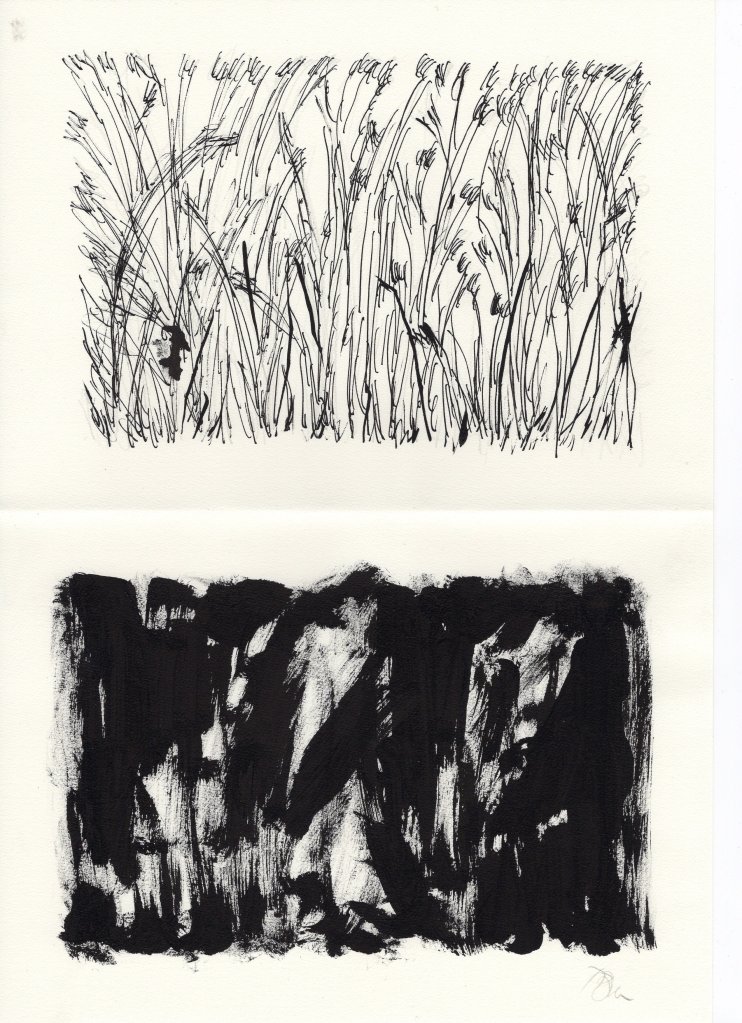
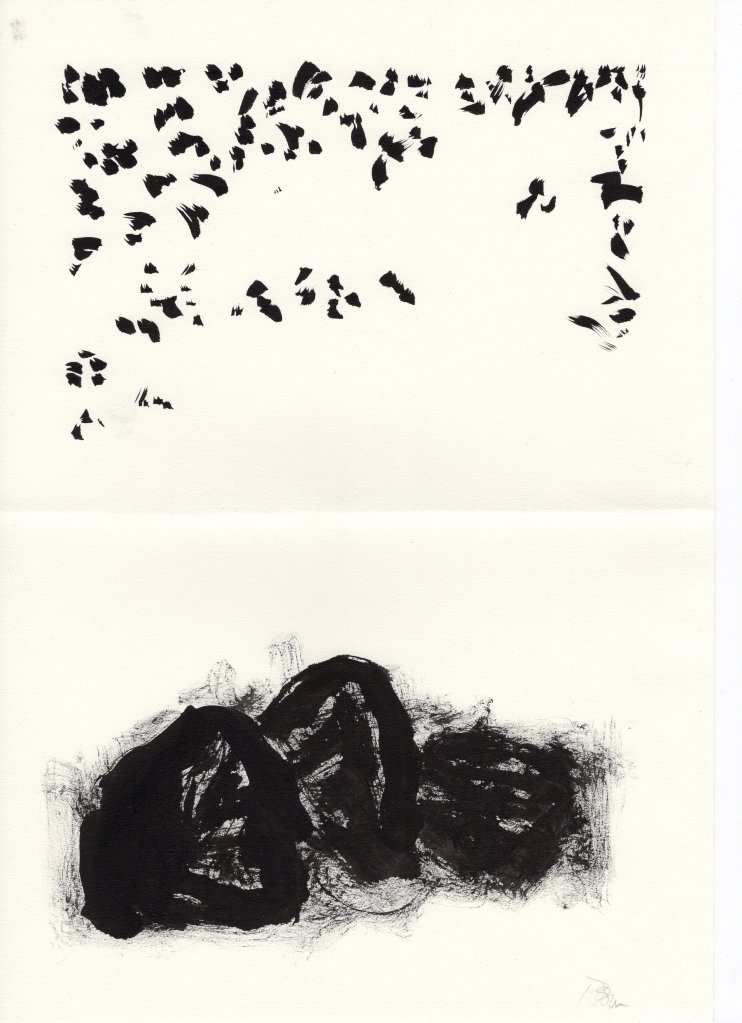
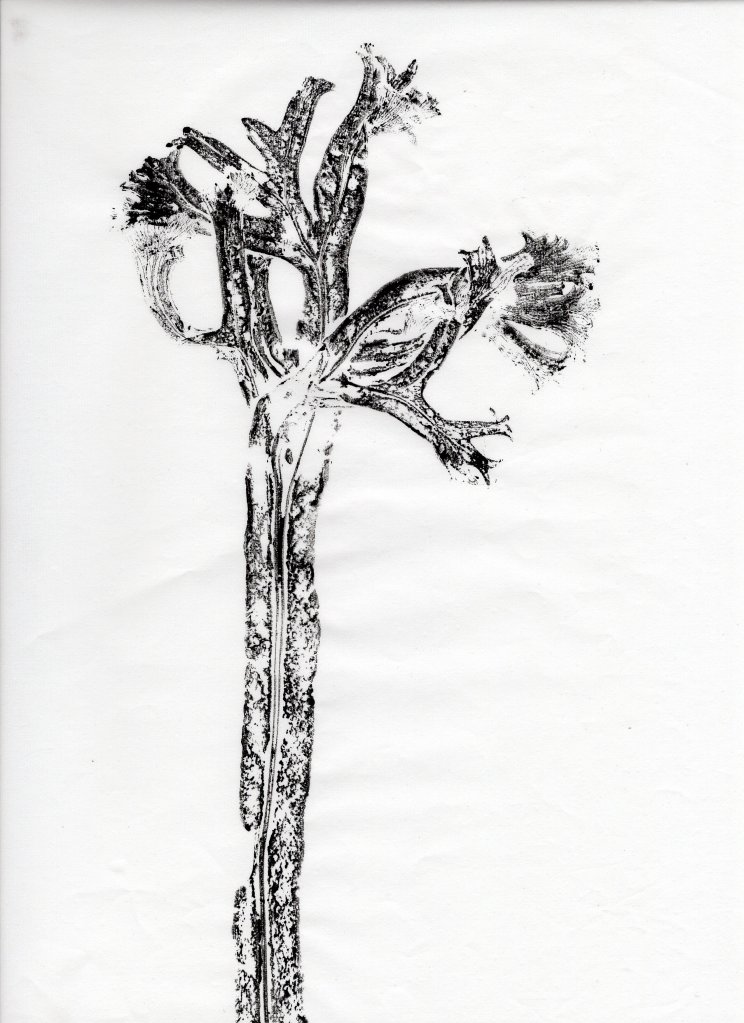
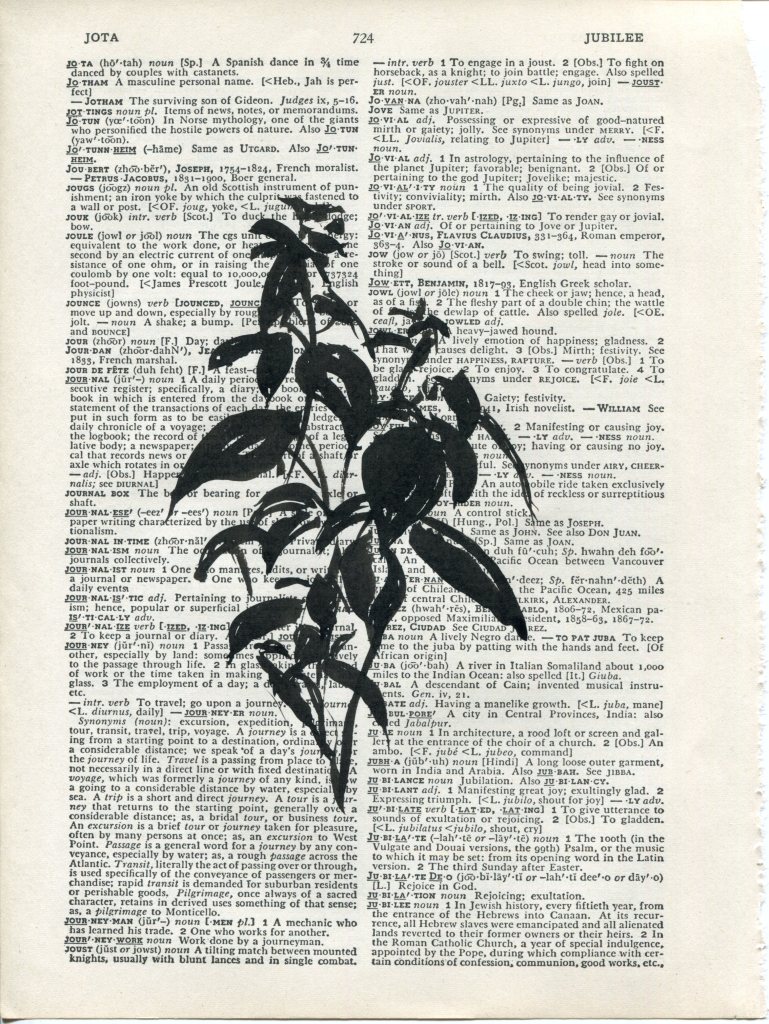
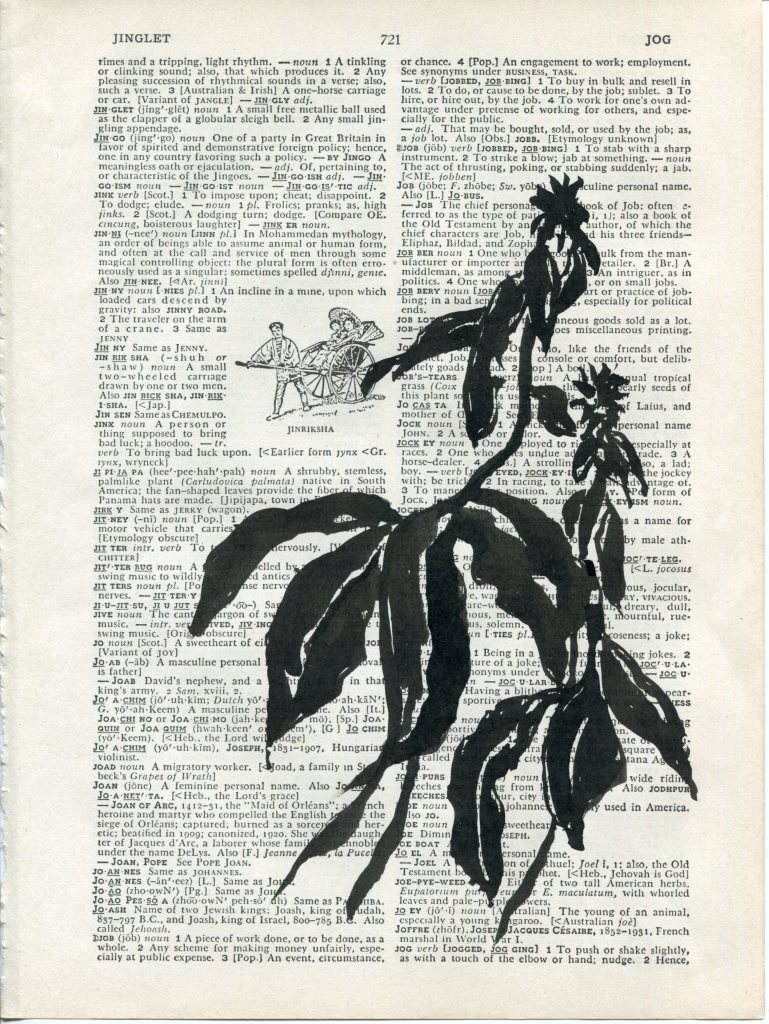
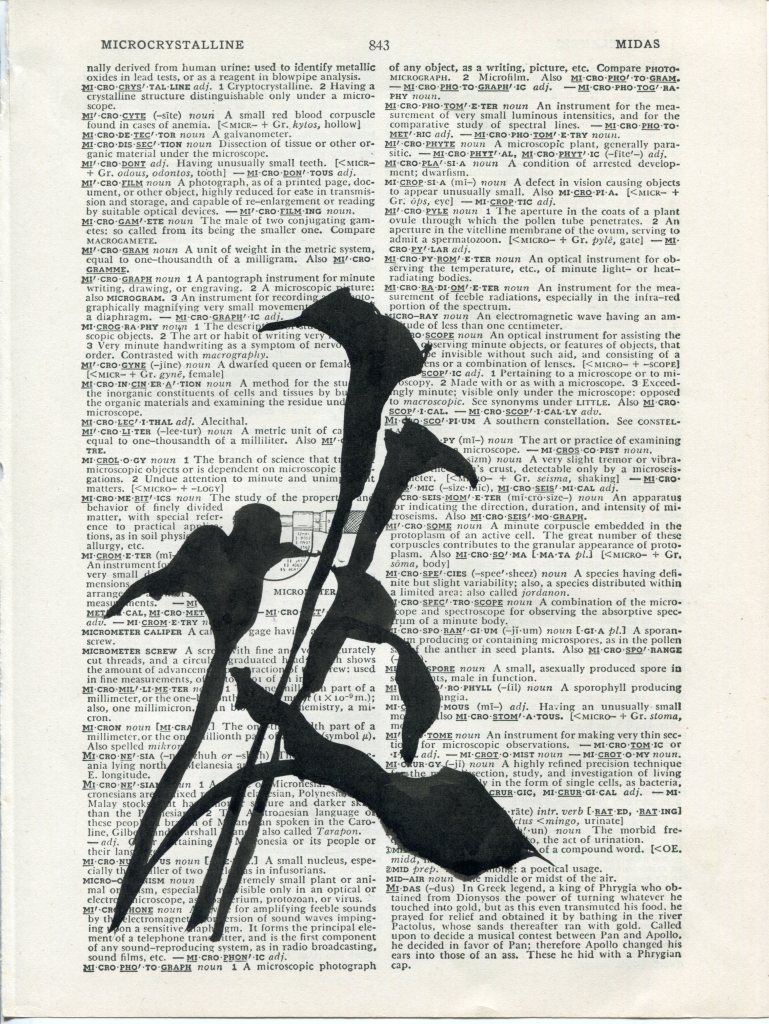
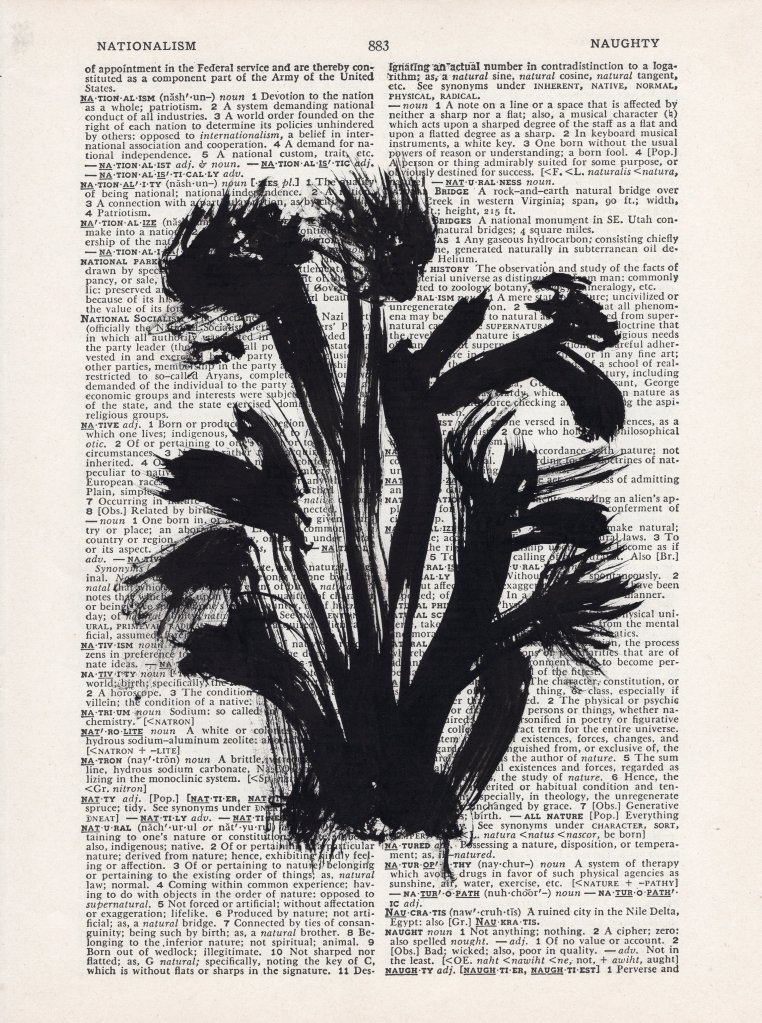
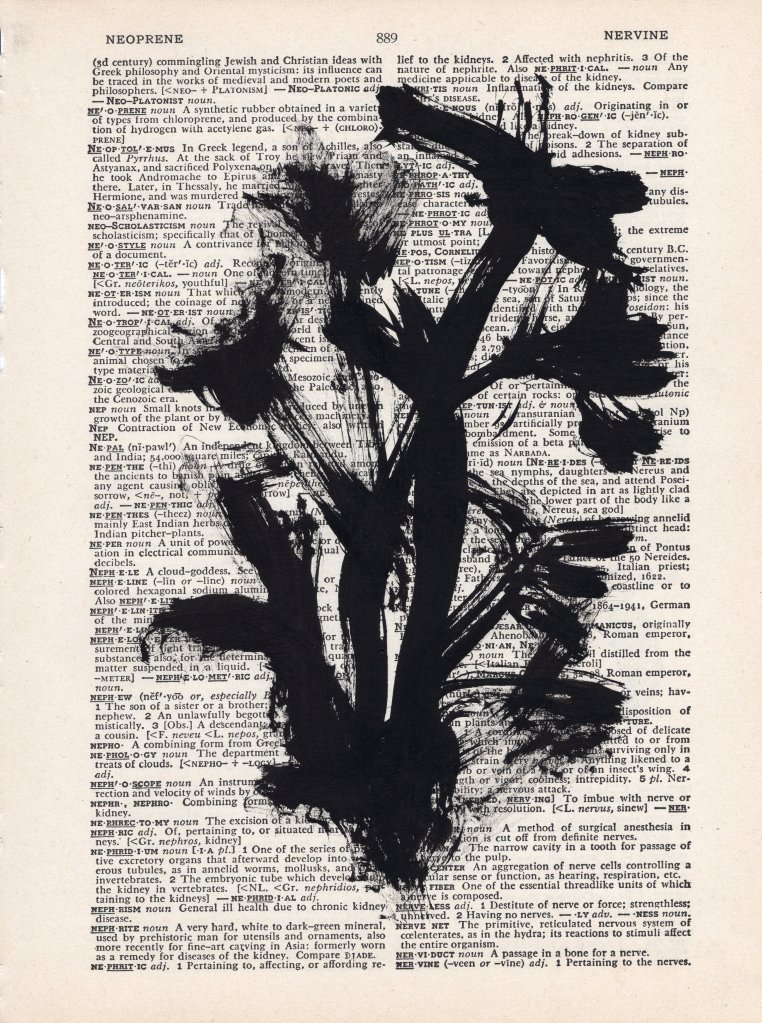
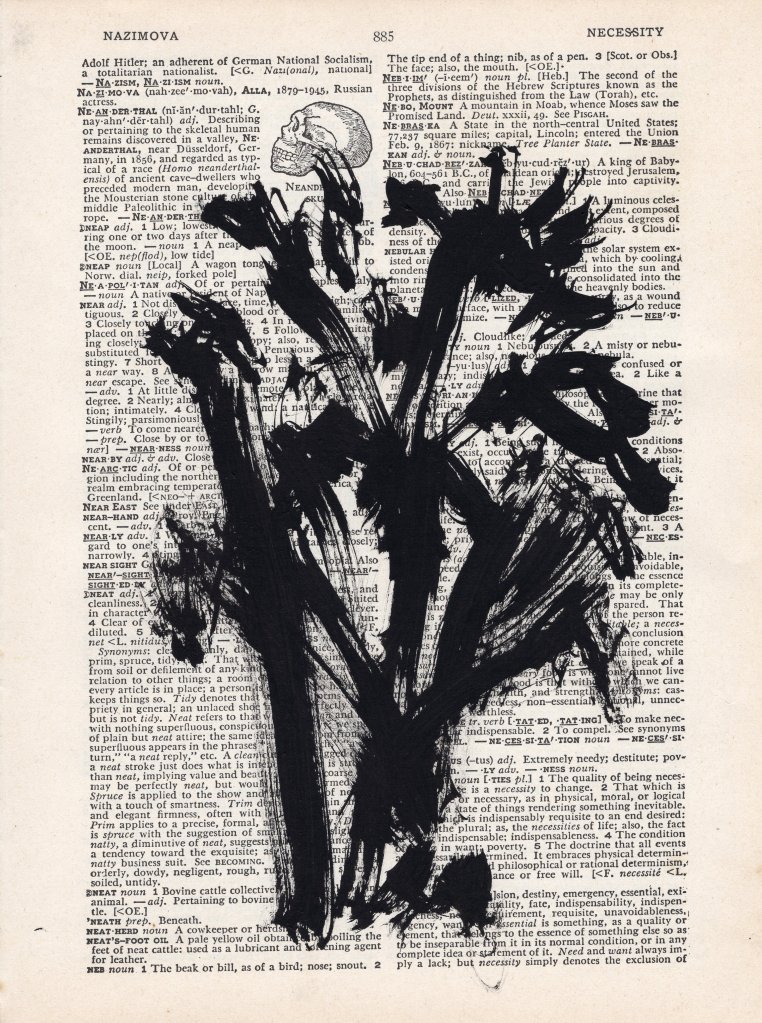
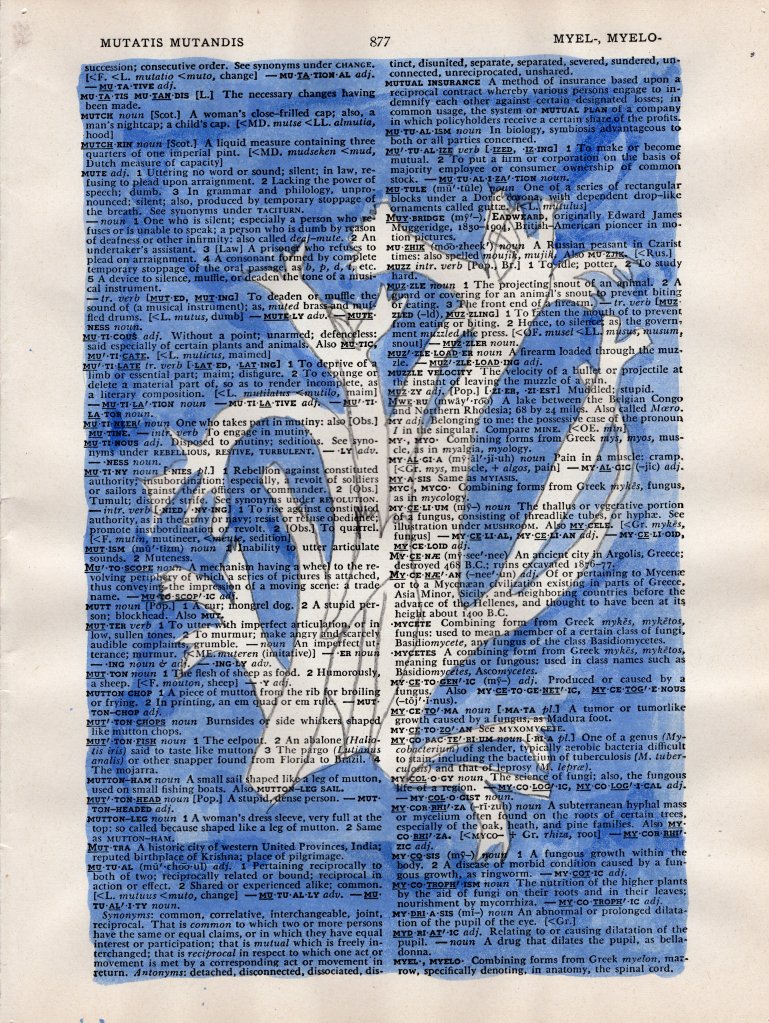
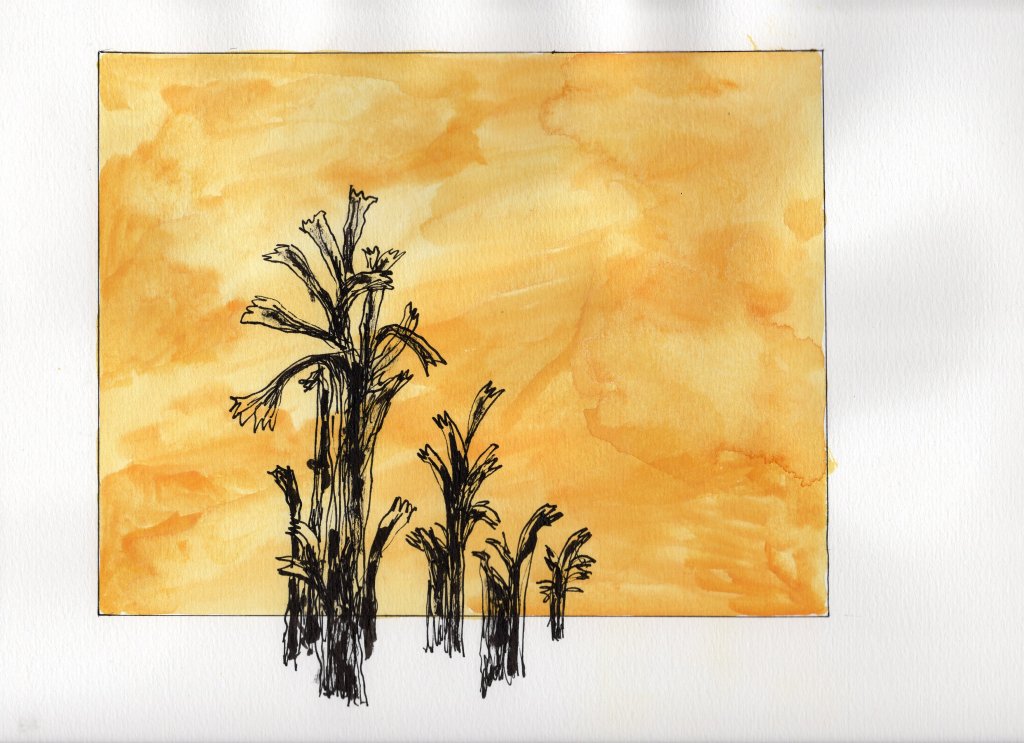
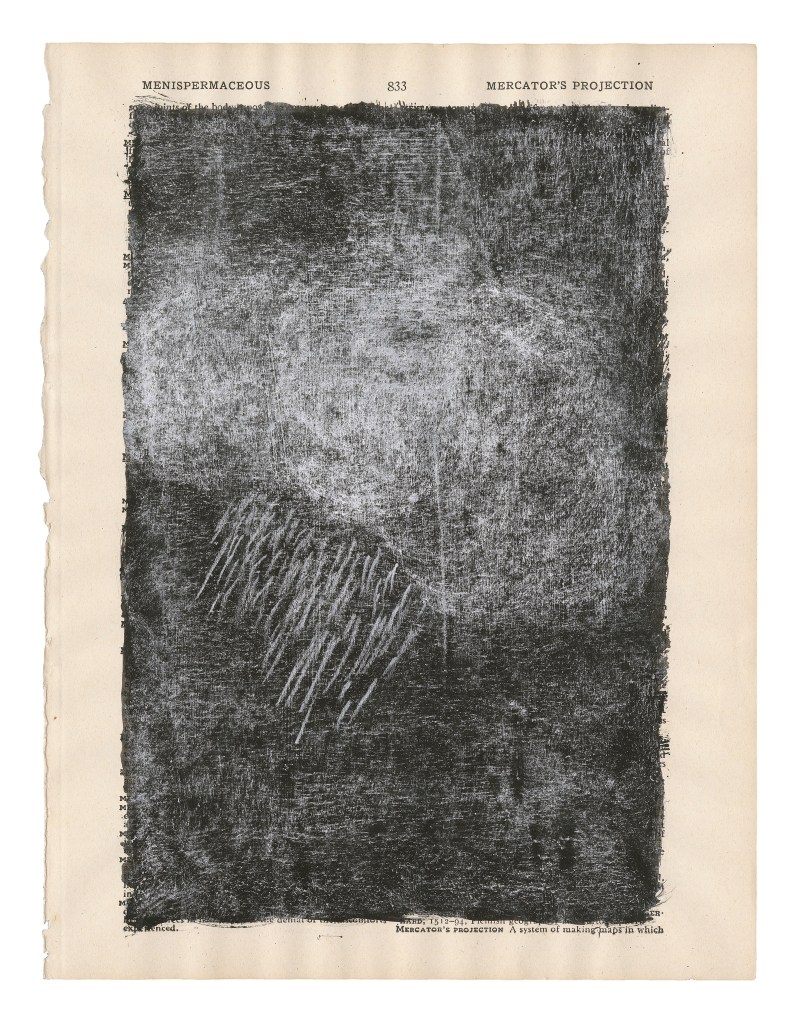
For these works I used individual leaves of a succulent plant that grows at the entrance of the studio. I selected two leaves, inking them them up individually for each print on the inked glass plate then pressed them between two sheets of Japanese Daiso Paper rubbing gently. I used old encyclopedia pages for the second proof run.
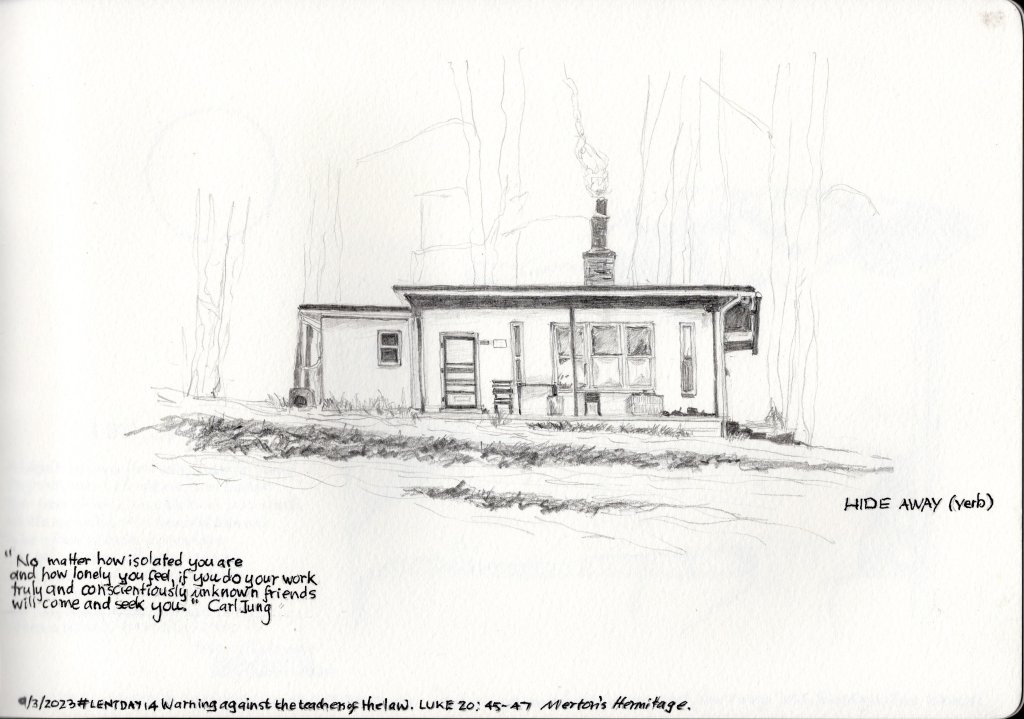
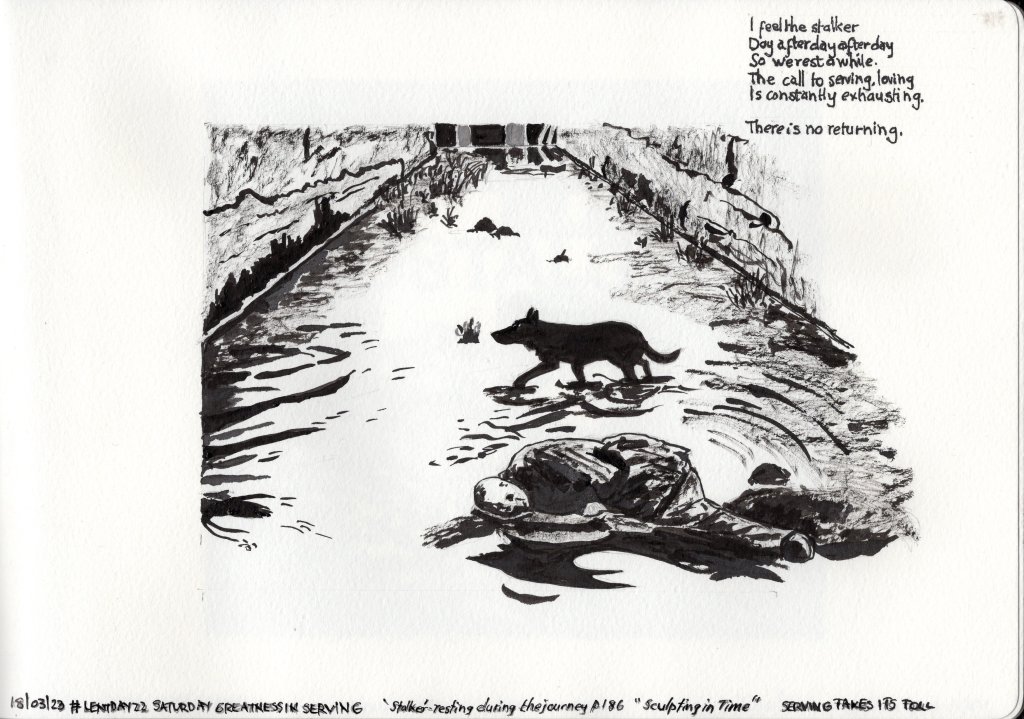
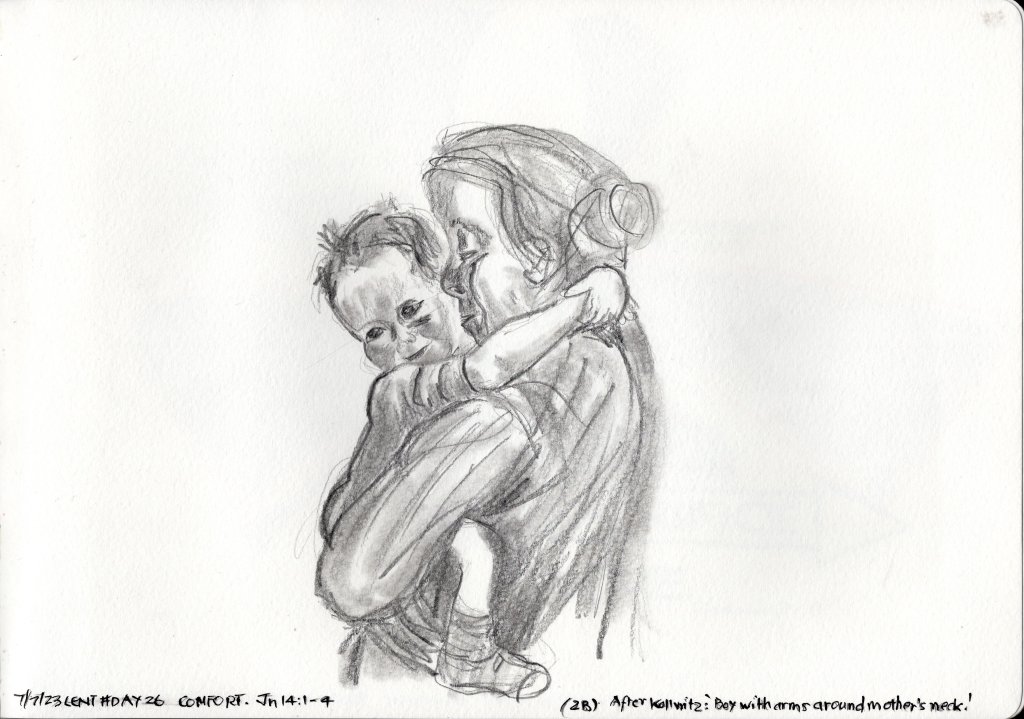
In processing a slow exit from formal Christian religion I have returned to readings at Lent via a pastor friend in Melbourne posted on Facebook each year. I use the readings and his commentary as my own door into reflections on the scaffold and ideas and thrust of evangelical theology/interpretations of the Easter narrative and my ongoing reframing of this.
Pencil, ink, collage, red pencil.
Ref:Andrei Tarkovsky “Sculpting in Time”, “Prints and Drawings of Kathe Kollwitz.”
I’m still not sure what British mythologist Martin Shaw means by beholding and seeing – does he want us to pursue beholding before seeing? I have used seeing as something more intuitive than looking so maybe he uses beholding and seeing as I use looking and seeing. I look in order to see. I sense he is suggesting that beholding takes a lot of looking and then, we finally see, albeit intuitively. In colloquial terms to me it means take a while to stop, be still, present, look and let the space – as with this pool on my daily walk this morning – seep into my soul. Stop the rush!
As I was walking this morning I broke my own rule and had my smart phone out and looked at an image on Instagram and suddenly realised that I was missing this pool and the fallen leaves with the still texture of tress watching the madness on the bordering road in the early morning work rush traffic.
And I was reminded of that famous photo of a group of young women in a gallery sitting on an ottoman in front of a significant work of art – on their phones as I had been this morning.
Streams of consciousness have never been so far from in these days of visual acquisition and rapid eye movement. A need to be still, slow, looking, listening and being calls quietly.
Not collecting but communicating.
Not hoarding but hearing.
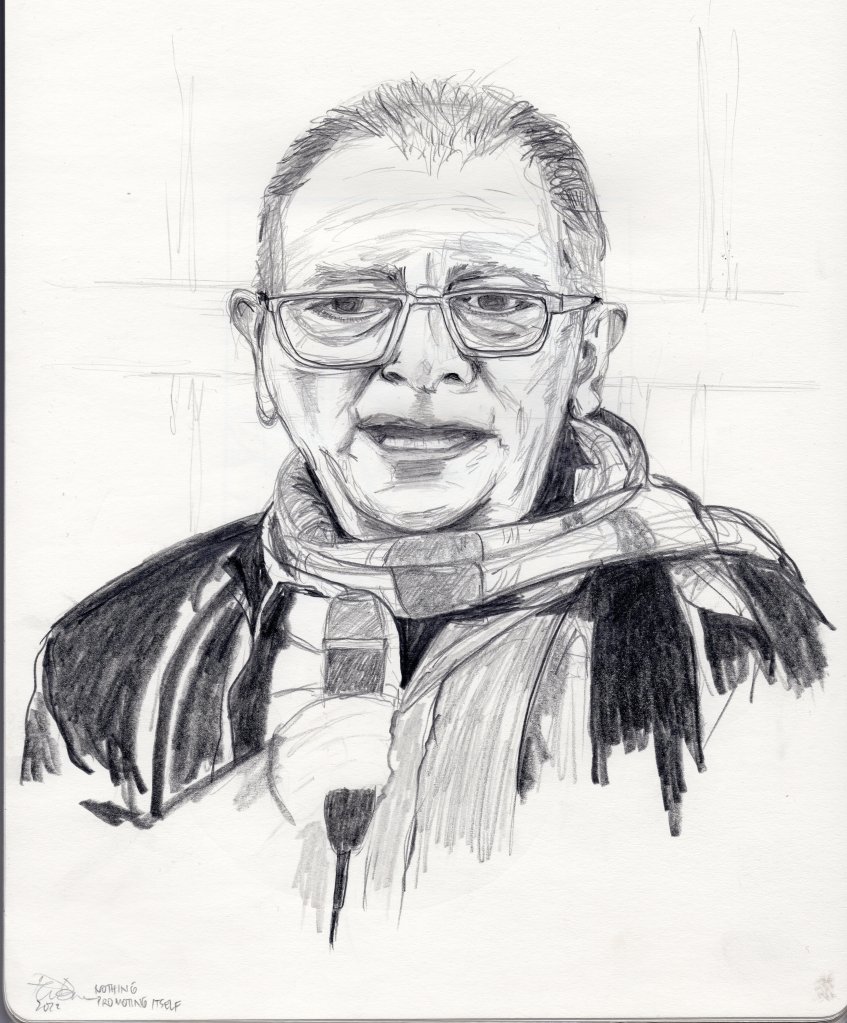
Not promoting but present.
In looking into this pool it is the depth of endless reflection that finally found me and yet I need to return so driven am I to fitness – a tick box agenda of a health and image conscious capitalist paradigm – that I missed the voice in the pool, the still quietness. I would rather behold the beauty than raise the pulse-rate!
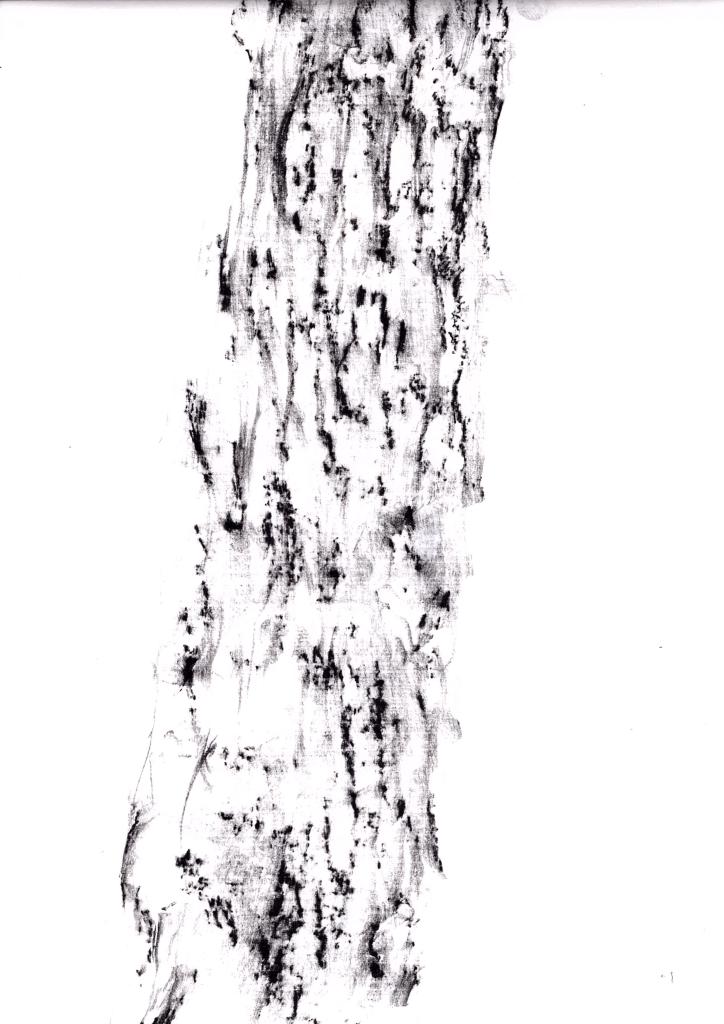
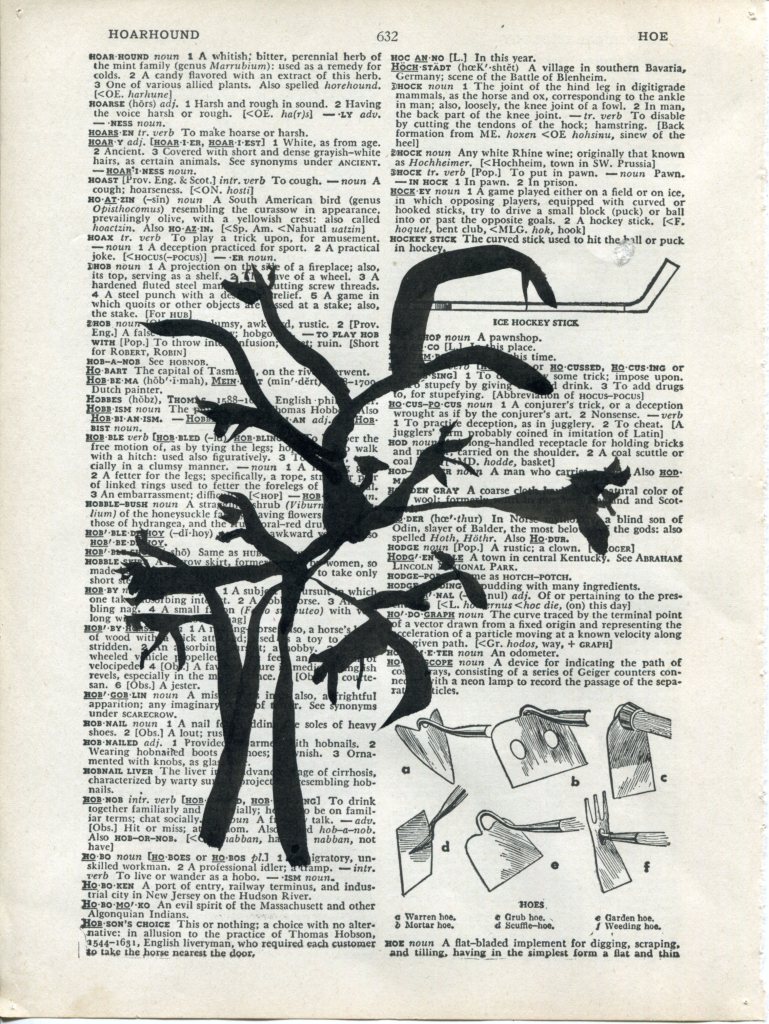
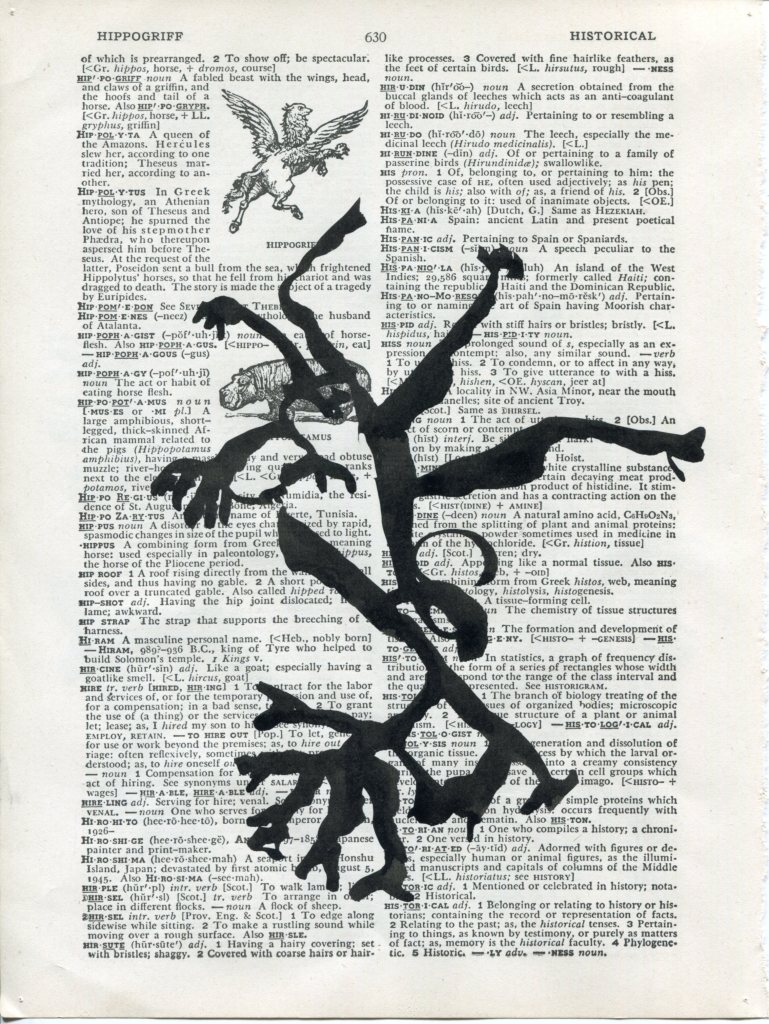
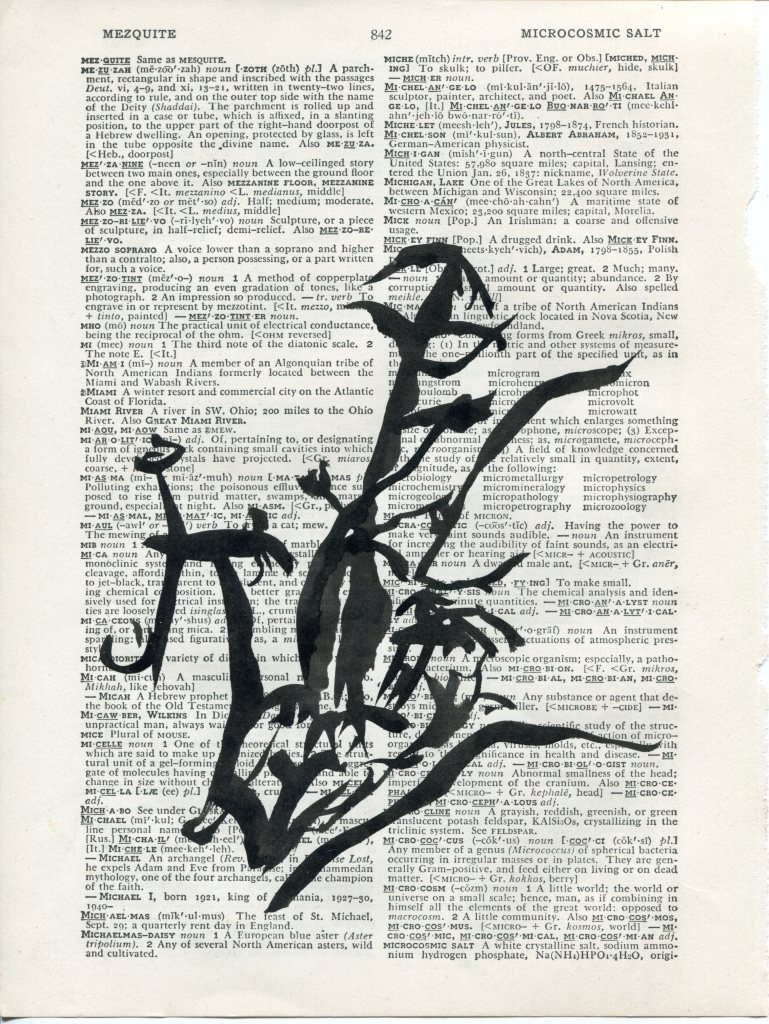
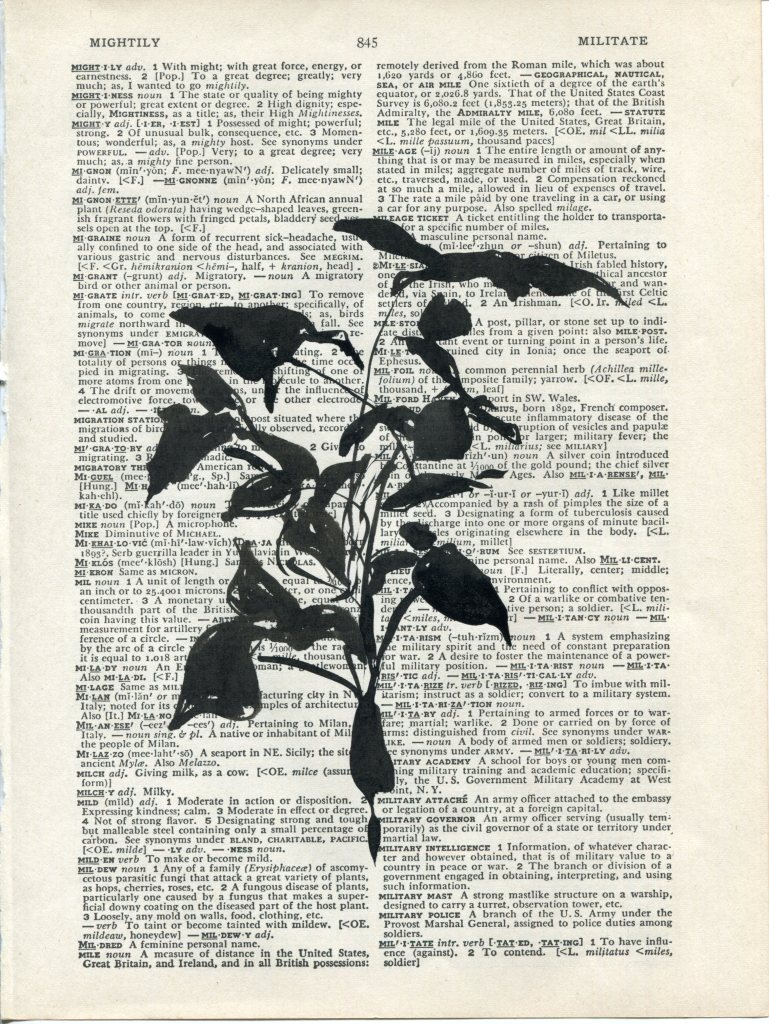
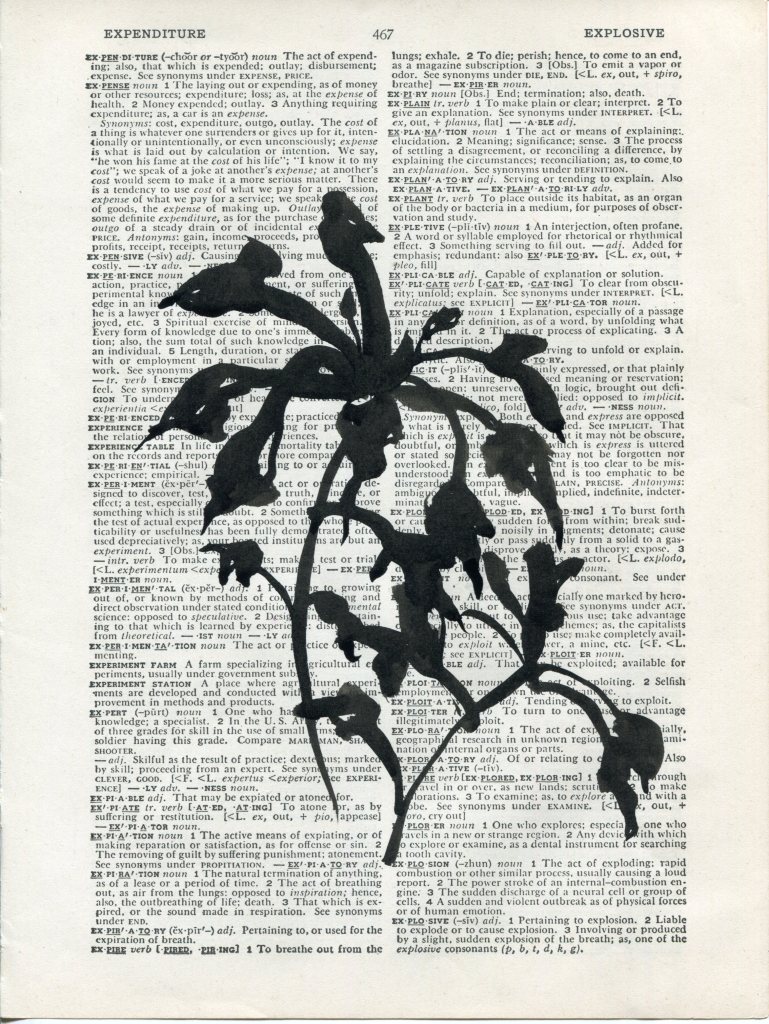
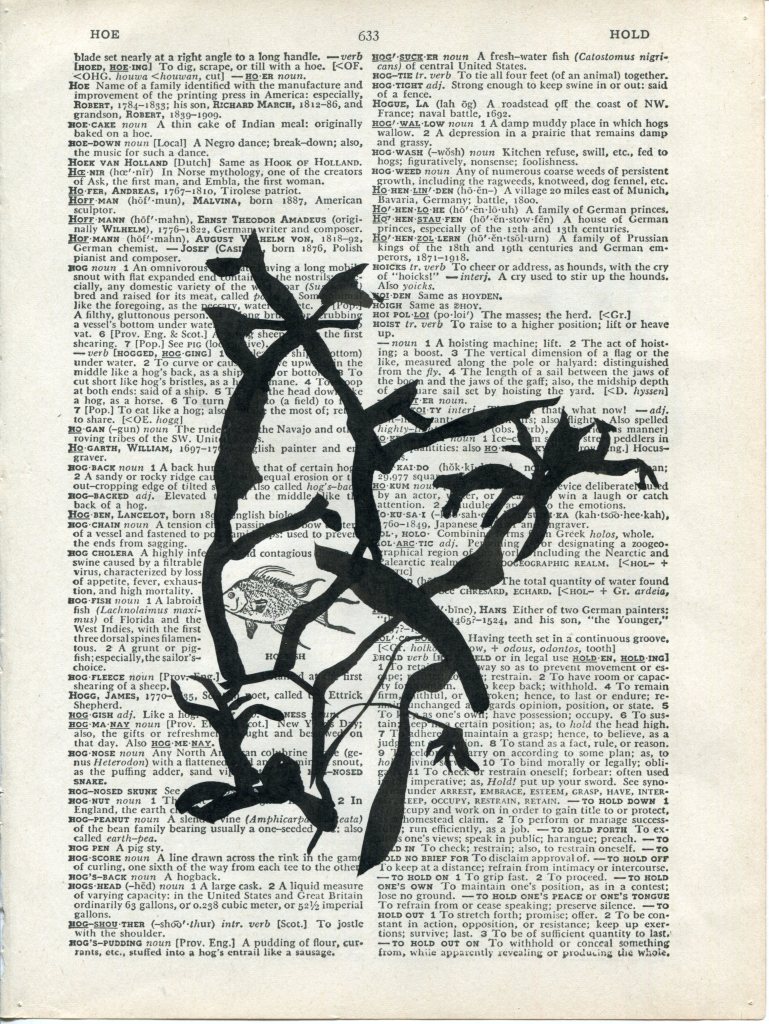
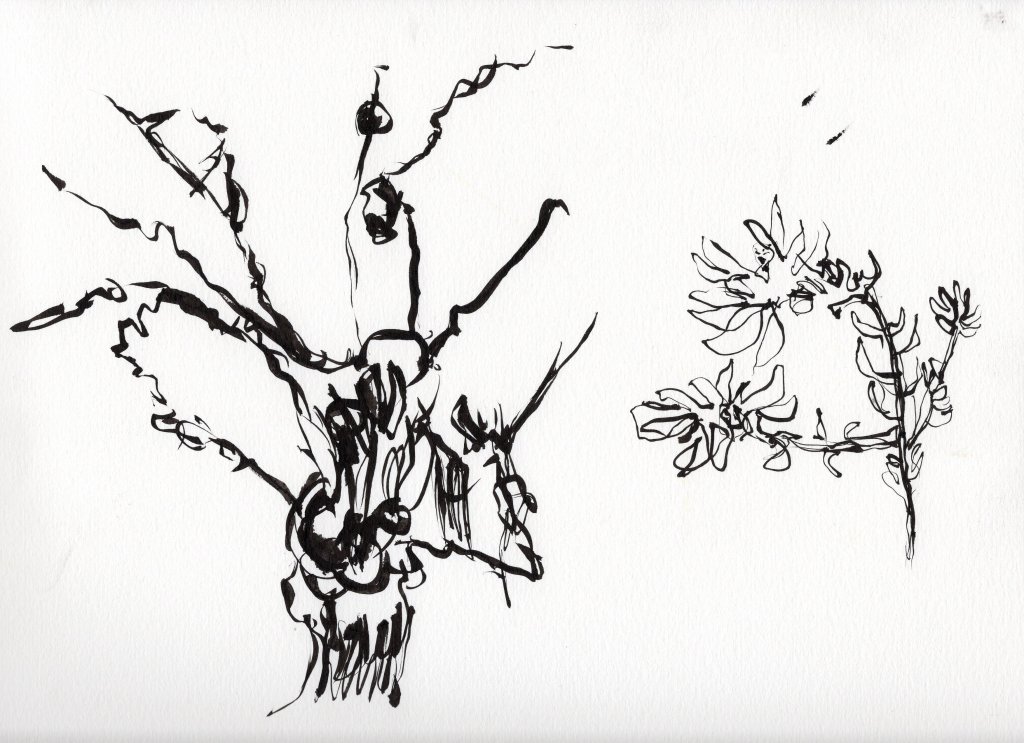
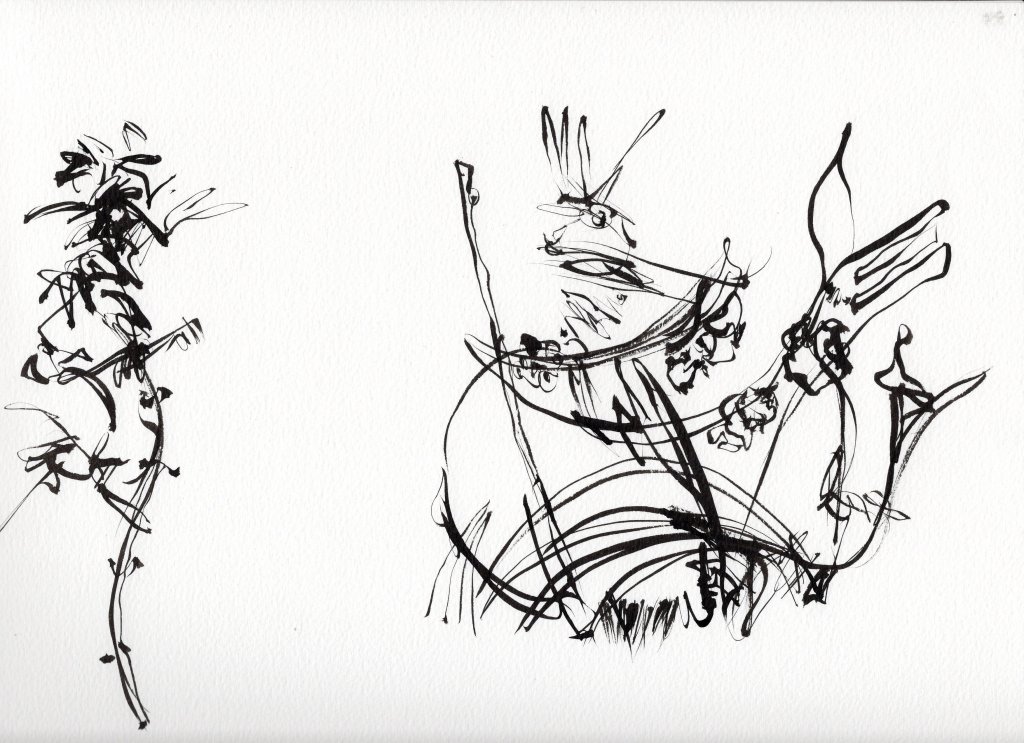
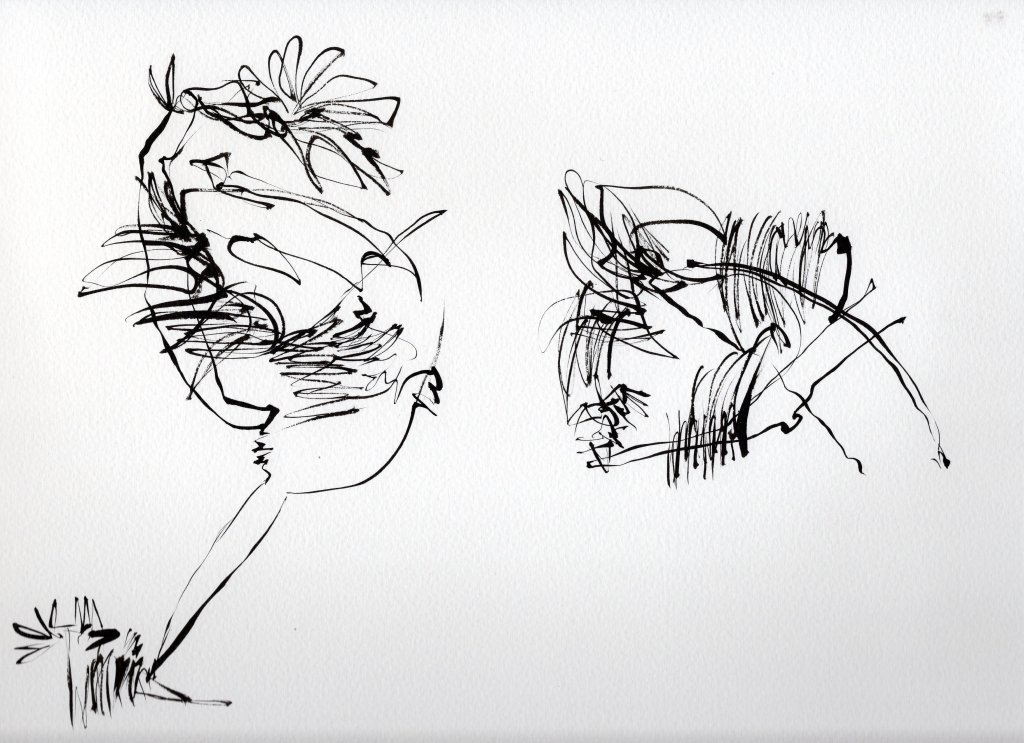
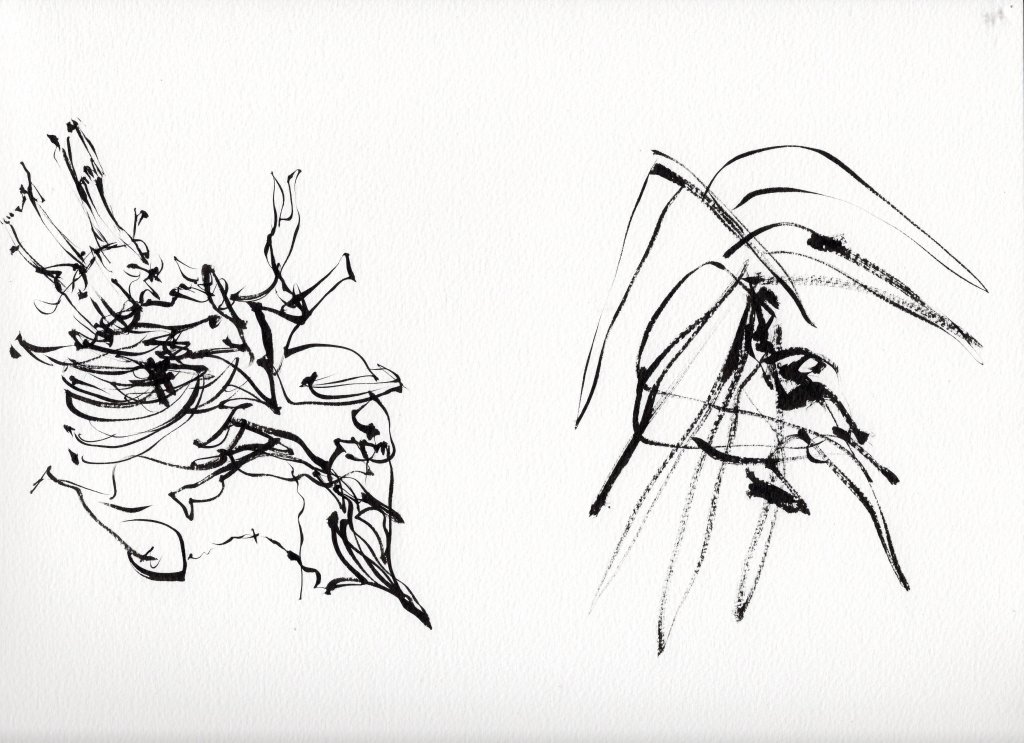
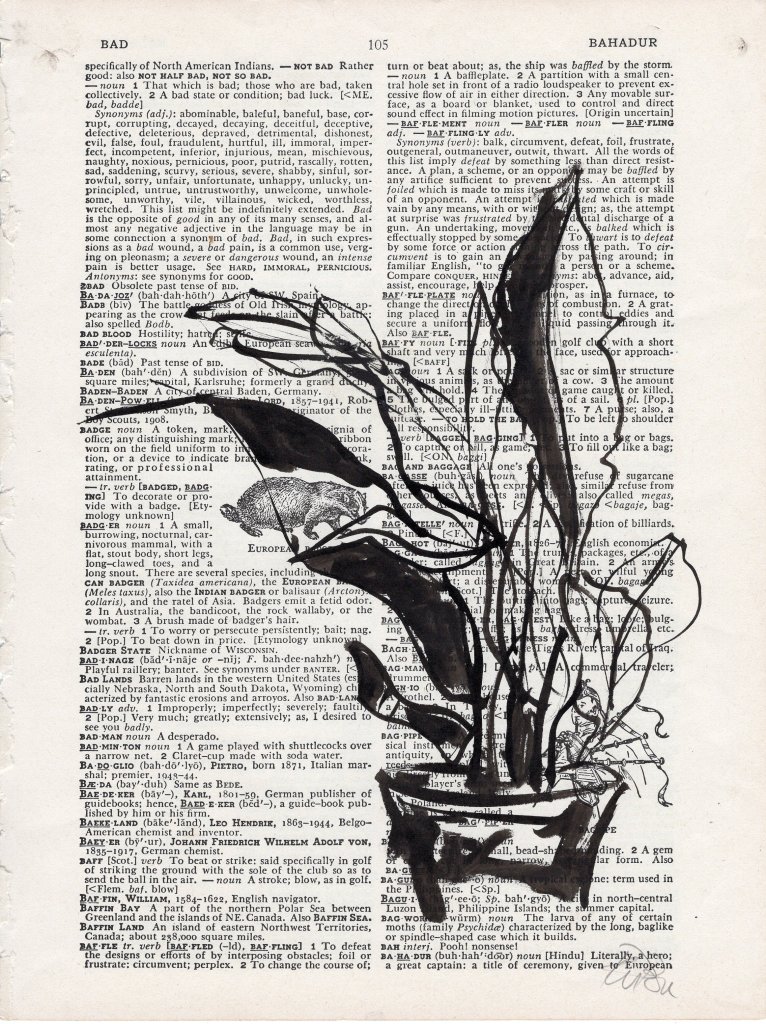
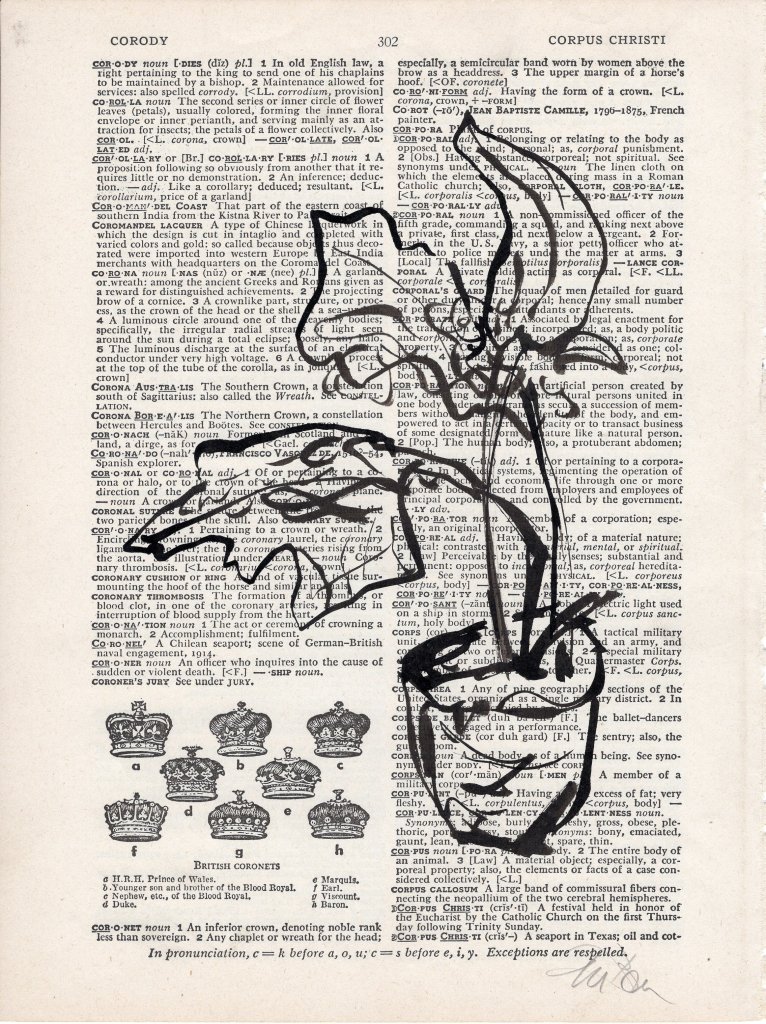
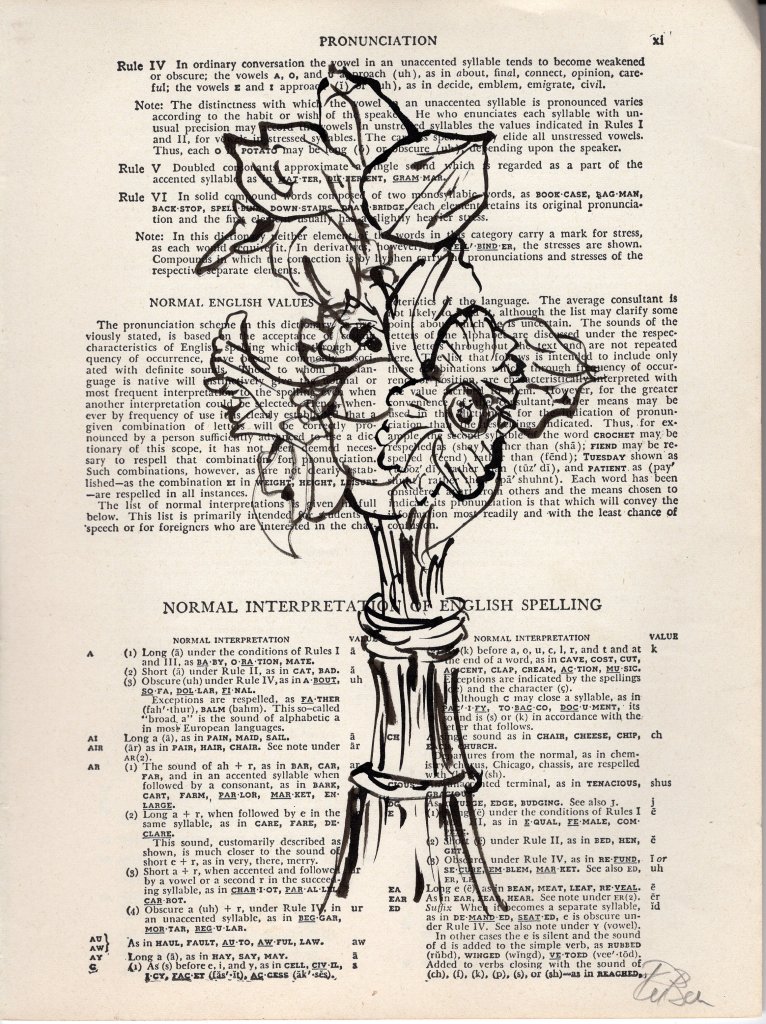
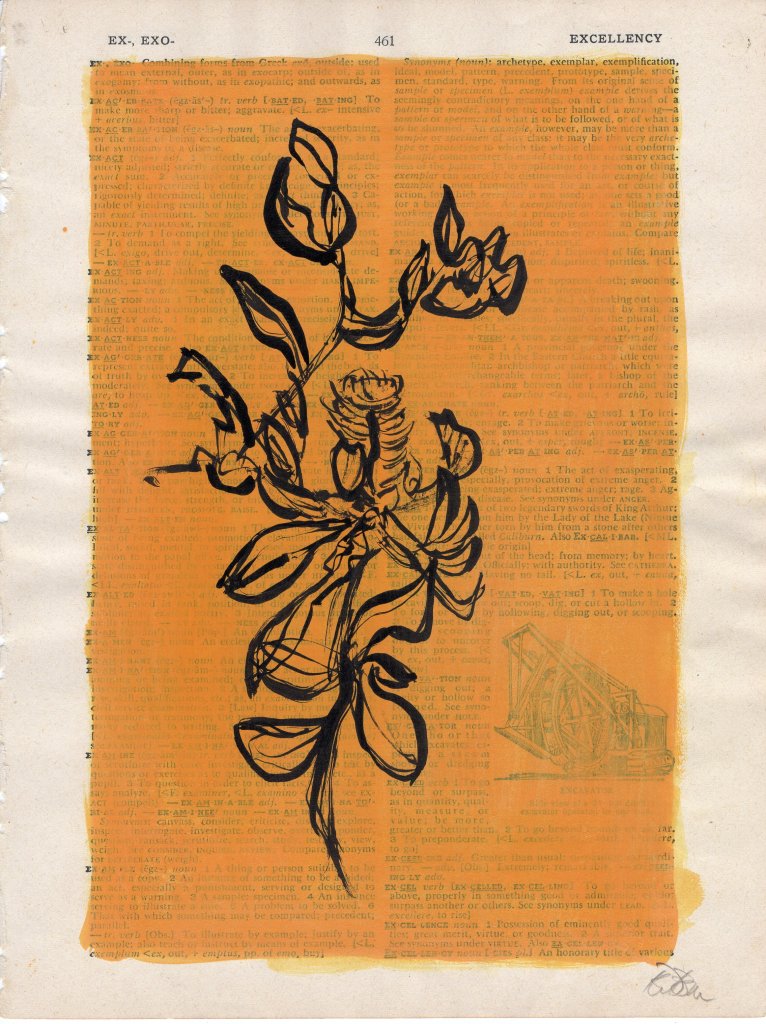
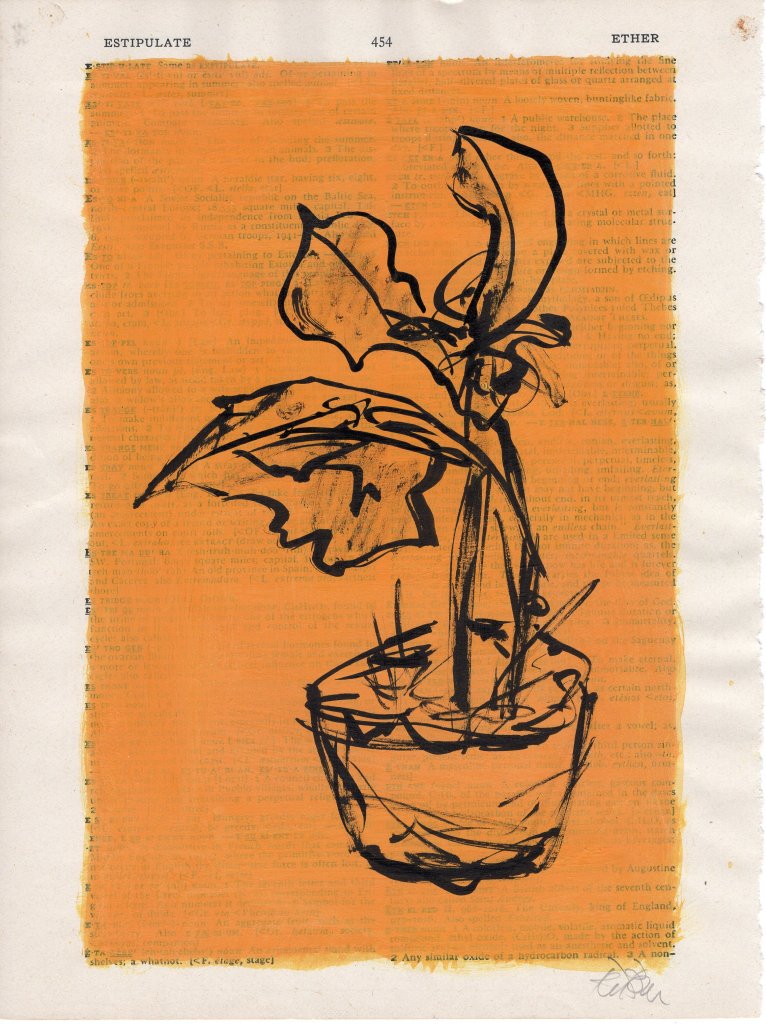
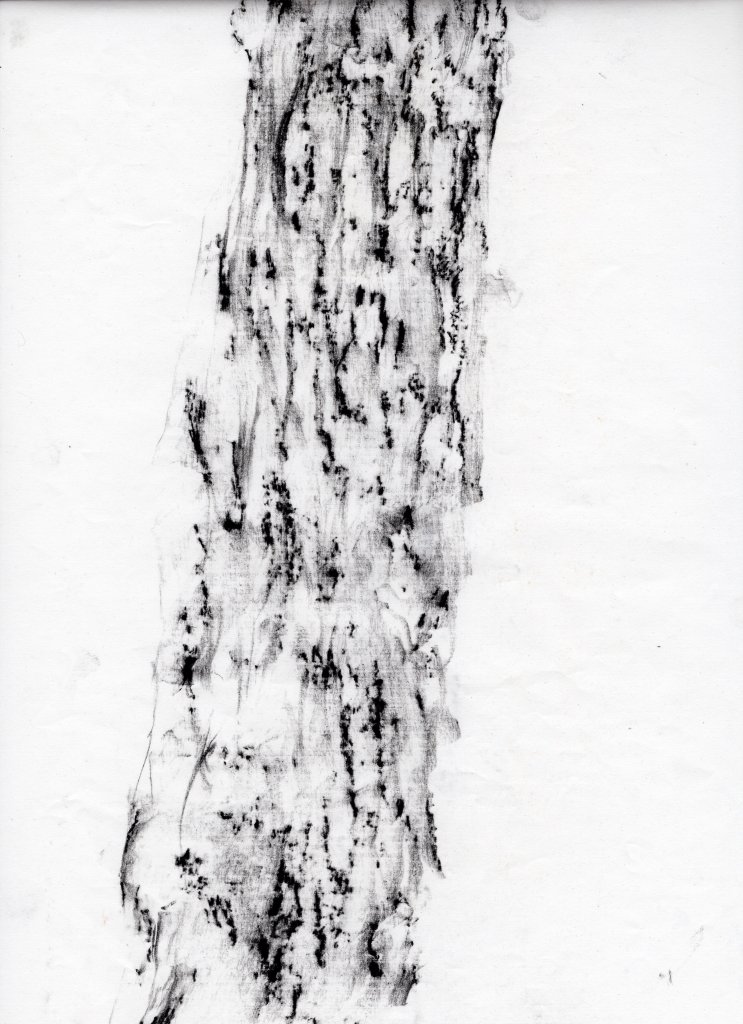
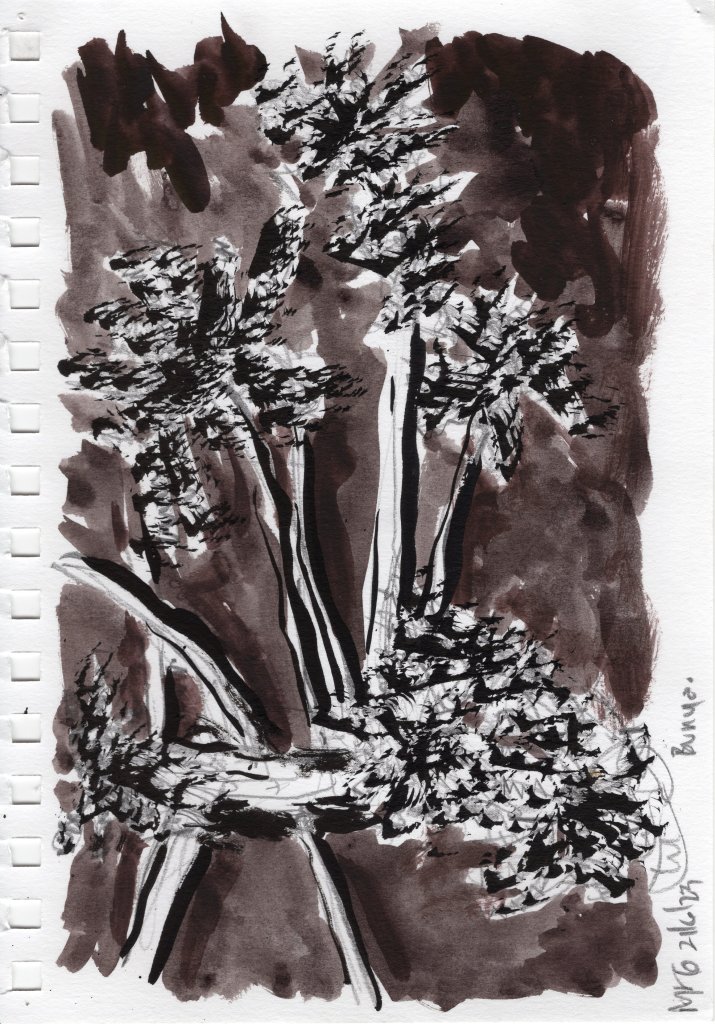
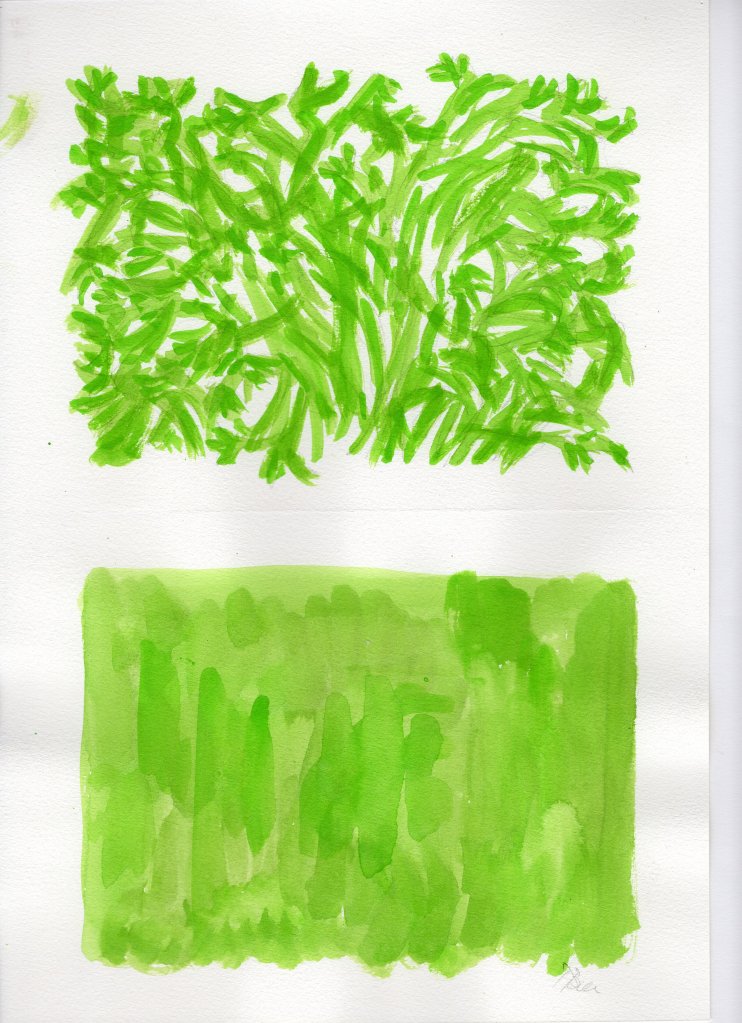
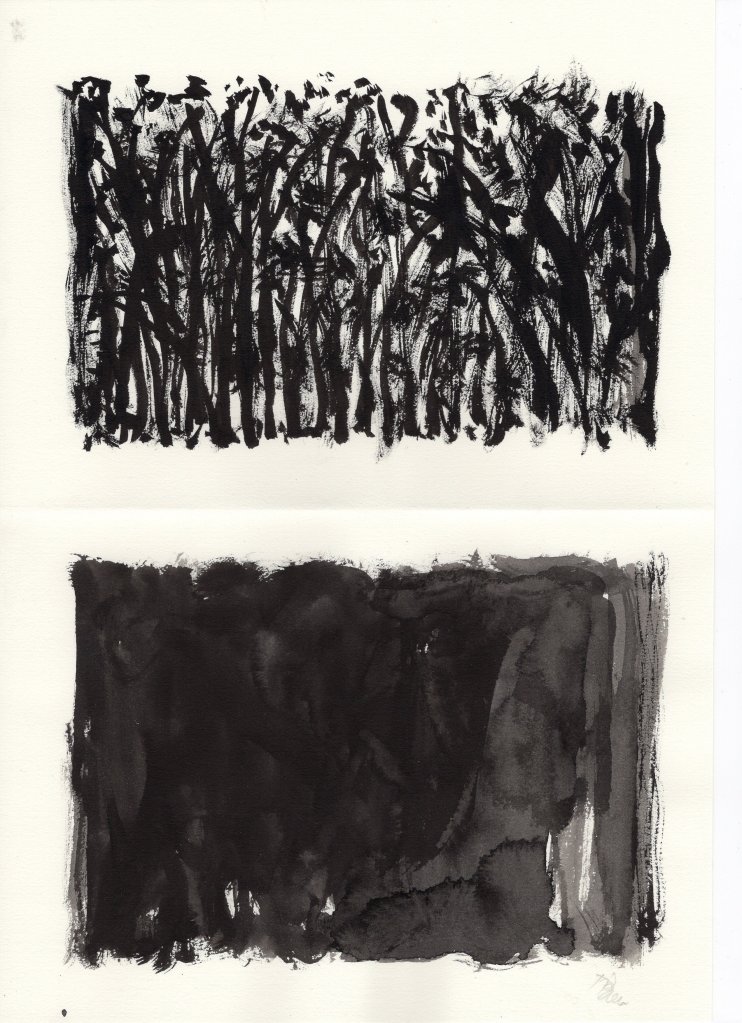
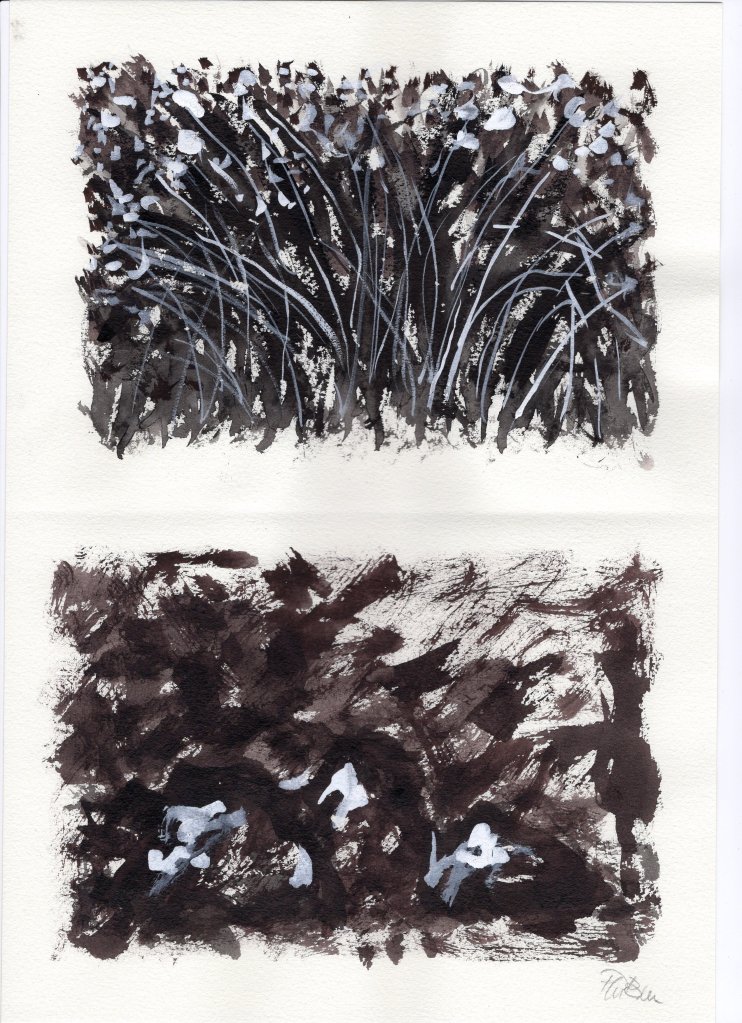
These drawings were done in my home studio while the rubbings were done in stunning virgin scrub in Gumburra [ SE Queensland] during a weekend rite of passage retreat for my eldest grandson. For the rubbings I used Japanese paper and charcoal – easily carried to the camp site – and for the other drawings I continue to experiment with graphite, ink, gesso and charcoal on old dictionary and/or encyclopaedia pages [ 1950’s printing] I occasionally use standard visual diary paper [300gsm.] The green and black ink drawings are of a majestic succulent plant at the door of my studio given to us by my late mother, Myrtle Breen. Following Ketnridge’s lead, I have added red pencil to the smaller gesso and ink drawings. There are 12 drawings in each set except for the black and sepia ones.
The tree rubbings on the retreat were brought about because my usual go-to is to use my iPhone camera to capture images and it was a “no-phone” weekend event! Brilliant! It forced the issue to hold a non-digital memory and to consider other means of mark making. It was an extremely satisfying activity.
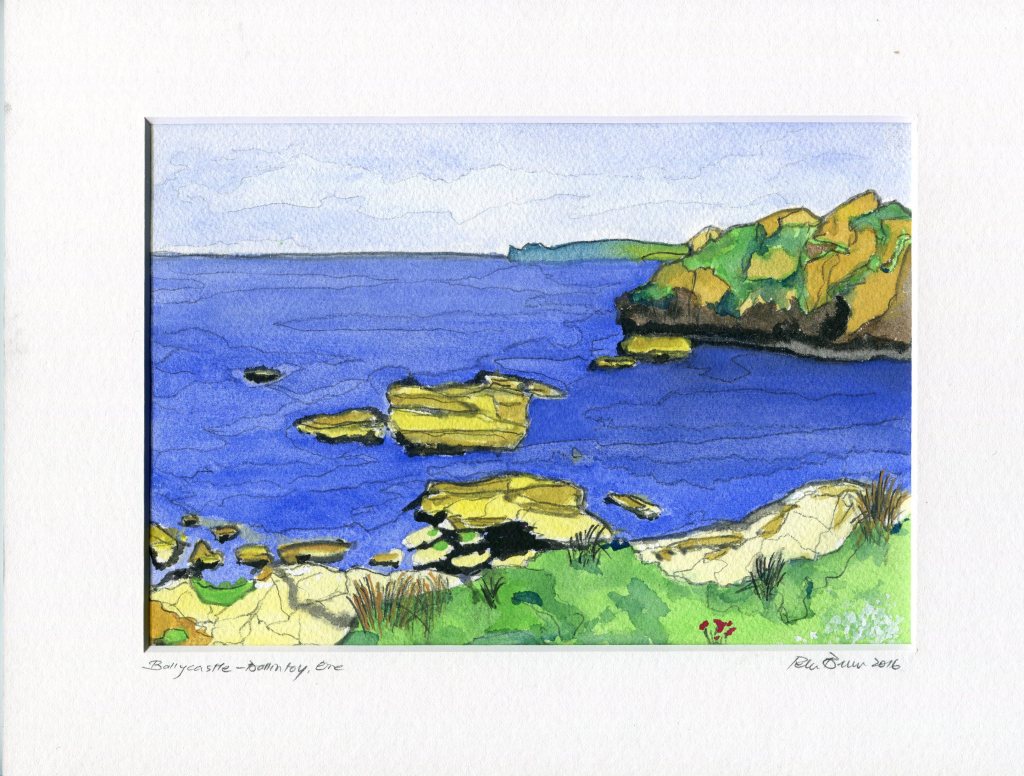
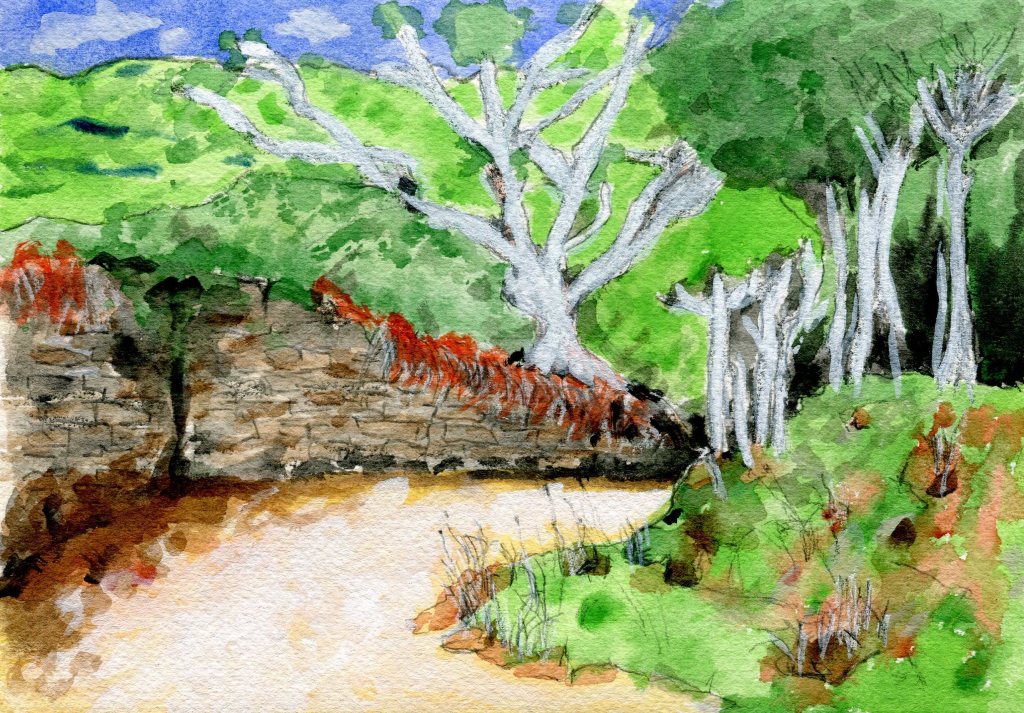
Ballycastle, Balintoy, EireBeaufort-Black Valley, Eire. ConnemaraLetterFrack-Healther Hills, Eire
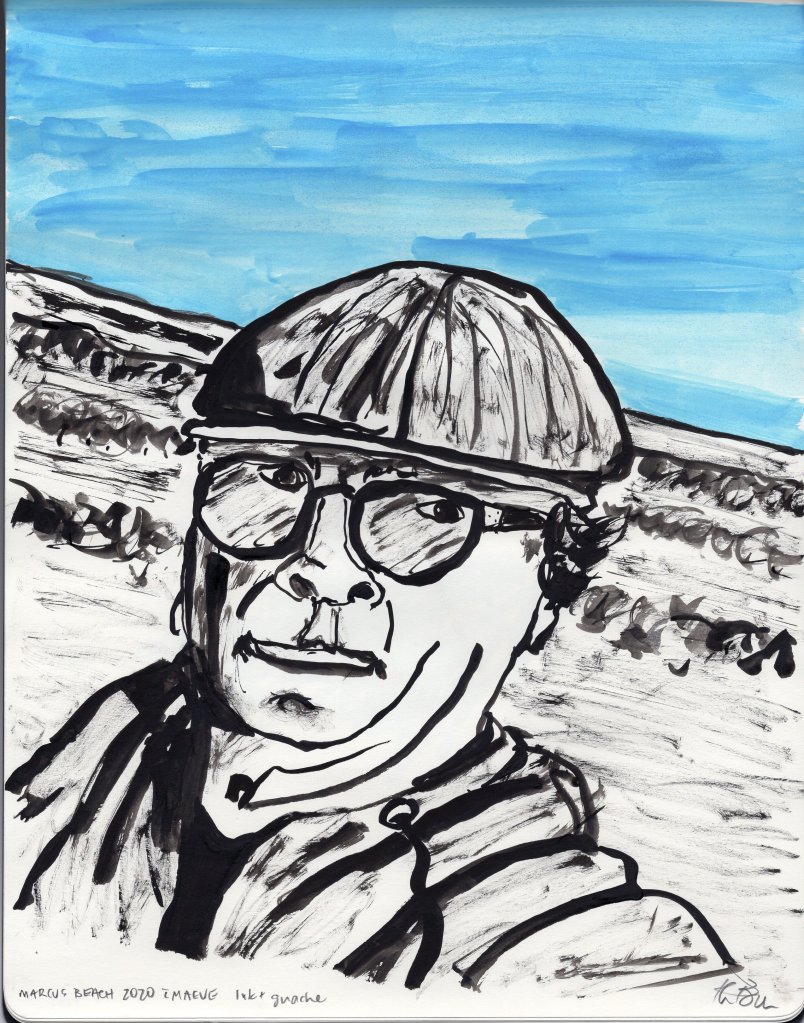
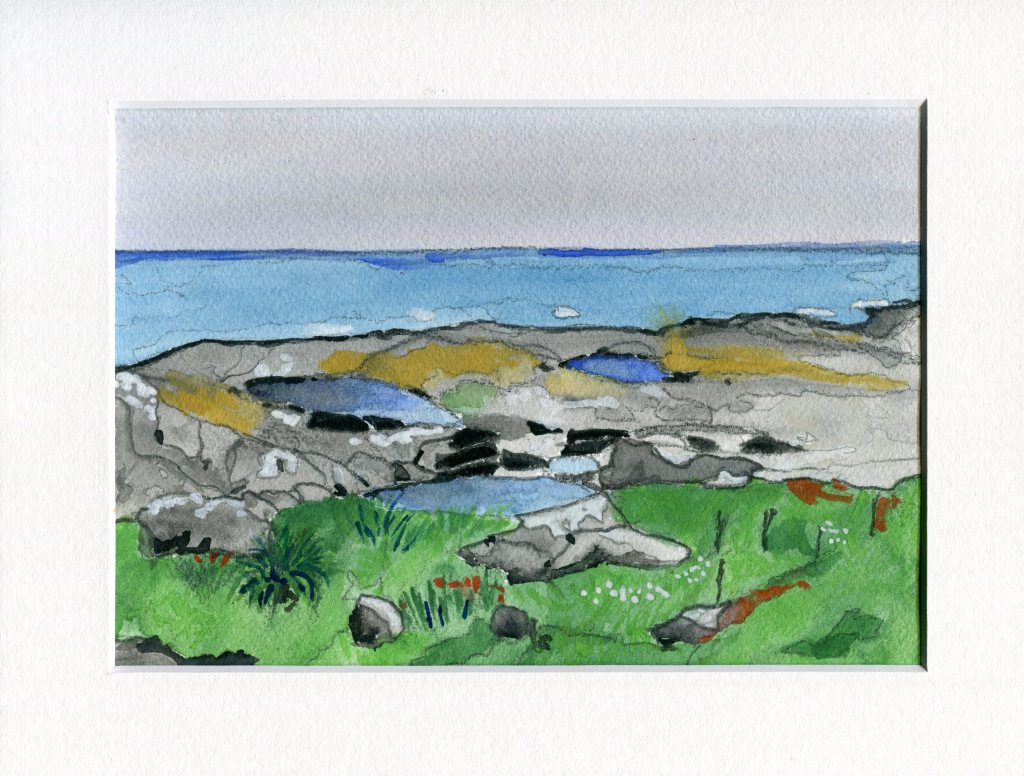
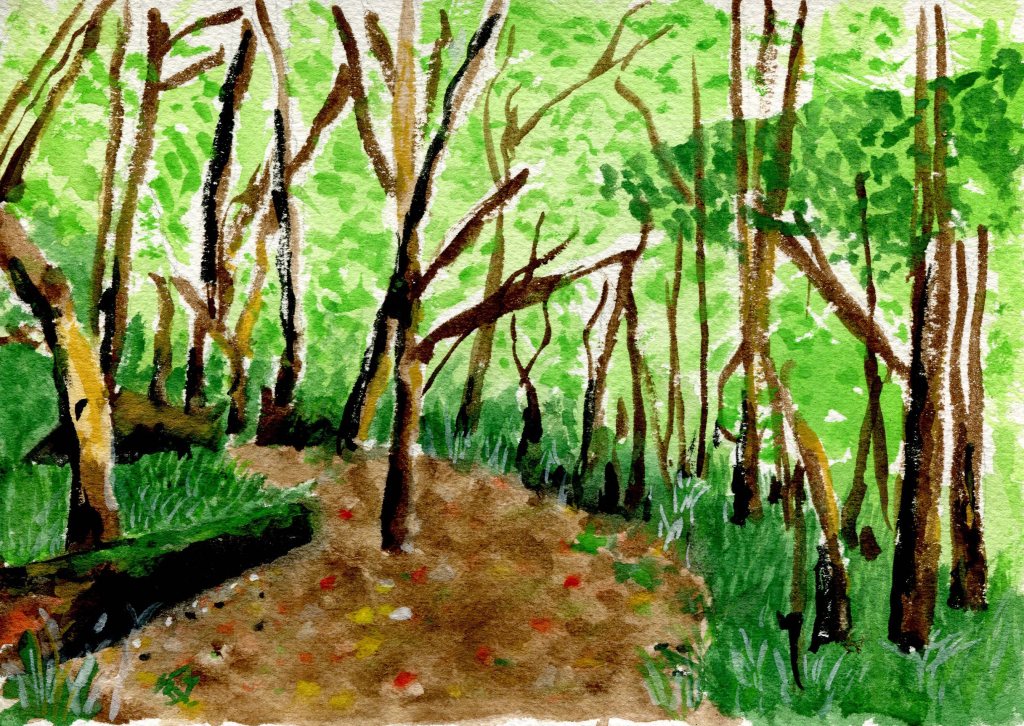
In 2016 I visited NI and Eire with my wife [ Maeve] and 3 out of 4 of my siblings in a trip to celebrate my brother Marcus’s 60th birthday. We travelled from Australia, he from Boston [ with his wife, Debbie].It was my intention to make a record of the trip in some drawings and water-colour sketches. This was before I had decided to focus my work on graphite, charcoal, ink and relief print – albeit not exclusively.
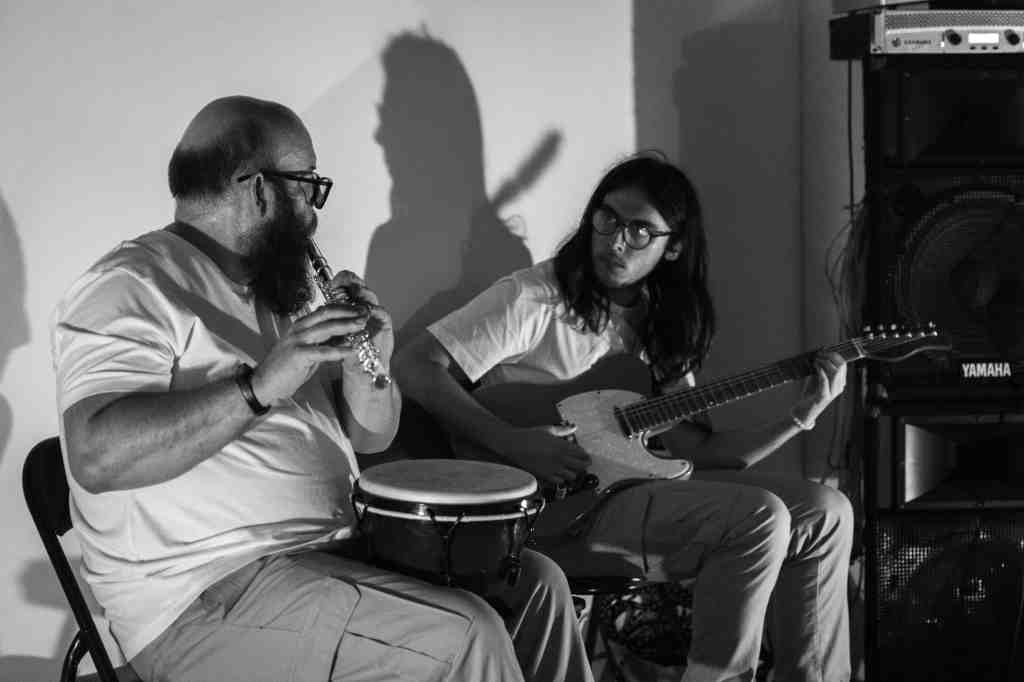
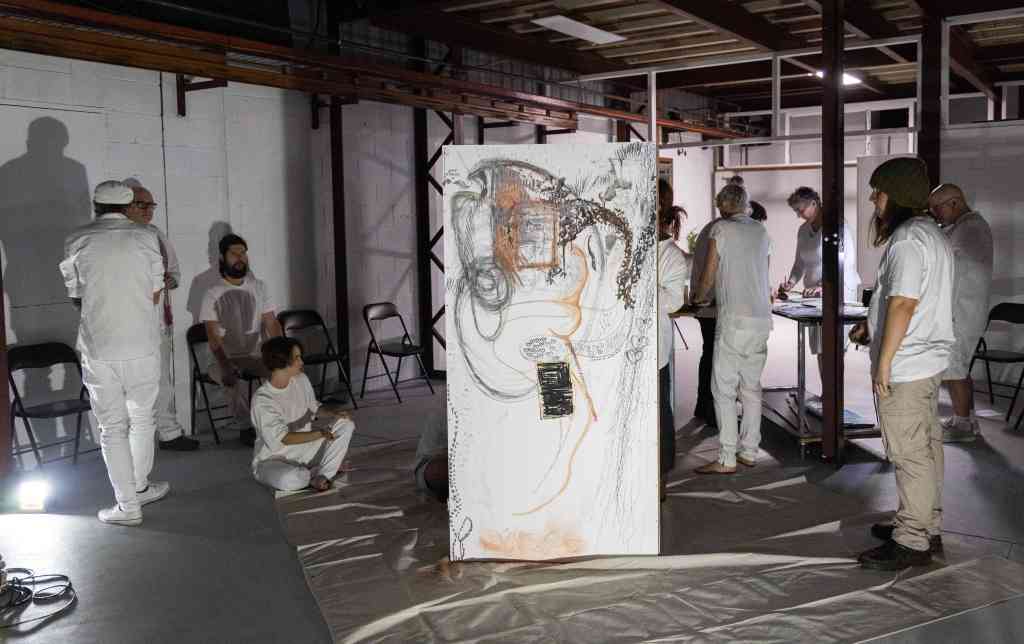
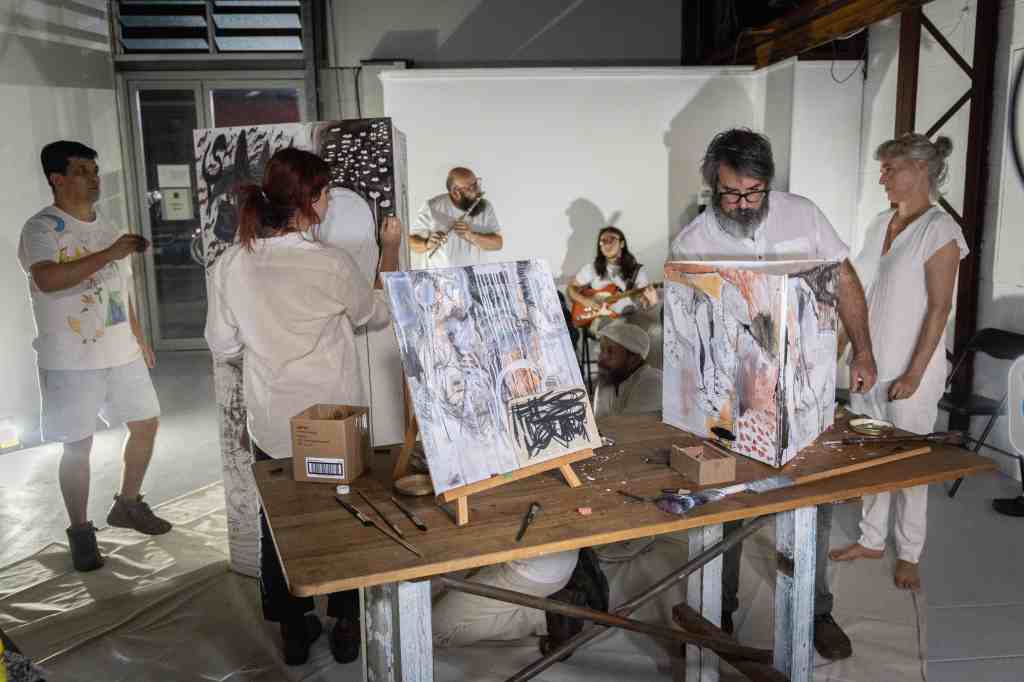
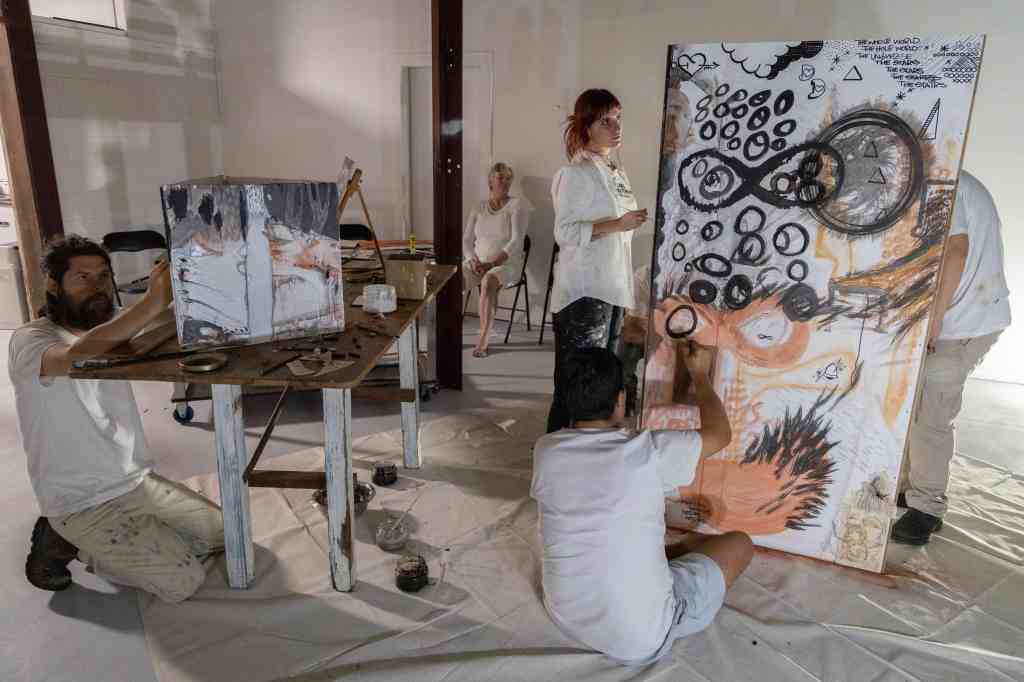
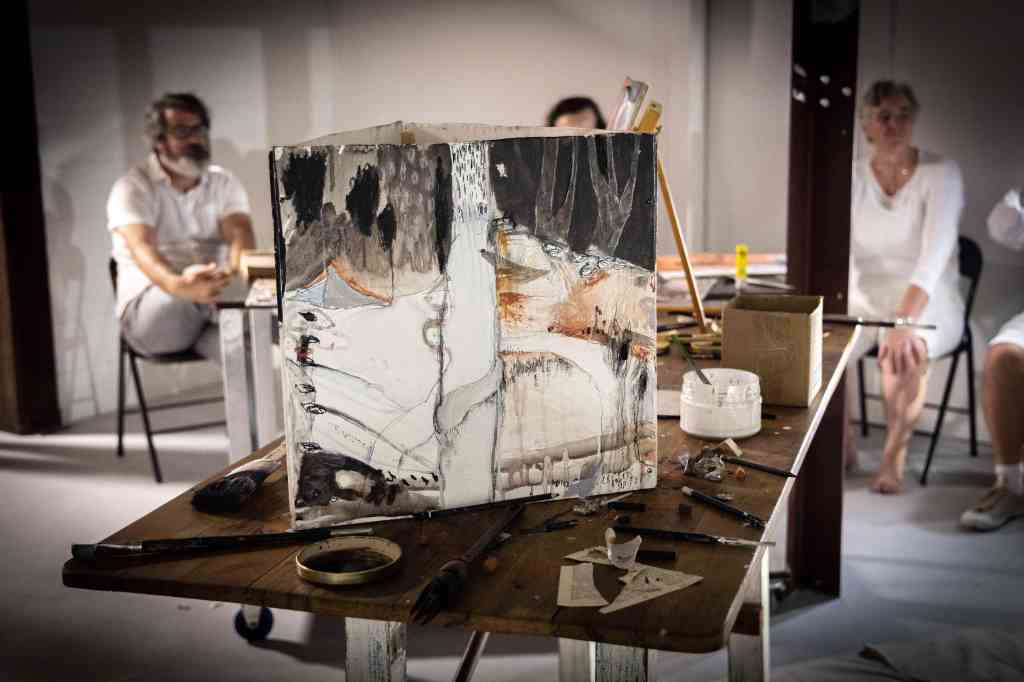
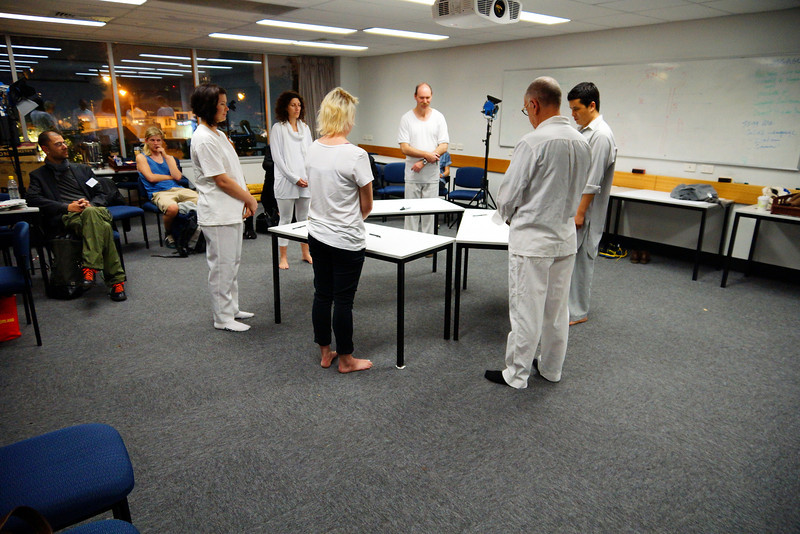
White Silence is an ongoing experiment of mine in slow art, slow performance and improvisational music with a small group of willing artists and musicians in a space conducive to such experiments. The underlying driver here is my religious past and the claims of all kinds of spiritual and religious experiences – not only religious and certainly not only Christian. Consider the whirling dervishes of Islam. The euphoria and deep affects of a range of crowd events including rave parties – no doubt fuelled by speed and other drugs – indicate if nothing else a hunger for inner calm, escape and euphoric moments. I continue to explore this “hunger” and especially for me as somewhat of a sceptic and with a “non-pentecostal past” – but a strong pastoral and lay religious one – to see if silent collaboration with improvisational music performance and art making within such a social group construct produces something akin to a spiritual experience. Which is what? Our experience is, so far, over 11 years, that the descending of silence and stillness is profound and almost transformative while the finding of flow and rhythm within the group during the experiment is as it were a mountain stream finding its way through rocks and reeds.
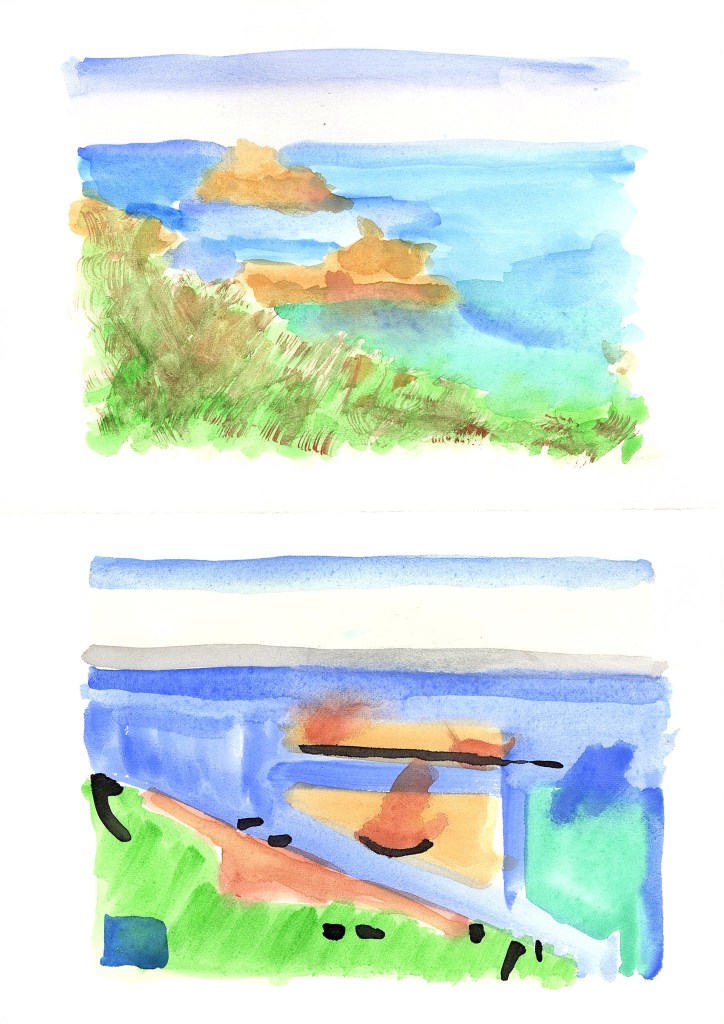
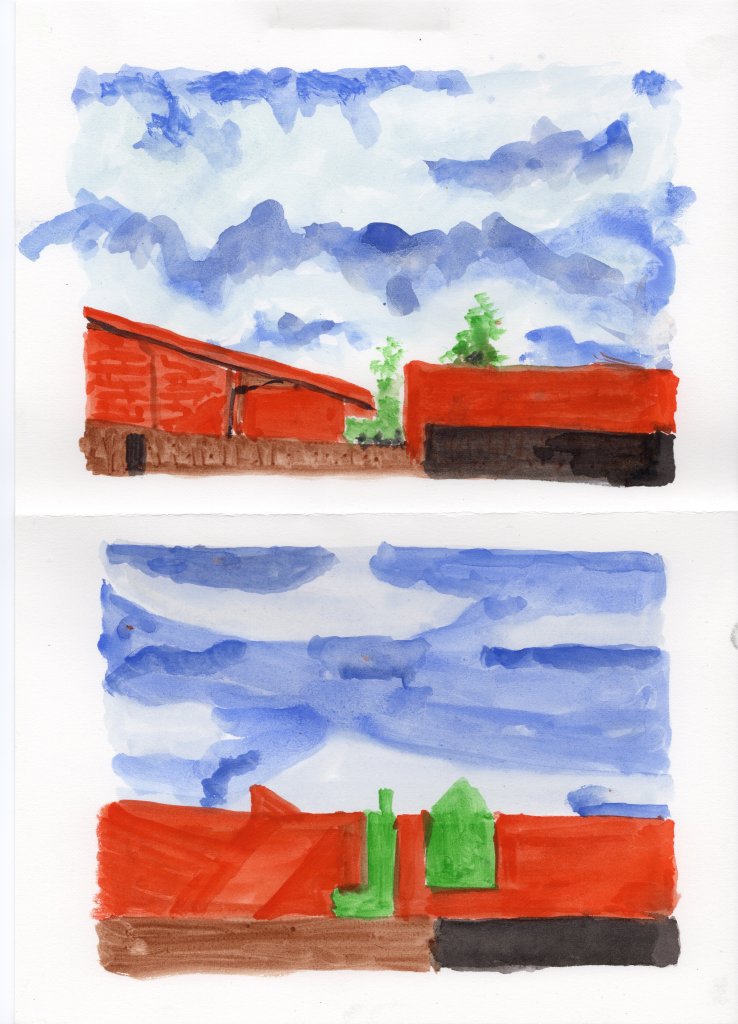
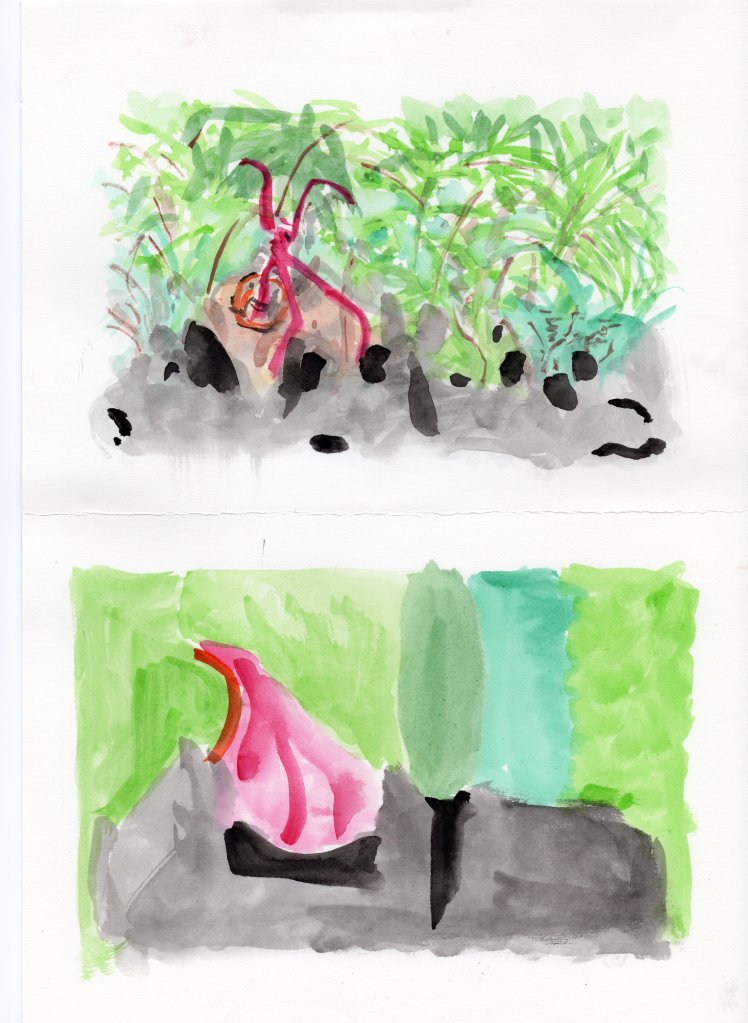
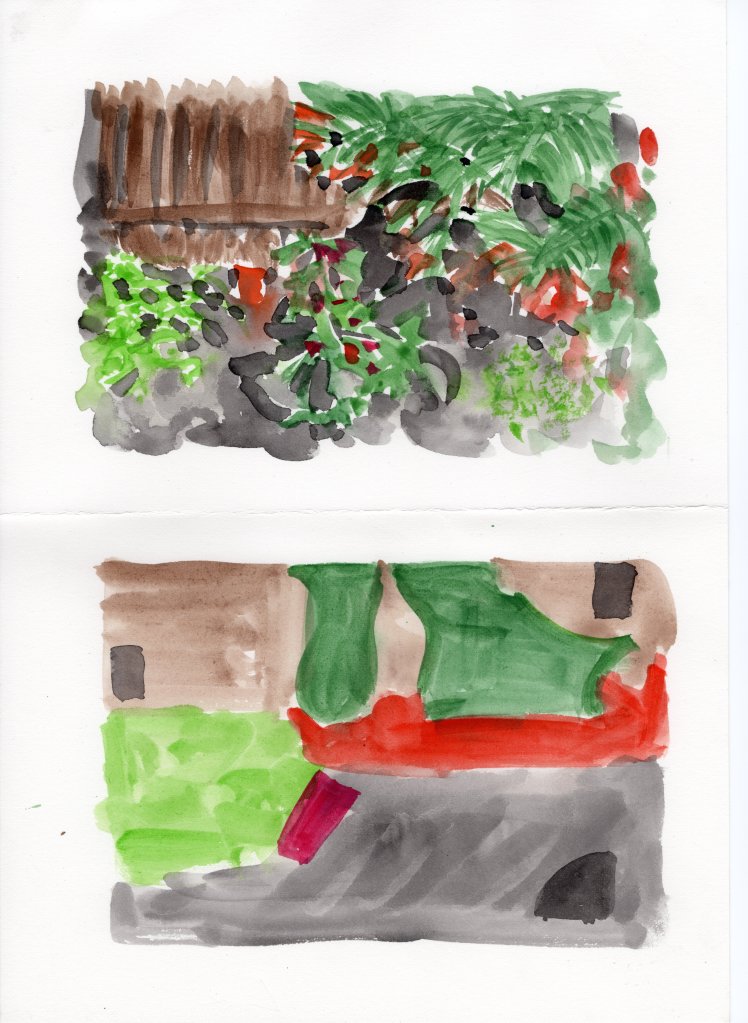
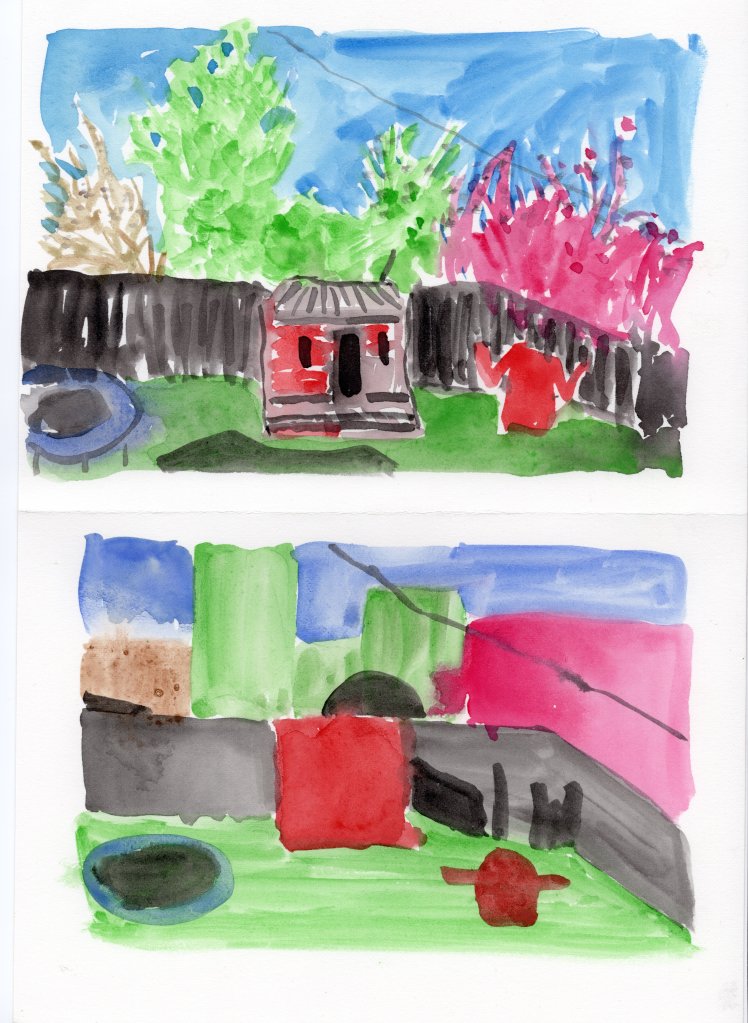
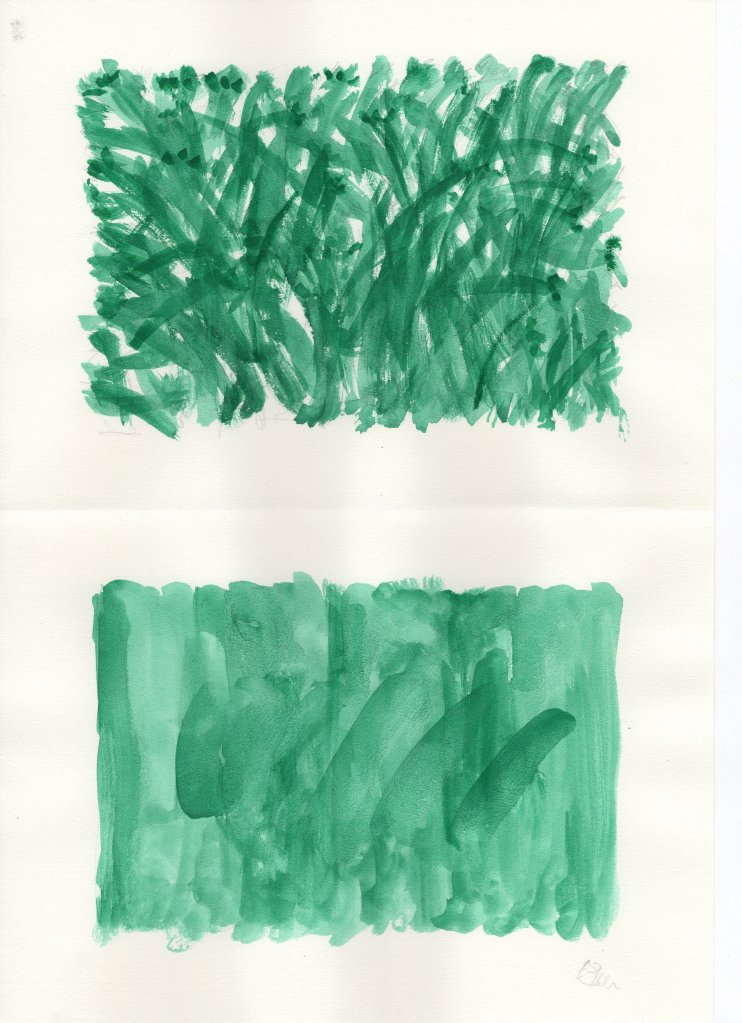
I have been resistant to using anything else than pencil, ink or charcoal to draw with but on a recent trip to Melbourne I chose to make some water colour sketches of the house and area where I was staying and then continued to try this medium when I came home to Brisbane. I bent the water colour A4 page in 2 and sketched the top half as a painterly rendition of the site. Then I rendered the bottom of the page as blocks of colour and shapes.
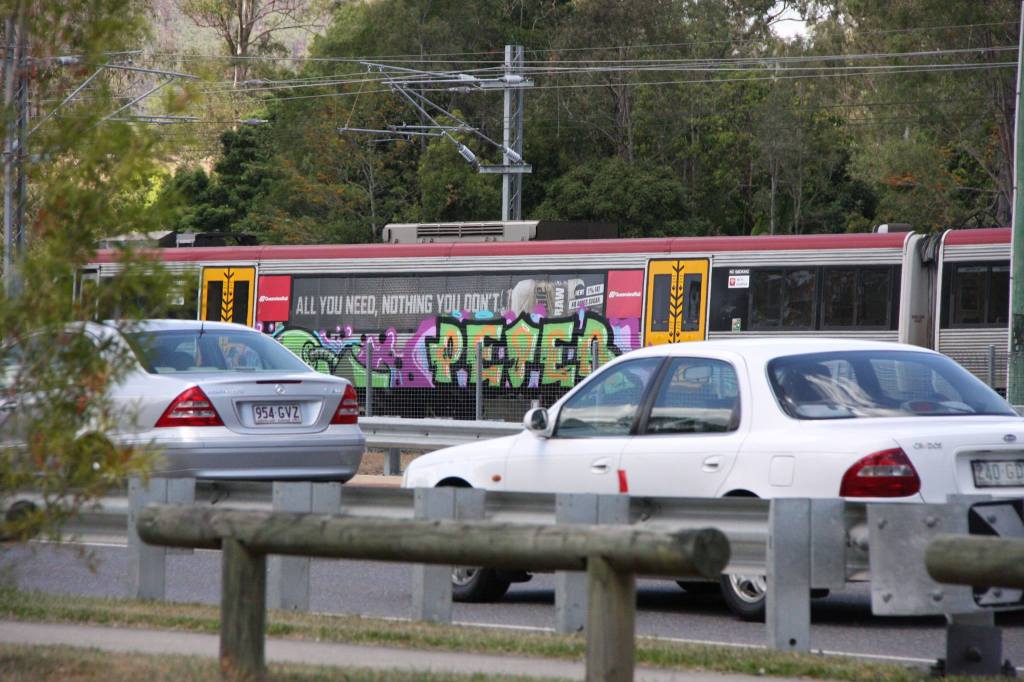
I have been wondering why I draw. I have been wondering why anyone draws or writes poetry or performs and tells stories. Or is a comedian. Or writes books and makes massive sculptures, chooses to be an opera singer, gets a garage band going and graffiti’s the side skin of a train.
This is a can of worms kind of question. For me, artists, arts funding and the arts consuming public have layers and side roads and dark alleys. There are shouting artists, silent artists, annoying artists and huge ego artists. Emerging artists [ I think everyone is] and mid-career artists – what does that mean? – and so probably end of career artists. It’s pretty good that the arts are a bit more “around” while the ABC has subsumed the art show into another “Creative” site. Blame the internet and instagram I guess.
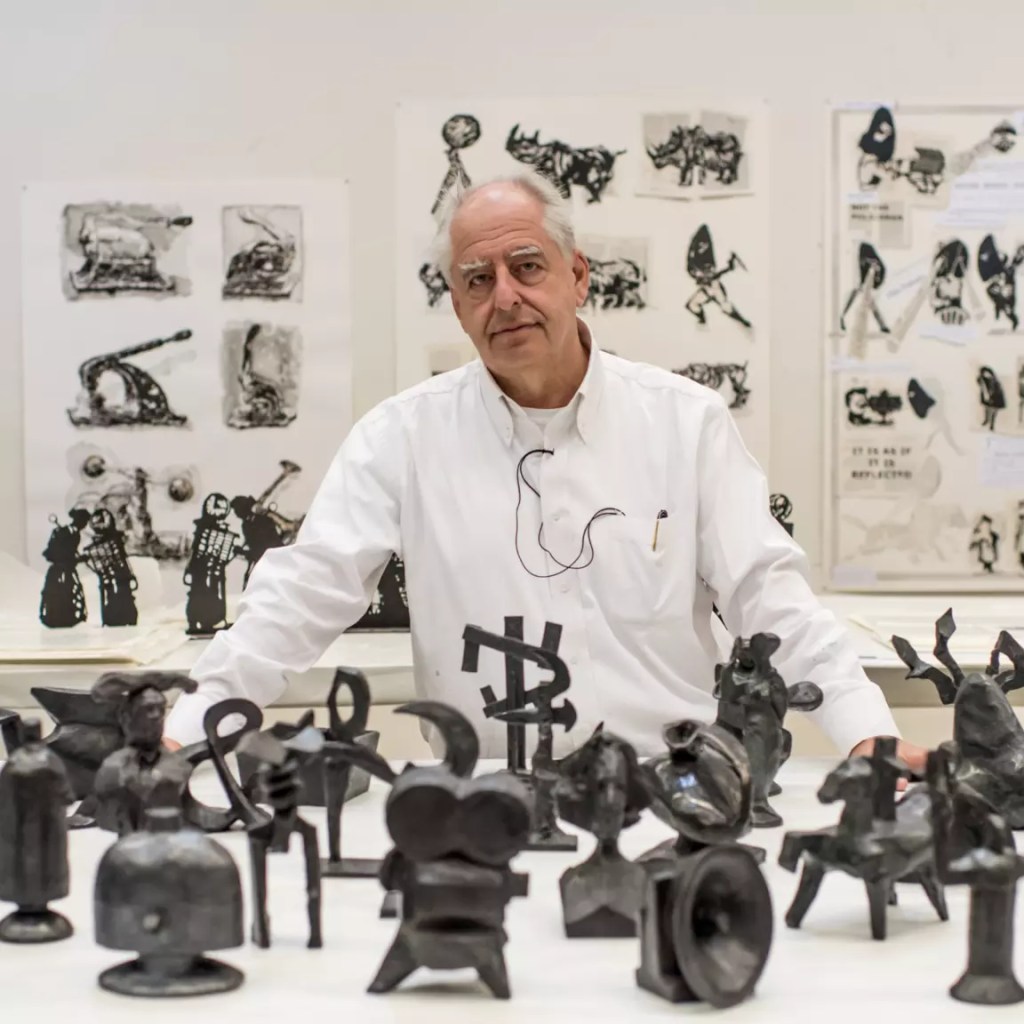
But I am working to be an artist that makes art that I love and do the hard yards of making to improve the message from brain to hand. I read and look at Kentridge’s work almost daily – I collect his books, can’t afford his art- and read up on Ai Wei Wei and have discovered a new guru in Andrey Tarkovsky. What a film maker poet! And graffiti writers – concept, risk, mark making, ephemerality. All these are my teachers.
I am learning from life and focussed on life givers. It is a journey with no end.
[The above photo I took while the Lord Mayor of Brisbane was opening a skate park mural I coordinated with Jugglers and BCC in 2014. A moment in time that would never be repeated again when my name slid past the opening event.]
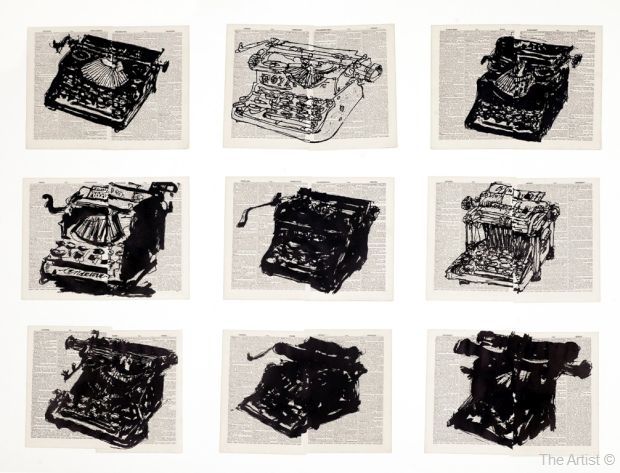
William Kentridge 030 – Final Artwork – Universal Archive (Nine Typewriters). The evidence was collected from this work. Image copyright and permission of the artist
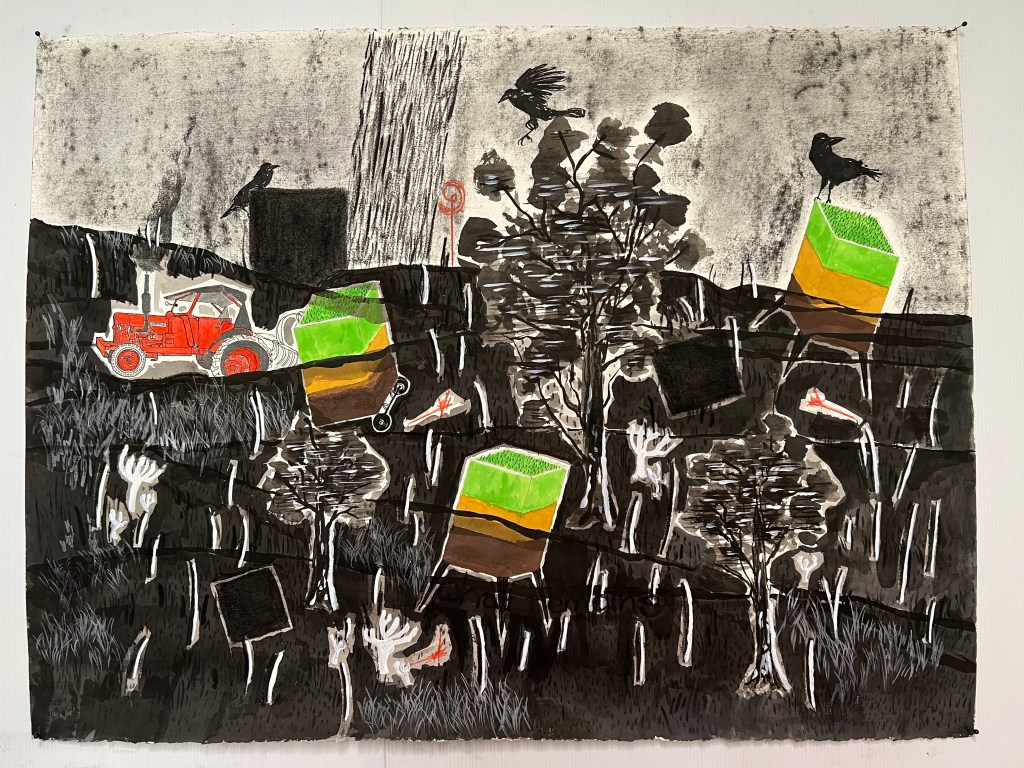
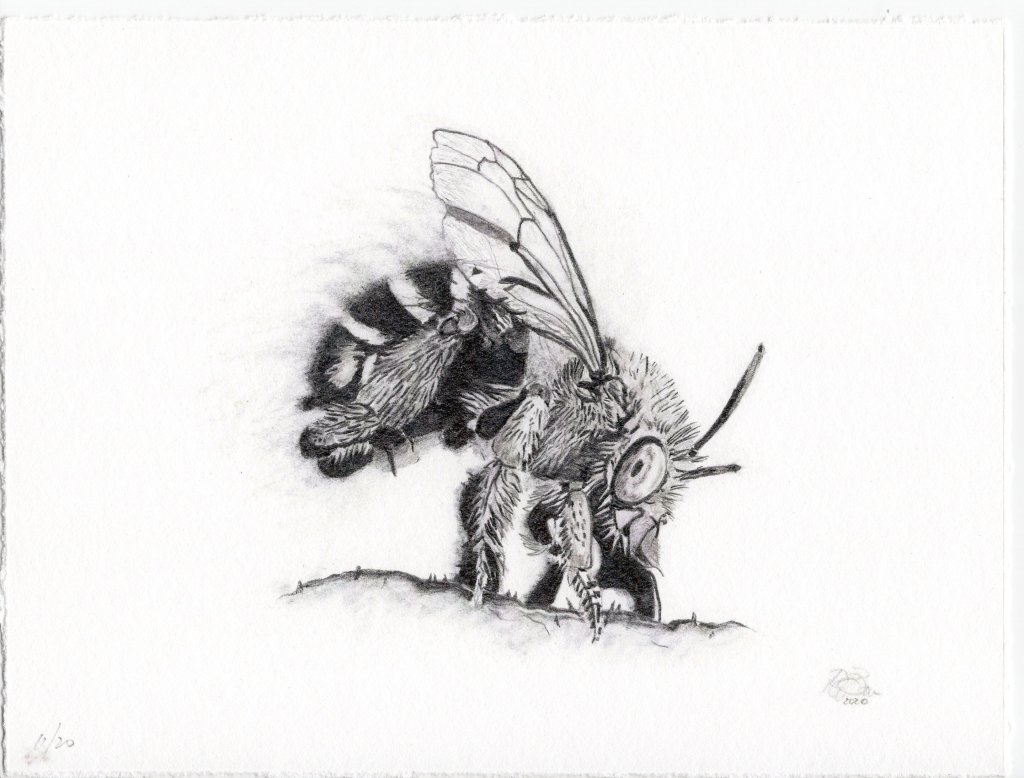
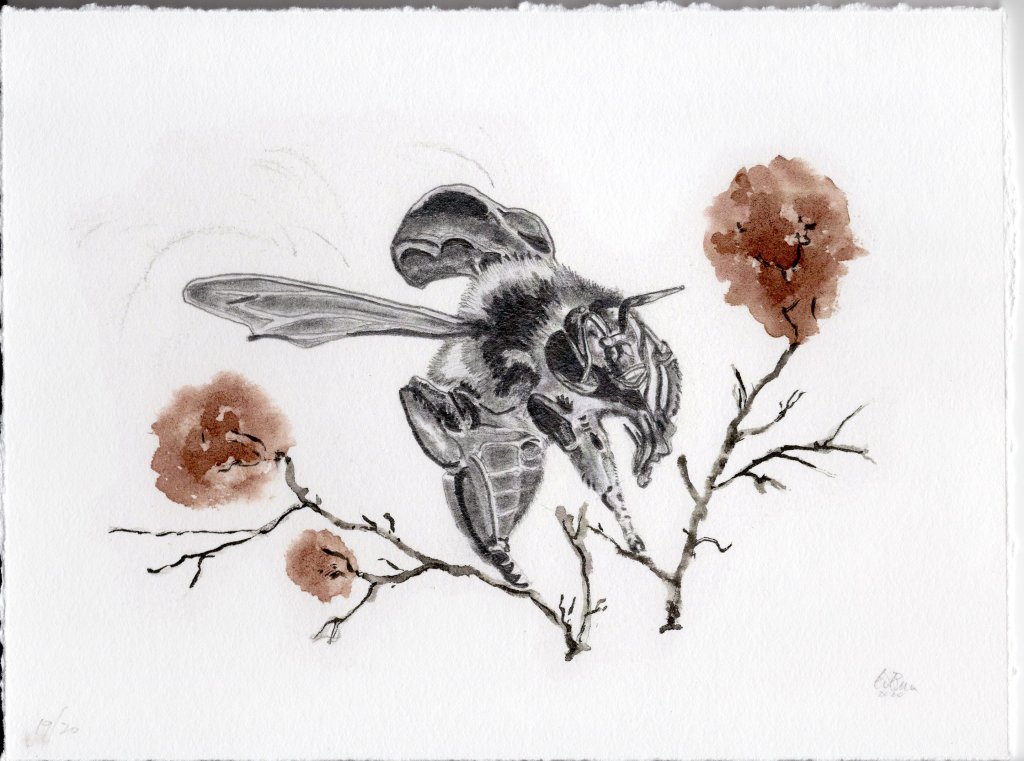
In 2020 I installed a body of work for my first solo exhibition – “All the bess are [not] dying” – outside of the comfort of the space I was used to – Jugglers Art Space, 103 Brunswick Street, Fortitude Valley. We sold the building to the YMCA in June 2018, moved out and I have continued to run a stripped back Jugglers Art Space Inc [JASI] without a graffiti space, studios, Paint it Red music events, the Marie Eillis OAM Prize for Drawing, public art murals and White Silence. The Stairwell Project, our studios at Tarragindi plus my own enjoyable art practice – and a busyness with family during COVID-19 – have taken large slabs of time. But COVID-19 gave me space and time to draw, and to prepare an exhibition with long stretches of reflection to respond to global warming on paper with prints and drawings.
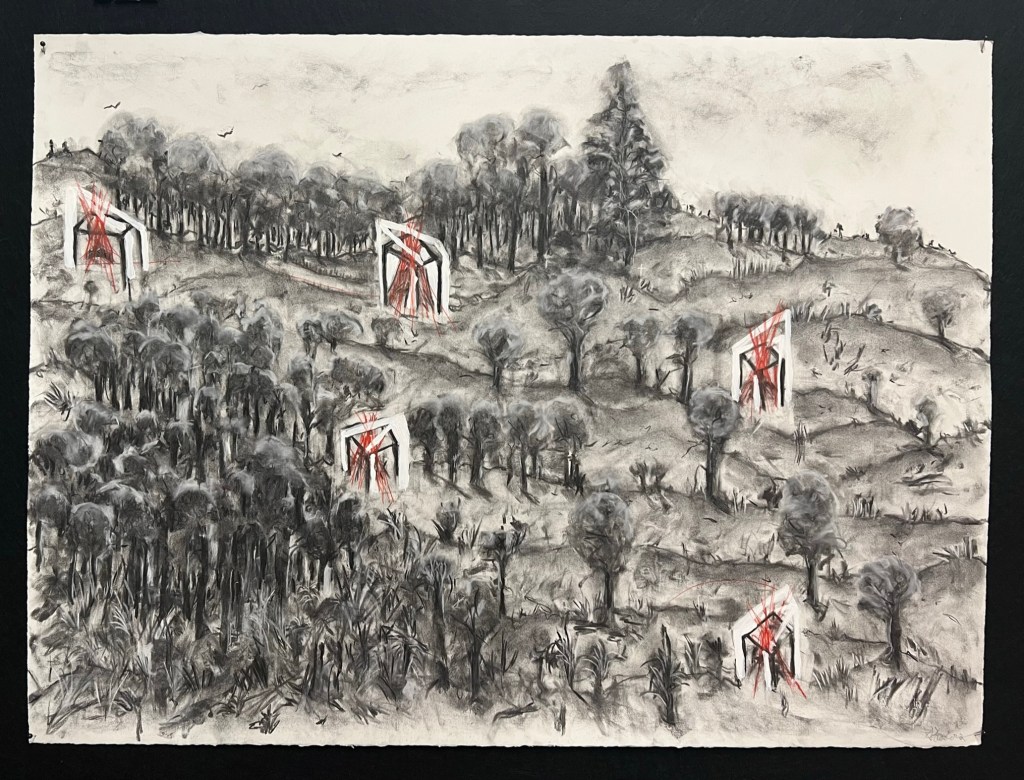
What is happening to the bees? What will happen to the forests now burnt while action is stifled?
In 2014 I curated a White Silence event at The Shed which was a marvellous massive industrial shed on the banks of the Brisbane River that Jugglers leased for 3 years. This intentional non-verbal group art making event grew out of an ongoing desire of mine to explore existential experience within a construct – a construct designed to evoke a kind of slow dance response to a specific music, spatial and art making environment. Would a silence descend, would it capture us, would there be a singular moment of being transported somehow without drugs, hypnosis or alcohol?












































 Peteskibreen's Blog