Peteskibreen's Blog

Text and Image story telling – Art,Love,Spirituality,Oneness

  • Charcoal – the ideal medium

Independent existence?

Posted by Peter Breen on October 3, 2024
Posted in: Uncategorized. Leave a comment

“The misconception which has haunted philosophic literature throughout the centuries is the notion of ‘independent existence.’ There is no such mode of existence; every entity is to be understood in terms of the way it is interwoven with the rest of the universe.”

– Alfred North Whitehead

“I searched for Buddha – the wise one who sees and knows the true nature of reality, the one who understands the cause and solution of suffering, the one who walks in peace, serenity, and liberation. I searched for Buddha but I could not find him. I only found this enlightenment inside myself.

I searched for Guanyin – the mother of universal and indiscriminate compassion, the one with motherly resolve to liberate all her children from suffering. I searched for Guanyin but could not find her. I only found this boundless compassion inside myself.

I searched for Jesus – the one who unifies his divinity and humanity, the one who transcends the dualism of God and man, the one who knows no separation between heaven and earth. I searched for Jesus but could not find him. I only found this great completion inside myself.

I searched for Socrates – the one who questions, the one who investigate all things curiously, deeply, critically and introspectively, the one who ordered his life according to virtue and love. I searched for Socrates but I could not find him. I only found this wisdom inside myself.

I searched for Dr. King – the one who would not claim freedom for himself as long as his fellow human beings languished in isolation, suffering and oppression, the one who fearlessly championed the cause of the victimized, marginalized, maltreated, and forgotten. I searched for Dr. King but I could not find him. I only found this calling inside myself.

I searched for a God – the fundamental nature of reality, the ultimate ground of all being, the primordial essence of all that is, the wholeness and completeness at the heart of all things. I searched for a God out there somewhere but I could not find him. I only found this ultimate reality as the nature of all things and the essence of what I am.”

Jim Palmer

From Jim Palmer – Facebook Page – Founder for Non-Religious Spirituality

The personal is personal! And sometimes there’s a memory lapse as I go on and write or talk or draw as it always comes back to making sense of living, and now, impending death – I’m well at the moment and have no life threatening diseases – and God/god! And the church/religion! I spent 52 years flat out in it and now at 74 I have been flat out out of it for 22 years!

I read a book by a conservative activist in the 1970’s Oz Guiness “Doubt – Faith in two minds” and it helped me put doubts on the back burner and ostensibly come back to them. They, doubts, are all I have at times and yet the closed systems I hung onto needed and have been pushed away, abandoned and questioned. This is my journey and in finding Jim Palmer on Facebook was an interesting discovery. Strong dominant male leaders have sucked me in over the years and so I am a bit wary. But there is a pattern of his kind around. My own thoughts, readings, children and various authentic social media accounts post my exit from the church/religion continue to lead me to similar positions as Palmer [cited above].

Two excellent books from a pile of excellent books – and one that quotes Alfred Lord Whitehead – is by American theologian Catherine Keller – On the Mystery – Discerning Divinity in Process. The other is Courting the Wild Twin by the wonderful mythologist Dr Martin Shaw. Keller’s style is very demanding to read with a style that I need to re-read to get the gist of. But I get what she is driving at and it’s good to read a woman theologian’s work! Shame on me. Here are strong words from my favourite chapter – Sticky Justice: “Agapic or compassionate love has seemed sentimental, inffectual, patronizing. It prefers charity to structural change. In response we can only insist : those who are oppressed don’t want our compassion, they just want justice. They want a shift in the stucture of power that block their possibilities, that shut down their life process. ” P114

Trying to get there with this.

Peter Breen.

Share this:

  • Share on Facebook (Opens in new window) Facebook
  • Share on LinkedIn (Opens in new window) LinkedIn
  • Email a link to a friend (Opens in new window) Email
  • Share on X (Opens in new window) X
Like Loading...

Musicians playing in hospitals – a brief report from Nicole and Michael.

Posted by Peter Breen on September 30, 2024
Posted in: Uncategorized. Leave a comment

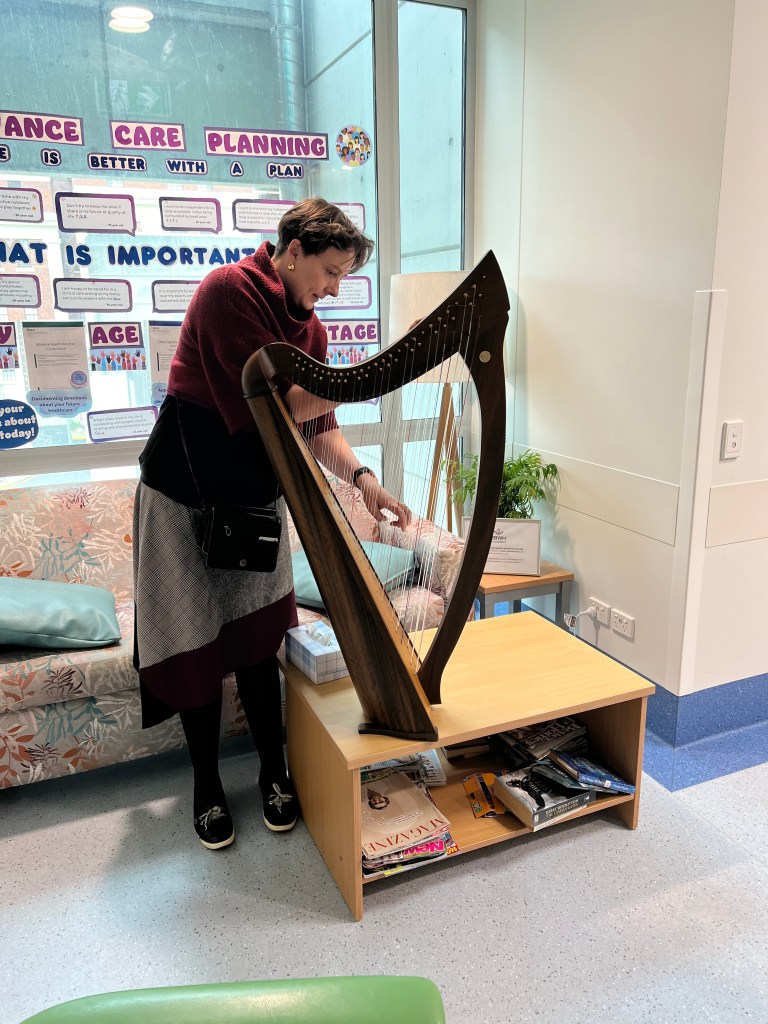
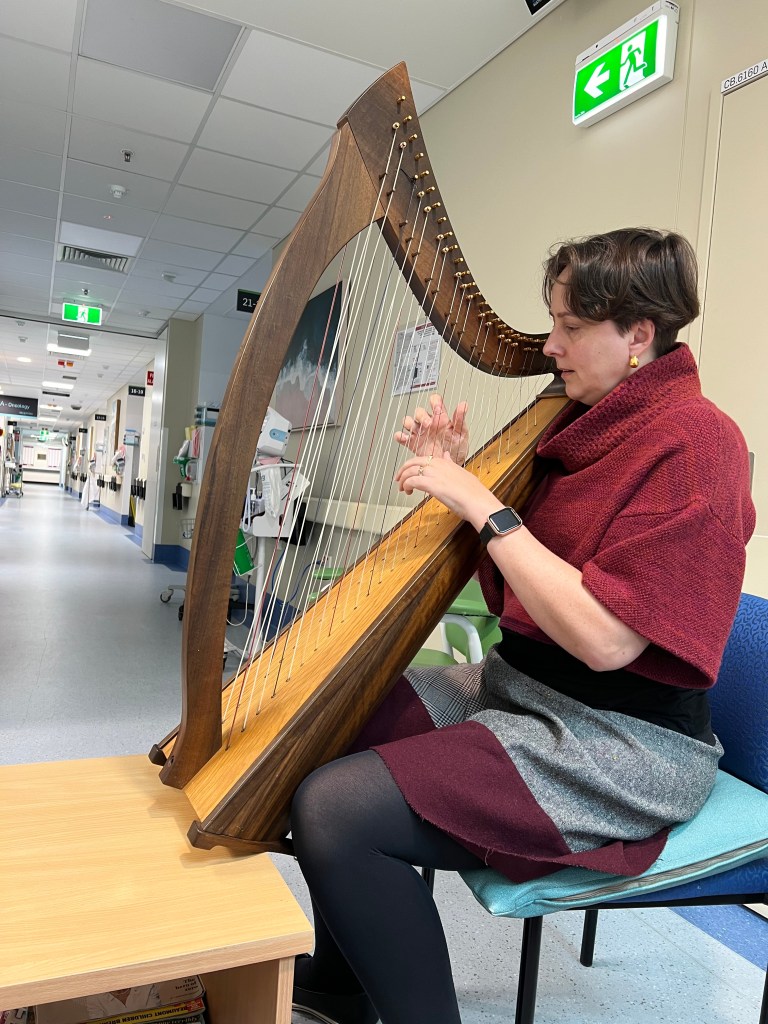
Nicole Tate – Stairwell Project Harpist, Cancer Ward, RBWH, June 2024

As you know The Stairwell Project and You Can Make Some Noise Workshops are two small live music initiatives we started at the Royal Brisbane and Womens’ Hospital – The Stairwell Project in 2015 and the YCMSN Workshops in 2022. It seems we are, with both of them, “punching above our weight” in respect of the the calming and other positive affects on patients, staff and musicians.

I had a phone call last week from Nicole Tate who plays harp in one of the general cancer wards at the RBWH each Saturday, being unavailable during the week. In school holidays however she plays there on weekdays. Patients are coming and going a lot more with clinics open and consultants in the wards. Last week during the school holidays she was in the ward midweek. There was no crisis or roster problem – it was that she wanted to share a bit of that day’s experience with me – a spontaneus group singing with her as she played , the smiles on people’s faces, the positivity from staff. I gathered from her report that that day was a high point in her regular weekly visits.

Getting the balance right in this live music preject in hospital wards continues to be part of our prescriptive considerations. What times are best, when do we leave, what if there is an emergency, is this music distracting for staff, what is the right repertoire, what instrument would be out of place? And then there are moments like this one that Nicole shared with me that sometimes just happen, that a flow arrives that carries something magical into the ward and hearts, minds and maybe even bodies of everyone for a few moments.

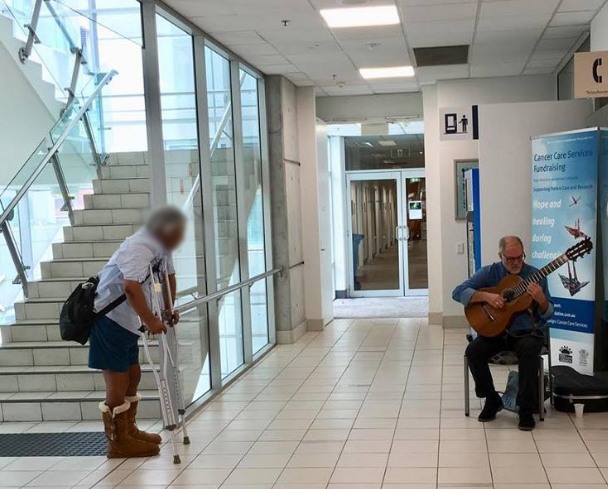
Dr Michael Knopf and a passing patient on level 4, Joyce Tweddell Building, RBWH, September 2024.

“This photo is from a few years ago. I spoke with this gentleman after he had been listening for some time. The photo was taken by a SWP team member. We all had a lovely chat and he was really happy to have music where he was having treatments.

This past week at SWP in the Royal Brisbane and Women’s Hospital:

This is one of the areas the SWP musicians perform for patients and family, staff and visitors. It’s in a little niche across from 2 sitting areas near the elevators and down from the entry way in Oncology. Some of us also play in the chemotherapy ward for patients and staff.

People are all different of course- as individuals and coming from many parts of the world. I’ve met Aussies from everywhere, but also Japanese, Chinese, Korean, Kiwis, Brazilians, Paraguayans, and also many from North America and Europe.

It’s good to keep in mind that often the patients are quite ill feeling from their disease or medication. I play Bach, improvisations, Beatles, Bossa Novas and classical repertoire too. This week I played much softer than I normally do as many were unwell and closing their eyes to deal with the pain and discomfort. They do hear the music and will very often thank me as I get up to go to another spot.

This week we had: the lady so ill that she never opened her eyes in a grim-and-bear it face; the lady with the scarf on her head cheerfully chatting to the snacks gentleman but in turning her head to one side in the conversation one notes the red and tear filled eyes; the lady from Papua New Guinea who claps carefully but enthusiastically when I finish “Love Me Tender” and who later when I’m in another part of the ward walks by to tell me I’d buy your CDs!

The old gentleman who sits quietly munching a cookie while his wife sits next to him reading and, hilariously, the old fellow from Eastern Europe who, as I am playing, makes a blowing noise from his mouth. I turn to see what’s going on and apparently there was part of his sandwich caught in his dentures. He had taken them out, was holding them and blow the debris away!

It was not appropriate for me to laugh aloud.

A little while later, I place my guitar under my right arm and pick up my foldable chair and depart. Around the ward to the hallway and exit, several nurses smile and say “thank you” or “beautiful”. (I think they meant the music?)

Live, sensitive and caring music is denied most patients in the world. It seems to me to be a highly impactful accompaniment to medical treatment.”

Words by Michael on his personal Facebook Page

Share this:

  • Share on Facebook (Opens in new window) Facebook
  • Share on LinkedIn (Opens in new window) LinkedIn
  • Email a link to a friend (Opens in new window) Email
  • Share on X (Opens in new window) X
Like Loading...

Food and mood

Posted by Peter Breen on September 23, 2024
Posted in: Uncategorized. Leave a comment
Food and mood is one of the drivers at Echo Valley Farm of their agroecology – to sell food directly to the eater in their Four Goods framework.
Good for the land, good for the animal, good for farmer, good for the eater.

http://www.echovally.com.au

Healthy food choices help us avoid erratic blood sugar levels and associated mood swings. But many of us have experienced the 3 o’clock dip in the afternoon where you find yourself irritated, fuzzy and trouble focusing. You would love to find a corner and go to sleep, but there is no time. How about a coffee or a chocolate bar? Most of us instinctively reach for sweets or caffeine to give relief from the morning sluggishness or afternoon slump. We use sweets as a way of helping ourselves through stressful times. Those strategies might help, temporarily, but there is a downside to these methods. Many people choose sweets and caffeine as a substitute for proper nutrition. Poor eating strategies affect our brain chemistry and cause fatigue, apathy, apprehension, edginess and the blues. The brain has first call on the body’s available supply of nutrients, therefore, the first effects of nutritional deficiencies are often mental symptoms.

Research shows that low levels of protein in a diet have a negative impact on the body’s production of neurotransmitters, which directly affect our mood and energy. Deficiencies in vitamins B1, B6, C, A, essential fatty acids, folic acid, niacin, magnesium, copper and iron also affect the fine balance of these neurotransmitters. Vitamin and Mineral Deficiencies In Food That Impact Your Mood:Vitamin B1 or Thiamine is drained by simple sugars. B1 helps convert blood sugar into fuel. Without it, we can experience fatigue, depressive symptoms, irritability, anxiety, memory problems, insomnia and even thoughts of suicide.Research has found a strong correlation between vitamin B6 deficiency and depressive symptomsA lack of B12 can lead to mood swings, paranoia, irritability, confusion, dementia, hallucinationsFolic Acid assists in the creation of many neurotransmitters and can cause fatigue and dementiaLow levels of Vitamin C can produce depressive symptoms.

Building Resiliency Through Food & Mood

1. Eat regularly. Smaller balanced meals are preferable to large meals
2. Use exercise or stretching to increase energy and lift the ‘fog’
3. Eat protein earlier in the day – we metabolize proteins in a way that we get the full energy from them up to 5 hours later
4. Include fish in your weekly diet as the essential fatty acids they contain increase energy and improve mood
5. Eat complex carbohydrates such as whole grains and vegetables instead of simple sugars found in chocolate bars and candy, which give the quick high but a low plunge
6. Don’t confuse thirst with hunger. Drinking a cool glass of water can boost energy in the middle of the afternoon slump
7. Avoid food additives such as colorants and preservatives which can have a negative allergic reaction in the body
8. Don’t buy foods high in sugar. If it is not sitting in the cupboard or desk drawer you are less likely to make snap decisions
9. Have healthy snacks readily available. Plan ahead and keep them in desk drawers, lockers or even in the glove box of your car
10. A daily supplement may be helpful, but don’t rely on it to replace healthy eating. Eat a variety of foods.

We have all heard the saying ‘We are what we eat’, but most of us connect this with the body’s physical reactions. Our brain is just as dependent on the food that we consume. Healthy food choices help us avoid the erratic blood sugar levels and associated mood swings, which can keep us mentally healthy.
READ MORE

Copyright © 2024 EapAssist, All rights reserved.
Eap Assist Subsribers List

Our mailing address is:

EapAssist

101 Collins Street

Melbourne, Vic 3000

Australia

Used with permission

Share this:

  • Share on Facebook (Opens in new window) Facebook
  • Share on LinkedIn (Opens in new window) LinkedIn
  • Email a link to a friend (Opens in new window) Email
  • Share on X (Opens in new window) X
Like Loading...

Compound Fractures

Posted by Peter Breen on September 22, 2024
Posted in: Regenerative Agriculture, Uncategorized. Tagged: 4goodsfieldday, agriculture, farming, regenerative. Leave a comment
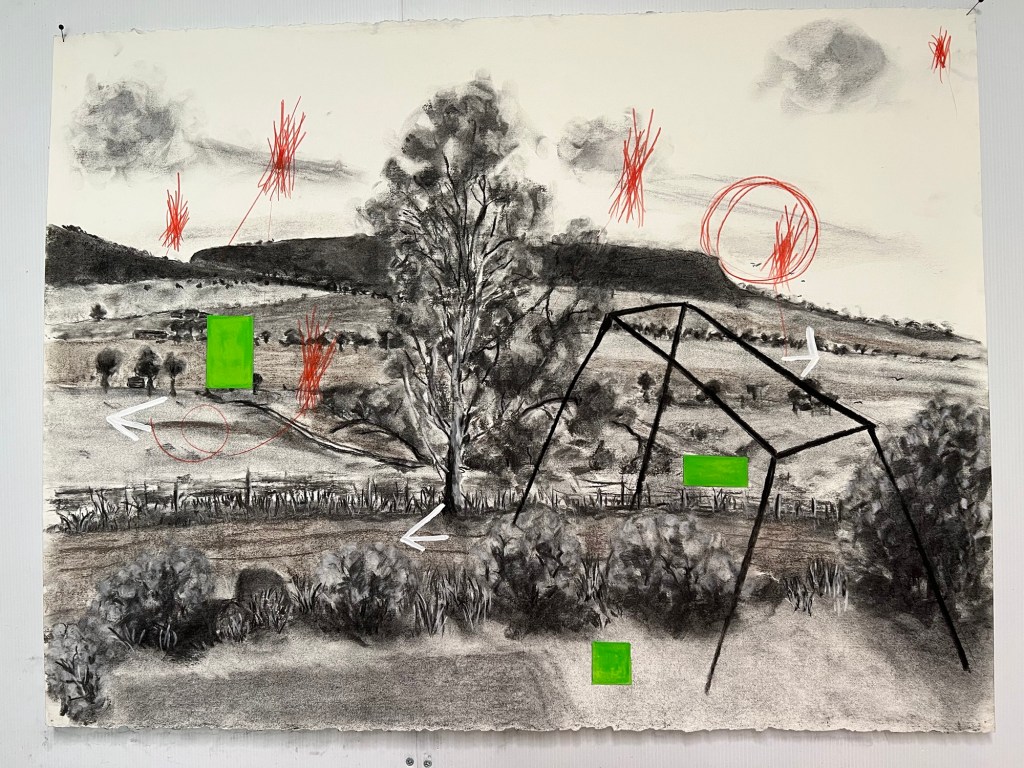
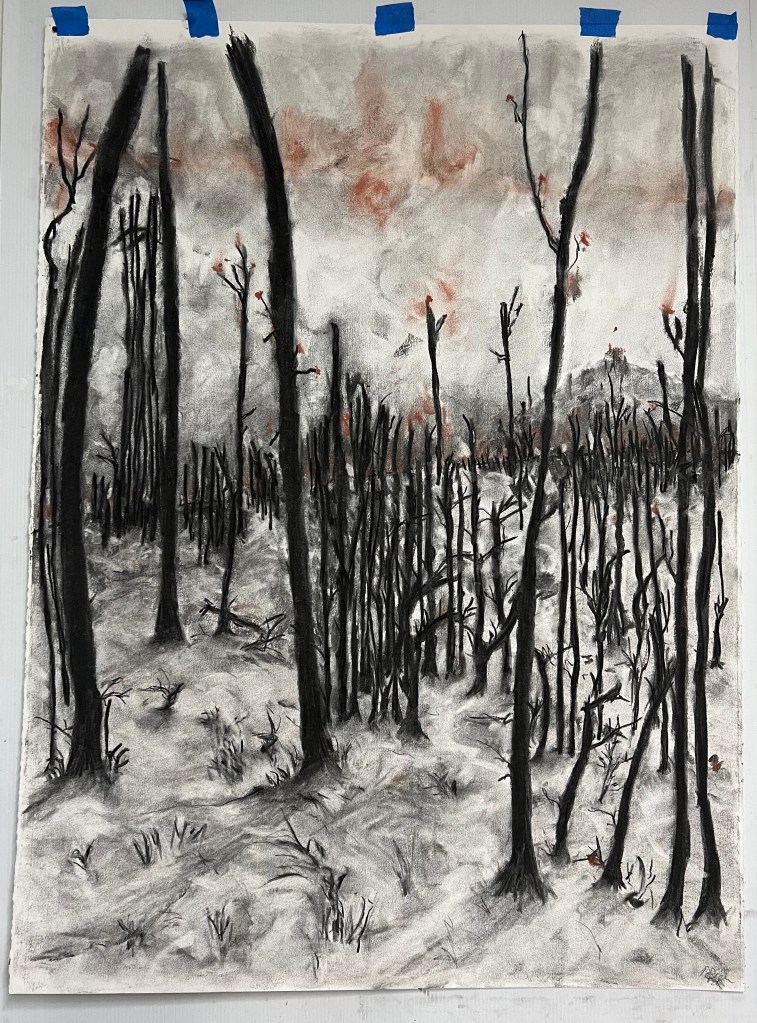
“Compound Fractures” Charcoal, red pencil, guauche, gesso.

This drawing of mine was part of a series of 4 that was included in the @echovalleyfarmer #4goodsfieldday on August 31. Those 4 were not listed for sale ( other artists’ works from Toowoomba and Warwick were) but this one – Compound Fractures – caught the eye and heart of a couple who are heavily invested in Regenerative agriculture as Randal and Juanita are. They felt that this drawing was both descriptive and symbolic of what has been happening to the landscape and the soil in particular in Australia over the past couple of hundred years particularly with the impact of industrial farming practices. To be honest it was hard to farewell this work but this morning I did part with it as it goes to a home where eyes and hearts will be engaged by my drawing that is partly representative of what I have seen as a learning “ patient, attentive observer” SOLD

“What Remains #3 Chacoal, ink, red pencil, guauche on arches paper
“What Remains #2” Charcoal, ink, gauche,
“What Remains #1” Charcoal, chalk, ink on Arches paper.

The remaining 3 drawings are available for purchase. For more information please contact me via psbjugglers@gmail.com

Peter Breen

Share this:

  • Share on Facebook (Opens in new window) Facebook
  • Share on LinkedIn (Opens in new window) LinkedIn
  • Email a link to a friend (Opens in new window) Email
  • Share on X (Opens in new window) X
Like Loading...

The Act of Forgiveness

Posted by Peter Breen on September 12, 2024
Posted in: Uncategorized. Leave a comment

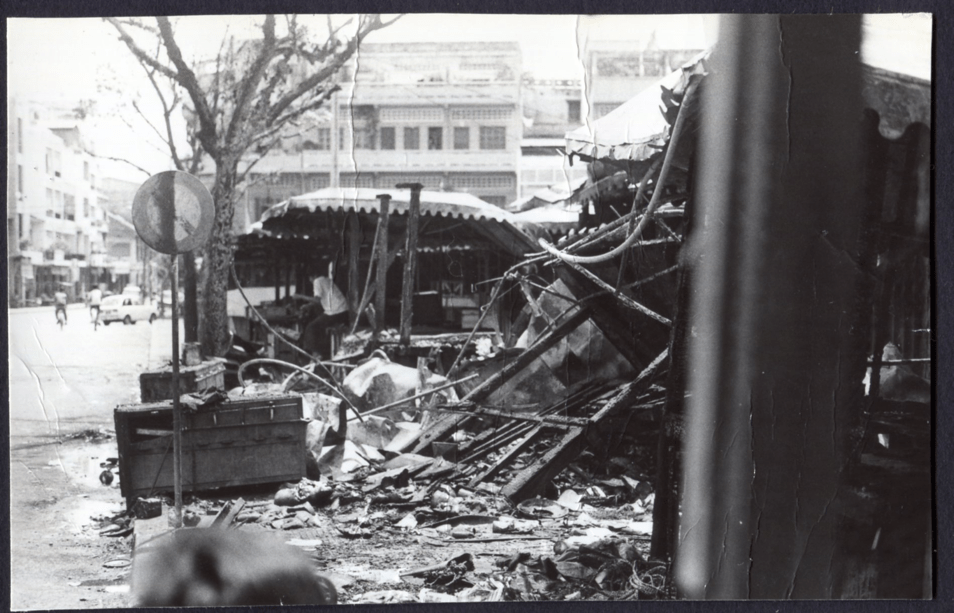
March 1975, Rocket attack debri, Phnom Pehn – Pre Pol Pot.

Photo Credit: Lindsay Nicholls

Administrator -World Vision Medical Team, Cambodia 1974 – 75

Forgiveness is a core value in religion and particularly in Christianity. It can be positive, healing and renewing but it has a history of being over-used, maninipulative and abused to the point of even excluding restorative justice – as in the massive sexual abuse issues in the church in Australia. Thankfully some positive ways forward have been initiated in that particular example. I found the following article a helpful reflection. My experience of working with and in a country of gentle people abused and violated by foreign [ USA ] and malign [ Khmer Rouge] powers begs the question of forgiveness and restorative justice for a whole country.

“In this age of grievance and deadly conflict we can learn about forgiveness through the lens of science that expands what religion and moral philosophy teach us. Social scientists have now been studying the psychological benefits of interpersonal forgiveness for more than thirty years.The act of forgiving, they have found, can have benefits both mental, less anger, anxiety and depression, and physical, lower blood pressure, better sleep and improved immune system. More recently, researchers have been studying whether they can apply what they have learned about interpersonal forgiveness to group forgiveness.The first important aspect of interpersonal forgiveness is that there must be a harm in an interpersonal relationship. Forgiveness begins with a recognition that one has been harmed. In that harm there is pain, resentment, and anger (which are natural responses to harm). Having recognized the harm and the attendant suffering, one then must choose what to do next. The path to forgiveness involves a decision to work through the pain and the suffering by opening up to the possibility of forgiveness.We should be clear that forgiveness is not forgetting or explaining away. In other words, the forgiver can be very clear that they were harmed, that the perpetrator and act(s) were wrong, that experiencing pain and anger is justified (and natural). However, because anger and resentment are corrosive to well-being, liberating oneself from the difficult experience may require offering beneficence or goodwill or compassion to the offender, but not necessarily for the offender.Once a decision to move toward forgiveness has occurred, the next is the work phase. In this phase, the forgiver tries to better understand the causes and conditions that contributed to the offender acting as they did, and through this understanding the forgiver tries to see the offender in their full humanity. It also involves recognizing the full depth of the harm and pain and accepting it.Forgiveness may result in reconciliation, but it does not need to. It also may result in altruistic feelings such as empathy and compassion toward the offender because by going through the forgiveness process the forgiver recognizes the humanity of the offender and the suffering and the challenges he or she must have experienced to lead them to act in the way(s) they did.Group forgiveness is when an identity group (e.g., team, company, religious organization) establishes norms and values that promote forgiveness, make public statements and commitments that lead to or are consistent with forgiveness, and establishes structures that support forgiveness. For example, a truth and reconciliation process following strife between two groups is an example of a structure that supports forgiveness.Reconciliation is coming back together after a breaking apart. Forgiveness might lead to reconciliation, but it is equally possible that forgiveness leads to strong feelings of compassion and the recognition that reconciliation would likely lead to more harm. Pardoning is typically a legal term that suggests a legal remedy for a prior transgression. Forgiveness does not pardon or excuse; the process of forgiveness involves fully appreciating that harm was done and accepting the consequences of that harm, and then making the decision to move beyond it. Accommodating intimates adjusting one’s point of view so that it is closer to another’s. While better understanding the causes and conditions that might have contributed to the offender offending is part of the forgiveness process, it does not involve accommodating an alternative understanding of the harm itself (e.g., the offender’s rationale).”
READ MORE

Copyright © 2024 EapAssist, All rights reserved.
Eap Assist Subsribers List

Our mailing address is:

EapAssist

101 Collins Street

Melbourne, Vic 3000

Australia

Used with permission

Share this:

  • Share on Facebook (Opens in new window) Facebook
  • Share on LinkedIn (Opens in new window) LinkedIn
  • Email a link to a friend (Opens in new window) Email
  • Share on X (Opens in new window) X
Like Loading...

Feeling SAD

Posted by Peter Breen on September 10, 2024
Posted in: Uncategorized. Leave a comment

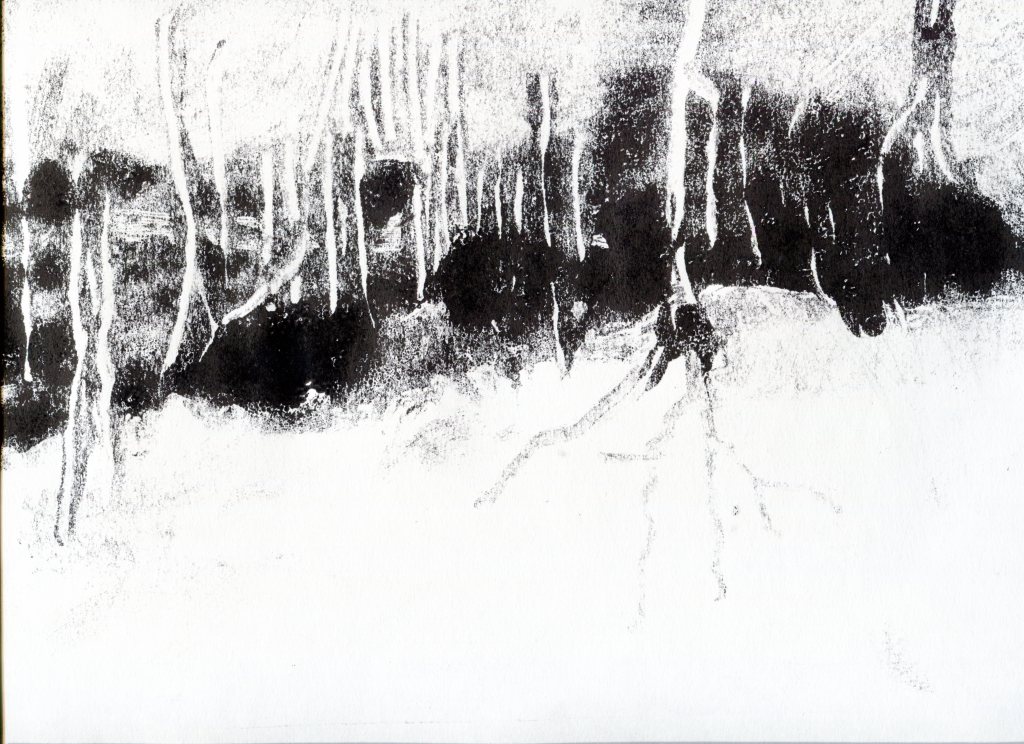
Monotype on paper Artist: Peter Breen


Seasonal Affective Disorder (SAD) is a type of depressive disorder that coincides with the change of seasons. It most notably occurs from late Autumn to Winter. It tends to impact females more frequently than males and can range in intensity from mild to more severe symptoms. The most common symptoms are:

Feelings of loneliness and isolation
Social withdrawal
Changes in sleep patterns
Feelings of detachment and/or feeling emotionally numb
A change in appetite 
Craving foods high in carbohydrates
Feeling agitated
Drinking more alcohol/substance abuse
School or work problems
Weight gain or Weight loss
Feeling lethargic / having low energy
Feeling teary

Feeling hopeless and/or worthless
Suicidal thoughts or behaviour


Those people who are affected by SAD often feel that it has impacted all areas of their lives, including their relationships, work, health and well-being. When these symptoms manifest, people can often feel as if they are unable to work or function daily.

Managing SAD
The best way to manage the Winter Blues is to manage the symptoms. As with any mental health issue, symptoms will vary from person to person. Some individuals will respond well to certain types of interventions, whilst others may need another type of intervention or approach. The main thing is to strive for balance; if one method doesn’t work, then try another.

Seek Balance
Mental and physical health often improve when life is back in balance. The three areas of our lives we need to pay attention to are our minds, our physical body and our spirit (emotions). Try to include activities in your daily life that fit into these three categories.

Some Suggestions are: 
Eat foods that nourish your body including sufficient vegetables and fruits (think a minimum of 2 servings of fruits and 5 servings of vegetables per day). Are you eating whole grains and staying away from highly processed foods?

Are you regularly interacting with others in your life whose company you enjoy?

Have you been moving your body regularly in ways that bring you calm and satisfaction?

Even as little as a few minutes of mindfulness practice each day can help to lift your mood and induce feelings of calm and well-being.

Prioritise your daily tasks
Your ever-increasing to-do lists aren’t going to disappear, however, developing strategies for dealing with them will make them seem less onerous. Create a list with tasks ranging from the simplest tasks to the more complex ones. Set a goal of achieving at least 3 tasks each day from the list; a few more if you are able. At work, if you have more than a few projects going at one time and feel overwhelmed, divide each project into manageable segments that can be done in one sitting.

Talk about it
The Winter Blues or SAD is a disorder that will only worsen if symptoms are stifled and not spoken about. Speaking with trusted friends, and family, or joining an online community who are also experiencing it can be helpful, however speaking to a trained mental health professional is the most helpful approach.
READ MORE

Copyright © 2024 EapAssist, All rights reserved.
Eap Assist Subsribers List

Our mailing address is:

EapAssist

101 Collins Street

Melbourne, Vic 3000

Australia

Used with permission

Share this:

  • Share on Facebook (Opens in new window) Facebook
  • Share on LinkedIn (Opens in new window) LinkedIn
  • Email a link to a friend (Opens in new window) Email
  • Share on X (Opens in new window) X
Like Loading...

When you feel like giving up

Posted by Peter Breen on August 14, 2024
Posted in: Uncategorized. Leave a comment
times when energy sap
is gone
when corners distance
in a far off land
or sleep arrives in bits and pieces
and despair stays at home
as part of being
while dust settles.


Peter Breen


Below are five tips to help you enhance motivation when you feel like giving up:

Be grateful
If there’s an instant way to defuse those feel bad vibes, it’s gratitude, and even if it doesn’t directly change your situation, it changes your perspective. A well know quote is “Great things happen to those who don’t stop believing, trying, learning and being grateful.”

Being grateful shifts you from a dwelling, passive and stagnant mode into a receptive one. Being in the here and now and catching that glimmer of light through the darkness. From there you’re open to new ideas, hope and inspiration. Whatever you’re going through, it’s not about discrediting it or trivialising it. Breakups are rough. Heartbreak can be agony; physically and emotionally. But you will always have something to be grateful for. It could be something tiny such as a song on the radio, a call you had with a friend yesterday.

Look to others as examples
This is all about finding evidence that ‘if they can do it, I can too!’ It can be helpful to find examples of other people who have come from a similar place and are now thriving.  You’ll often learn that for those people, it was also a process, but seeing them a few steps ahead of you or even miles ahead, can give you the fuel you need to know it’s possible for you too. Ultimately, we all have the same potential regardless of academic intelligence, appearance, wealth or background.

Rewire and reprogram your brain
What this means is learning how to identify and change your internal and subconscious beliefs to heal. Say you just can’t seem to get over your ex despite doing everything in your power. You’ve read all the books and all the articles and nothing seems to help. Even though on a conscious level you want for the pain to be over more than anything, deep down, some of the beliefs you could be experiencing might include not feeling good enough to be alone or in new relationship, being scared of your identity without your ex, not wanting to let go of your ex or being afraid of change.  With health, it could be not believing you’re worthy of having perfect health, being scared of what would happen if you were healthy, feeling unsafe in the world, being afraid to speak your truth, not believing that you’re capable of taking care of yourself. Ultimately the process of rewiring is individual and allows you to tap into those deep rooted and often insidious reasons that are keeping you stuck – usually they’re enlightening to discover. It’s then about calming down your limbic system to get into a parasympathetic state as opposed to a fight or flight one to then begin to rewire those old patterns and turn them into new ones that will support getting over your ex, getting back to perfect health or whatever situation you’re looking to bounce back from. This process includes a highly repetitive blend of elements such as affirmation, visualisation and action.

Just DO something
Depression is the worst kind of emotion because it’s passive. There’s no energy behind it. Nothing is impossible but it can be very tricky to go from feeling depressed to absolutely elated in a short space of time. No amount of affirmations can make your subconscious believe it. But aiming just a few rungs up the emotional ladder is more do-able. Even moving from depression to frustration or anger is an amazing step, because those emotions have energy behind them. You can do something with them.
To ignite that emotion climb it requires you to create energy within your body. Do jumping jacks, go for a walk, cook, clean, call a friend, do something which makes you feel like you’re ‘doing’ something. Movement is a great one. A brilliant definition of emotion is ‘energy in motion’. It’s amazing how when we resign ourselves to staying stagnant, we embody that physically and emotionally. We feel tired. We feel worse inside. But just a little movement or environment change can be all we need in that moment to shift and get an extra rung up the emotion ladder.

Be the inspirer you need
Imagine that your younger, childlike self is feeling how you’re feeling. Going through this experience. What would you do or say to them to help them through? To keep them feeling inspired, safe and nurtured. Also know that whatever challenges you’re going through, it will pass. Feel it, be ok with it, know that it’s a human experience, know that like a captain steering a ship sometimes you have to adapt and go left, sometimes you have to go right; it isn’t a linear path. Do what you can to keep yourself moving forward a tiny step every single day.
READ MORE

Copyright © 2024 EapAssist, All rights reserved.
Eap Assist Subsribers List

Our mailing address is:

EapAssist

101 Collins Street

Melbourne, Vic 3000

Australia

Used with permission

Share this:

  • Share on Facebook (Opens in new window) Facebook
  • Share on LinkedIn (Opens in new window) LinkedIn
  • Email a link to a friend (Opens in new window) Email
  • Share on X (Opens in new window) X
Like Loading...

A few postive lifestyle steps for preventing depression in men

Posted by Peter Breen on August 6, 2024
Posted in: Uncategorized. Leave a comment

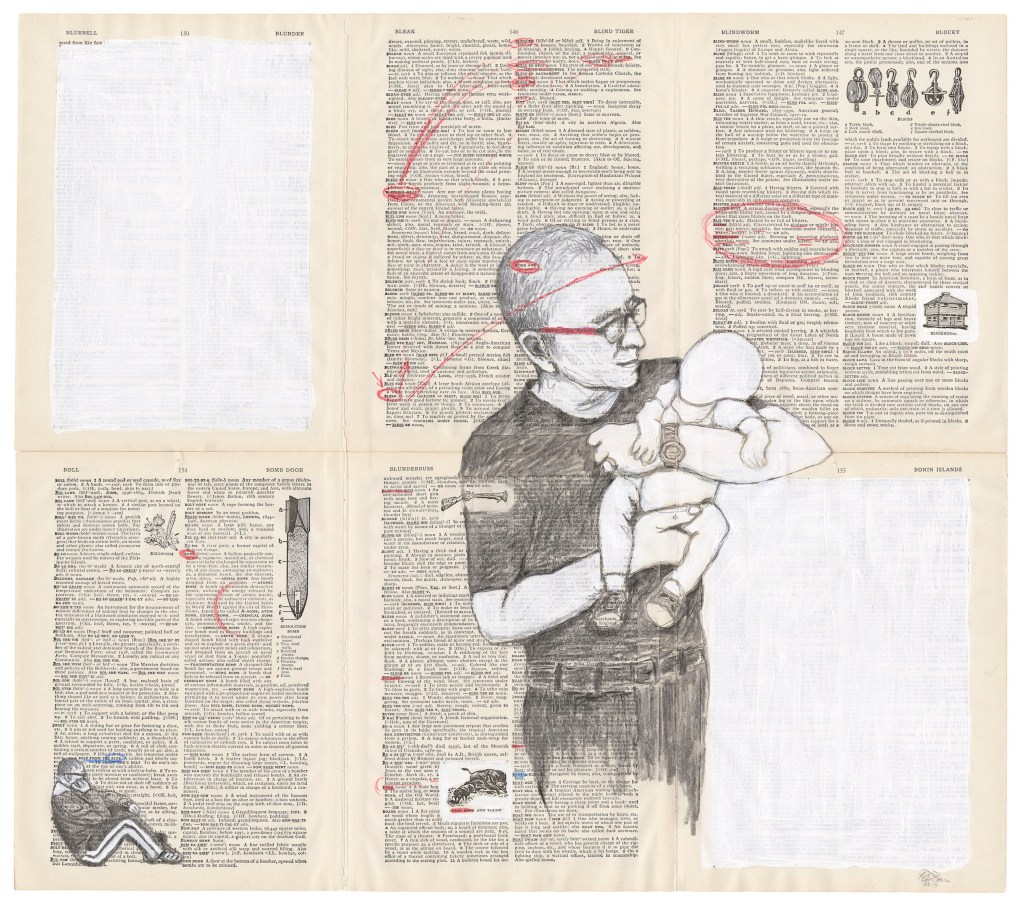
Blessings of the blithesome Charcoal, ink, pencil on old book pages. Peter Breen 2017

I apply all of these during my daily life and have done over the years as the black dog circles occasionally. One of the most effective for me is the regular [daily] exercise and never taking my smart phone or lap top to the bed room. I am currently reducing smart phone/app time significantly. Peter Breen.

When feelings of sadness or feeling ‘down’ last more than a few weeks, and start to impact your daily life, it may be a sign of depression. It can lead to feeling irritated, hopeless or worthless, and affect energy, sleep, appetite and relationships. Depression is a mood disorder that can be caused by a variety of factors, including genetics, stress from life-changing events, serious illness, substance use and even certain medications. Depression can range from moderate (having a significant impact on daily life) to severe (making daily life almost impossible). Currently, men are less likely to seek help for depression, and 3x more likely to die from suicide. Below are some strategies which may make a difference:

Mind Your Thinking
Reality check your thinking so that overly negative thought patterns do not become a habit. Your mindset matters and can affect your health. Talk to yourself like you would talk to a friend or how your favourite coach or teacher would talk to you.

Set “SMART” Goals
Achieving goals can boost your mood. Setting goals that are unrealistic can lower your mood and sense of self-efficacy. Set “SMART” goals that are specific, measurable, achievable, relevant and time-bound. If you are having trouble meeting your goals, try making them smaller or asking for help. Small steps can lead to big change.

Do Things on Purpose
Find activities that give you a sense of meaning. Do not avoid all uncomfortable situations. You can do hard things.

Get Active
80% of Australian men believe physical activity has a positive effect on their mental health. Physical activity triggers feel-good endorphins, while reducing symptoms of stress, anxiety and mild-to-moderate depression. Research shows that 30 minutes of moderately intense activity 2-3 times per week can help if you keep it up for at least 9 weeks. Make moving your body a habit. Remember, any activity is better than none.

Sleep Better
Learn what you can do to improve your sleep: avoid screen-time one hour before bed, have a consistent wake time, and reduce your caffeine intake. Manage your worries during the day so your thoughts don’t keep you up at night. Aim for 7-9 hours of quality sleep per night.

Eat Healthier
Choose whole foods more often like fruits, vegetables, whole grains and lean proteins. These foods are packed with vitamins and nutrients essential for brain health and can boost your energy and overall sense of wellness.

Drink Less
Many people who experience depression may turn to alcohol for comfort or fun. However, alcohol is a depressant drug. It slows down parts of your brain involved in thinking, behaving, and even breathing. Long-term overuse of alcohol can trigger or worsen symptoms. Any reduction in alcohol use is beneficial for your physical and mental health.
 
READ MORE

Used witih permission

Copyright © 2024 EapAssist, All rights reserved.
Eap Assist Subsribers List

Our mailing address is:

EapAssist

101 Collins Street

Melbourne, Vic 3000

Australia

Share this:

  • Share on Facebook (Opens in new window) Facebook
  • Share on LinkedIn (Opens in new window) LinkedIn
  • Email a link to a friend (Opens in new window) Email
  • Share on X (Opens in new window) X
Like Loading...

On the way out of church…

Posted by Peter Breen on August 2, 2024
Posted in: Uncategorized. Leave a comment

…and the search for meaning

In 1998 during my second pastoral tenure with a Wesleyan Methodist Church in suburban Brisbane [Queensland, Australia] I attended a series of workshops over two weeks in Melbourne. It was sponsored by Scripture Union [Victoria] World Vision [ Australia] and Whitely College [ Baptist]. It was held at the Carlton Baptist church in an old two story disused shop complex and hosted by New Zealand art lovers and Baptist theologians Mike Riddell[i] and Mark Pierson. The basic idea of the seminar was to consider how to think about and be active around evangelism and worship “using the arts” in the emerging culture. As a pastor in a fundamentalist evangelical organisation at the time, applications and future options were conceived while the arts, my true love, were firing mystery and dreams.

Now the landscape was completely different then – no 9/11, high octane social media, COVID, Trump, Morrison, Putin, Boris or Ukraine/Russian or Palestinian/Israeli atrocities. Almost a generation on and now we are living in an unimagined landscape. However, those of us in that building in 1998 were thinking about “new music and art” in worship settings and conversations with “outsiders” that were not based around “selling the gospel.” In 1998 “Church Growth” had become a disease of franchised McDonald’s proportions, burning out pastors who were not inclined to be into sales while Hillsong was on the ascendency. 

Those two weeks opened new doors onto new rooms of thought and imagination, rooms that would lead me to become immersed in the arts, leave the religion based pastoral enclave and return to Medical Imaging. It would also find me grappling with the arts, fund raising, personal art practice and questioning my theology more deeply as I attempted to unravel and move out from under the iron clad Christian dualism construct. 

My “thinking life” before pastoral appointments and during them included applied science, Baptist and reformed theology morphing to Arminian understandings and an immersion in a range of social and theological constructs that had not honoured the arts or open ended question thought processes. At times I thought they had but they had not. My whole world of thought at its deepest levels was that of a passionate insistence on dualistic evangelical conversion and subsequent piety. The bottom line had always been to find ways to “get people saved and sanctified” aka Billy Graham and use love of “the other” if necessary. The arts were, in that context, only utilitarian, that is, for worship or evangelism. In some ways, from what I can see from a distance is that agenda of the Christian church seems to have hardly changed, particularly in the narrow evangelical fundamentalism that I shut the door to. I am thankful that in the midst of growing up in a fundamentalist and compassionate household my Christian parents had oddly enough fostered a love of a wide ranging arts exploration in their children – except for the “devil’s rock and roll music” – that served us well and that partly saved us from a more cultic infirmary. 

My time post-pastorate since 2003 has been immersed in the arts – including co-founding Jugglers Art Space – medical imaging, family life and completing an MA in Creative Arts Therapies. I am slowly learning to see as per John Berger inWays of Seeing where he “…challenges the elitist and mystified status of art that neglected the political, social, and ideological aspects that shaped the ways in which we look at art. “

Conversely, I’ve been exploring what spirituality in art means both within and outside religious iconographic and narrow utilitarian frameworks. Kandinsky’s epiphany affected philosophy helps here: “At its outset all art is sacred and its sole concern is the supernatural. This means that art is concerned with life – not with the visible but the invisible.”  

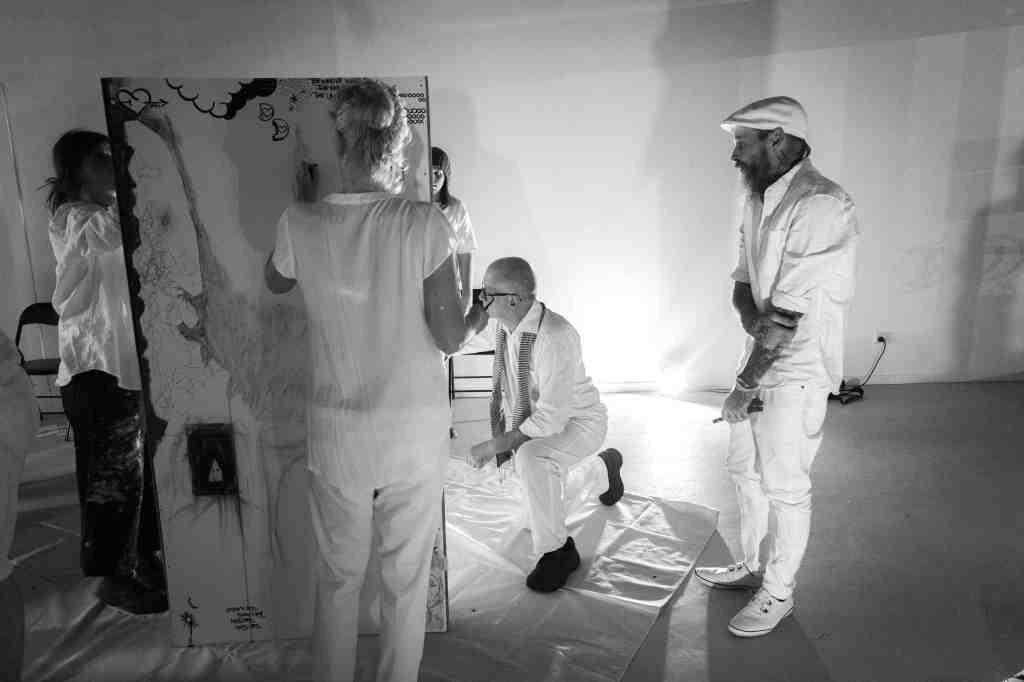
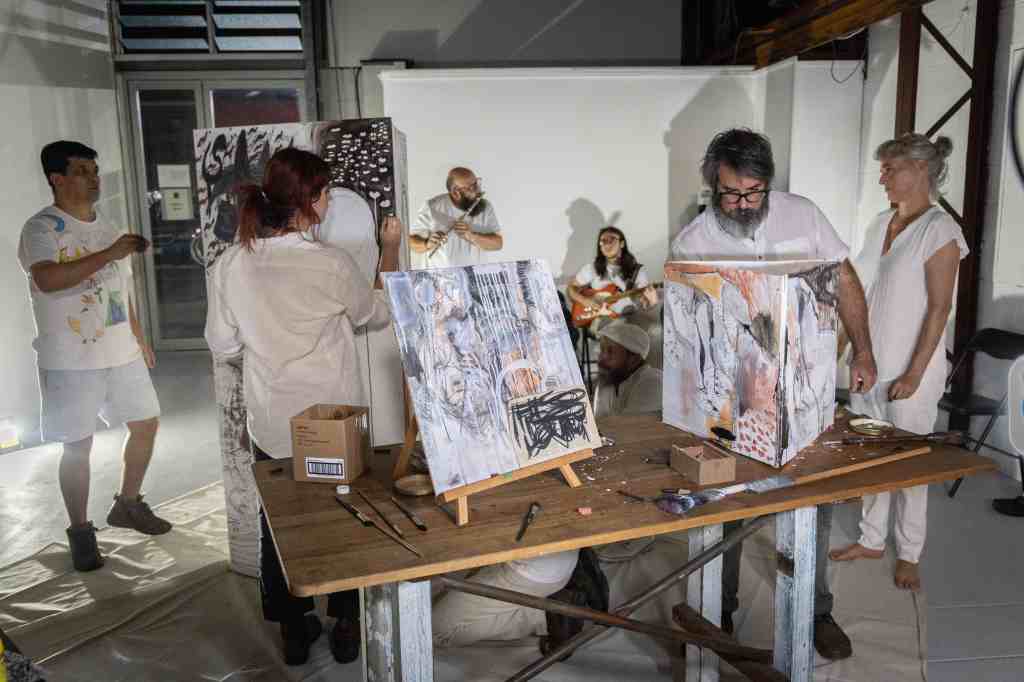
Building on a range of influences as Kandinsky’s, references to the “moving of the spirit” in the scriptures, whirling dervishes in Islamic mysticism, Quaker meetings, aboriginal understandings of country and so on I initiated a series of group art events at Jugglers Art Space. My quest was to host a gathering of artists with no known religious background or involvement, construct a sound and design space and for us to respond to silently but together with the intent to see if it was possible for something beyond ourselves to form and affect us. An epiphany perhaps. Over the past 12 years now I have curated and co-curated these events with the significant impact being the inexplicable silence attending the music and mark making find their end. I cannot say what happened but the sense of what happened has not been forgotten by me or by all of those who came. Mark making together without speech is the central activity for the artists with a range of musical atmospheres created via for example, Gavin Bryars’ amazing 75 minute Jesus Blood never failed me yet, ArvoPaart, improv live performances or the beach with lapping seas. 

The shift from being saved and sanctified and preaching such as the only answer to my and other’s search for meaning for me is significant. Within my evolving art practice, love has grown in response to the call of the spirit and the soul. I have also realised and embrace an embedded desire for inexplicable epiphany not that created by systems, argument, exegesis or consumption but that which is there, here and around, present and through. And the artists are the seers. 

Recommended reading:

  • The Artist as Divine Symbol Adam Edward Carnehl Cascade Books 2023 
  • No Idols: The Missing Theology of Art Power Polemics Thomas Crow, Power Publications, 2017
  • Arts of Wonder Jeffrey L Kosky, University of Chicago Press, 2016
  • Emergence Magazine – Ecology, Culture and Spirituality, Editions 1 – 5
  • Reasons of the Heart Bruce Wilson, Allen & Unwin, 1998
  • Beauty – The Invisible Embrace John O’Donohue, Harper/Perennial, 2003
  • Imagination in an Age of Crisis – Soundings from the Arts and Theology Edited by Jason Goroncy & Rod Pattenden, Pickwick Publications Wipf & Stock Publishers 2022
  • Zero at the Bone – Fifty Entries Against Despair Christian Wiman.  Farrar, Straus and Giroux 2023
  • In Pursuit of Silence Listening for Meaning in a World of Noise. George Prochnik Anchor Books 2011
  • In Pursuit of Silence Film/Director – Patrick Shen 2017
  • On the Mystery Discerning Divinity in Process Catherine Keller Fortress Press 2008
  • The New Boy A film by Warwick Thornton 2023

Peter Breen MA, BTh, ARMIT

Brisbane, Australia.

July, 2024 


[i] Rev Mike Riddell died in his sleep in 2023 in Dunedin, NZ. He was 69.

Share this:

  • Share on Facebook (Opens in new window) Facebook
  • Share on LinkedIn (Opens in new window) LinkedIn
  • Email a link to a friend (Opens in new window) Email
  • Share on X (Opens in new window) X
Like Loading...

Self Compassion

Posted by Peter Breen on July 31, 2024
Posted in: Uncategorized. Tagged: compassion, mental-health, mindfulness, self-care, self-compassion. Leave a comment
Self-compassion emphasizes the importance of treating oneself with the same kindness, concern and support that one would show to a good friend. Self-compassion comprises three core components: self-kindness, common humanity and mindfulness. These elements work together to foster a healthier and more resilient mindset, especially in the face of personal failures and hardships.

Self-Kindness: This involves being warm and understanding toward oneself when encountering pain and personal shortcomings, rather than ignoring them or engaging in self-criticism. Self-kindness means recognizing that being imperfect, failing, and experiencing life difficulties are inevitable, so one should be gentle with oneself.

Common Humanity: Recognizing that suffering and personal inadequacy are part of the shared human experience is crucial. Instead of feeling isolated by one’s imperfections and difficulties, see experiences as part of the larger human condition. This perspective helps to foster a sense of belonging and connectedness.

Mindfulness: Mindfulness involves being aware of the present moment in a clear and balanced manner, without getting caught up in negative reactivity or over-identification with one’s thoughts and emotions. Mindfulness in self-compassion means observing one’s thoughts and feelings as they are, without suppressing or denying them. 

Practical Steps to Implement Self-Compassion
 
Self-Compassionate Letter
Write a letter to yourself expressing compassion and understanding for a situation in which you feel you failed or suffered. Address yourself as if you were writing to a close friend who had the same experience. This exercise helps to shift the perspective from self-criticism to self-kindness, fostering a more supportive internal dialogue.

Self-Compassion Break
When you notice you’re feeling stressed or upset, take a moment to acknowledge your suffering. Place your hand over your heart, and say to yourself, “This is a moment of suffering,” “Suffering is part of life,” and “May I be kind to myself.” This quick exercise helps to integrate the three components of self-compassion—mindfulness, common humanity, and self-kindness—into daily life.

Mindful Self-Compassion Meditation
Engage in a guided meditation practice that focus on self-kindness, common humanity and mindfulness, helping to build a consistent practice of self-compassion over time. Regular meditation practice can significantly enhance one’s ability to remain compassionate toward oneself in challenging times.

Affectionate Breathing
Sit comfortably, close your eyes, and focus on your breath. Feel the sensation of the breath as it moves in and out of your body. While breathing, gently place your hand over your heart or another soothing place. This practice combines mindfulness with physical comfort, reinforcing a sense of self-kindness and care.

Self-Compassion Journaling
Keep a daily journal where you note down instances where you felt self-critical and how you could respond to yourself with compassion instead. Reflect on how you can bring a kinder, more understanding attitude towards yourself in future similar situations. Journaling helps to make self-compassion a regular habit and reinforces positive change.
READ MORE

Used with permission

Copyright © 2024 EapAssist, All rights reserved.
Eap Assist Subsribers List

Our mailing address is:

EapAssist

101 Collins Street

Melbourne, Vic 3000

Australia

Share this:

  • Share on Facebook (Opens in new window) Facebook
  • Share on LinkedIn (Opens in new window) LinkedIn
  • Email a link to a friend (Opens in new window) Email
  • Share on X (Opens in new window) X
Like Loading...

Listening

Posted by Peter Breen on July 16, 2024
Posted in: Uncategorized. Leave a comment
“Atmosphere and gravity lean into each other. They are simultaneously expansive, and anchoring. They hold us, and lend a sense of perspective. They provide a stability and a knowingness which is essential in the absolute, and yet we can’t help but find ourselves gazing upward, outward and reaching towards that which sits outside those things and ways we know. Selene is a record about that this lingering desire for that which sits beyond. It is work that seeks new perspectives snatched from familiar vistas, and it meditates on that sense of anchor and perspective. The work is also a speculative hymn to the visions of the celestial zones that spill ever outward. These visions, once merely what we could perceive with the naked eye are now so much more. Our mind’s eye is fed in equal parts by radio telecopy, filmic dreams and fiction renders of a place most of us will never know first-hand. This recording ties into a linage that reaches back, while stretching forward. It is just one story of so many, told across places, across cultures, across generations. It sits in the in-between of before and after, and in that moment invites us to situate ourselves and lean into it.” Review from the publisher http://www.temporaryresidence.com
AKIRA KOSEMURA & LAWRENCE ENGLISH Selene May 31, 2024

I have recently bought this album [Vinyl] in my ongoing search for “atmospheric” compositiions, music that feeds my hunger for slowing, silence, stillness, solitude. I have a growing collection on CD, Vinyl and streaming services – and video – but this is one I bought on the back of Lawrence English being a Brisbane based and well known and respected artist/composer. It is well worth the investment of time to listen and the money to buy. His partnership with Akira Kosemura was bound to have a strong outcome as Japanese compositions in this genre are in general, remarkable. Highly recommended. Peter Breen.

Lawrence English is an Australian composer, artist, and curator from Brisbane. His work is broadly concerned with the politics of perception, specifically he is interested in the nature of listening, and sounds’ capability to occupy the body. He is the director of the imprint Room40, started in 2000. Wikipedia

Born: 1975 (age 49 years), Brisbane

Record labels: Room40, Crónica Electrónica

Genres: French Indie, Dance/Electronic, Natural sounds

Share this:

  • Share on Facebook (Opens in new window) Facebook
  • Share on LinkedIn (Opens in new window) LinkedIn
  • Email a link to a friend (Opens in new window) Email
  • Share on X (Opens in new window) X
Like Loading...

Print making and agroecology

Posted by Peter Breen on July 10, 2024
Posted in: Uncategorized. Leave a comment

“Agroecology is sustainable farming that works with nature. Ecology is the study of relationships between plants, animals, people, and their environment – and the balance between these relationships. Agroecology is the application of ecological concepts and principals in farming.”

If we look back to farming in pre-industrial times and then to those who have pushed back against monocropping and broad acre farming as one impact of the industrial revolution then we see that agro-ecology is pure intelligence and commonsense.

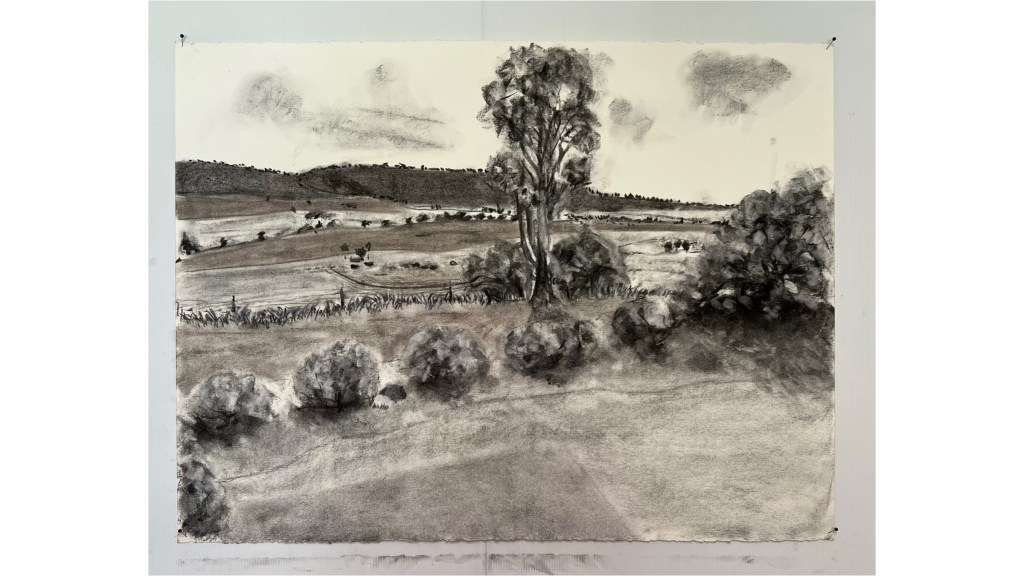
Echo Valley Landscape Charcoal on arches paper Artist: Peter Breen

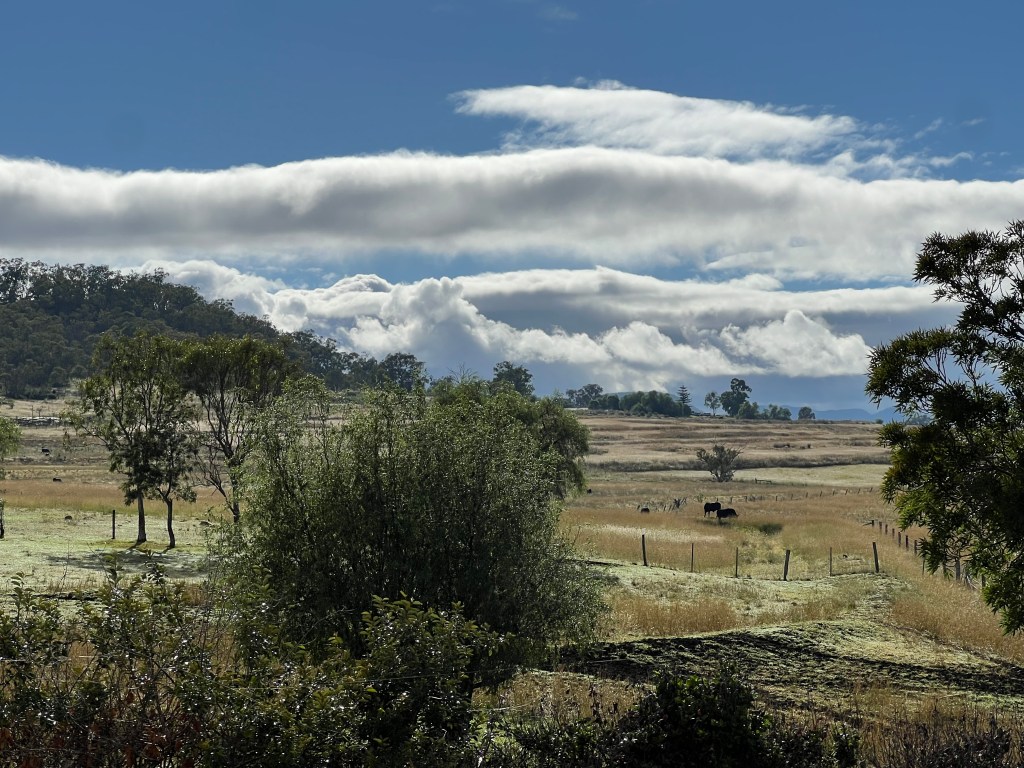
It is a respectful undertaking that honours and listens to the landscape – “to country” – to working with it in harmony. There is a reason why certain plants grow and why certain plants won’t. I am not a farmer or a botanist but I am learning through what Randal and Juanita Breen are doing in the Goomburra Valley that soil is life and that the life that has been reduced and almost annihilated by industrialisation in so much of our “wide brown land” can be resurrected. I have also learnt that being “patient, attentive observers” of the landscape – through the biggest and smallest lens – will lead to new intimacy with the life that sustains and emerges. It is much spiritual as it is a scientific discipline.

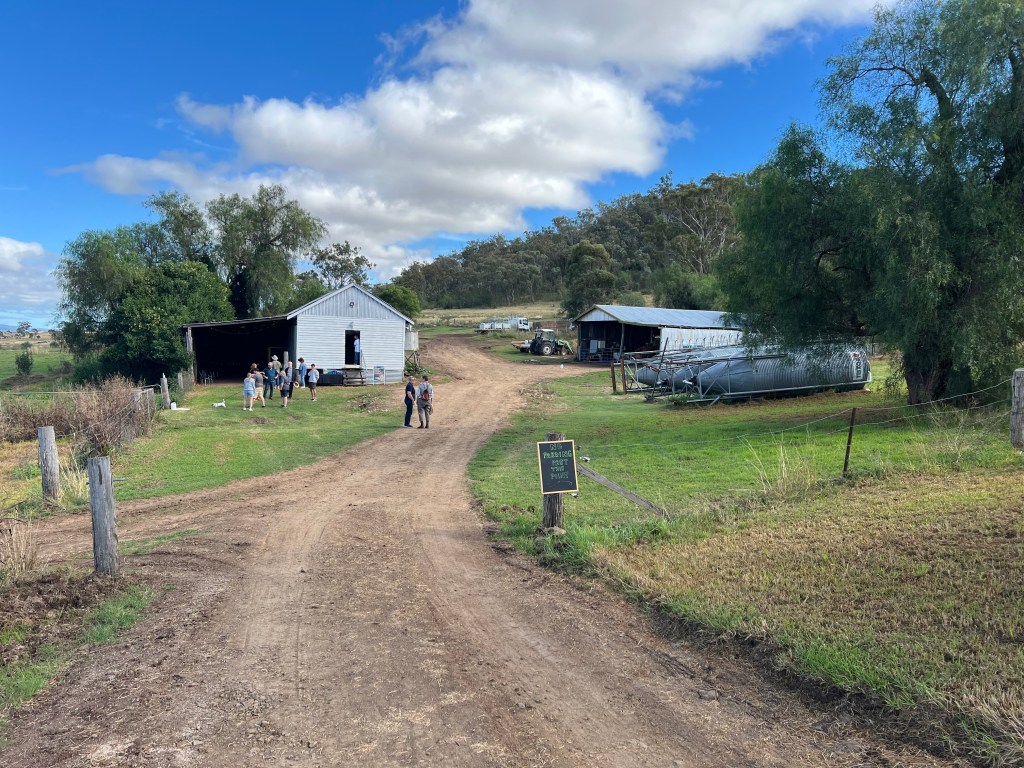
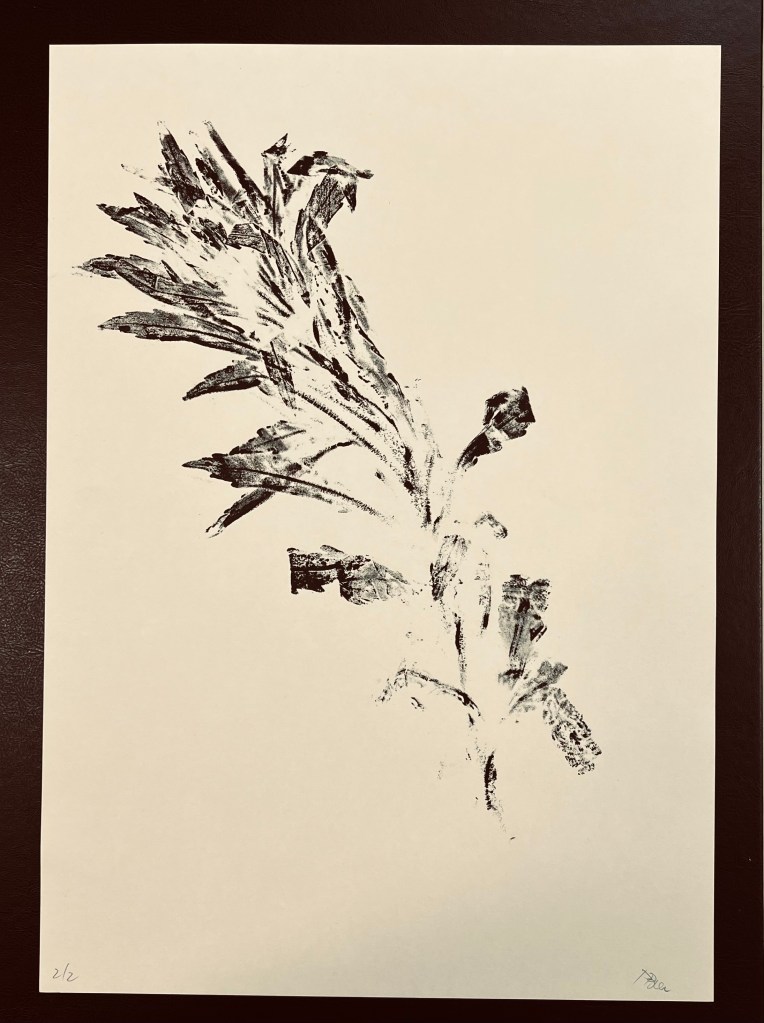
As part of the Echo Valley Field Day on August 31, 2024 Randal and Juanita will be celebrating 10 years into their 100 year agroecology vision for their landscape, in their space Goomburra on Bungalung unceded country. As part of that day I will be running two printmaking workshops – where participants will walk some of the landscape at the farm, select handfulls of plant specimens and learn how to produce mono-prints/monotypes of them. Taking the farmer’s line that “there are no weeds” – and he will explain that on the day – we will be celebrating the beauty of these “weeds” as living organisms through “patient, attentive obervation” and monotype printing. I am one of a group of artists who will be engaged in organising art making on the day. Sam Eyles, Laura Pascoe and Sarah Seminutin all from Vacant Assembly in Brisbane will be coordinating a range of workshops and improv art making througout the day. It will be a wonderful day of engagement and celebration and you can sign up via http://www.echovalley.com.au

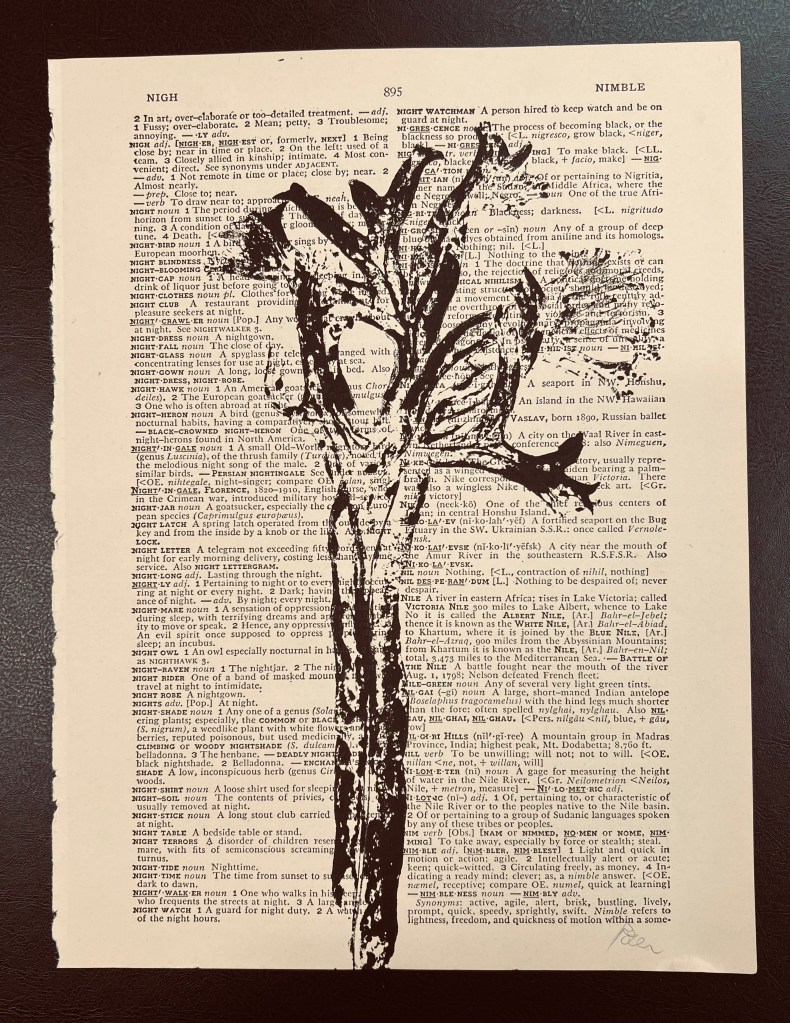
These are a few examples of monotypes I have made from plants gathered from the landscape at Goomburra on the Echo Valley farm.

Renewal – Charcoal, ink, guache on arches paper 2023 Artist: Peter Breen

Share this:

  • Share on Facebook (Opens in new window) Facebook
  • Share on LinkedIn (Opens in new window) LinkedIn
  • Email a link to a friend (Opens in new window) Email
  • Share on X (Opens in new window) X
Like Loading...

Is the artist a “divine symbol”?

Posted by Peter Breen on July 3, 2024
Posted in: Uncategorized. 2 Comments

Book Review

The Artist as Divine Symbol 

Chesterton’s Theological Aesthetic

Adam Edward Carnehl  

Cascade Books Eugene Oregon

(KALOS) Paperback 2023

#untitled Charcoal and pencil on arches paper Peter Breen 2024

Review

Peter Breen MA, BTh, ARMIT

Brisbane, Australia.

July, 2024 

In 1998 during my second pastoral tenure with a Wesleyan Methodist Church in suburban Brisbane [Queensland, Australia] I attended a series of workshops over two weeks in Melbourne. It was sponsored by Scripture Union [Victoria] World Vision [ Australia] and Whitely College [ Baptist]. It was held at the Carlton Baptist church in an old two story disused shop complex and hosted by New Zealand art lovers and Baptist theologians Mike Riddell[i] and Mark Pierson. The basic idea of the seminar was to consider how to think about and be active around evangelism and worship “using the arts” in the emerging culture. As a pastor in an evangelical organisation at the time, applications and future options were conceived while the arts, my true love, were firing mystery and dreams.

Now the landscape was completely different then – no 9/11, high octane social media, COVID, Trump, Morrison, Putin, Boris or Ukraine/Russian, Palestinian/Israeli atrocities. Almost a generation on and now we are living in an unimagined landscape. However, those of us in that building were thinking then about “new music and art” in worship settings and conversations with “outsiders” that were not based around “selling the gospel.” In 1998 “Church Growth” had become a disease of franchised McDonald’s proportions burning out pastors who were not inclined to be into sales.

Those two weeks opened new doors onto new rooms of thought and imagination, rooms that would lead me to become immersed in the arts, leave the religion based pastoral enclave and return to Medical Imaging [ Radiography]. It would also find me grappling with the arts, fund raising, personal art practice and questioning my theology more deeply as I attempted to unravel and move out from under the iron clad Christian dualism construct. And now I wonder how my path would have unfolded if Adam Carnehl’s book had been written in 1998. But it wasn’t and I am glad to have had the last 22 years to prepare for it. 

I found this to be an interesting, insightful and well researched book and an iteration of Adam’s doctoral research at the University of Glasgow. His research credentials for this book series are evident in the 4-page Bibliography and 2 pages of Page Indices. It is one of the Kalos series whose purpose is “…to seek to provide intelligent-yet-accessible volumes that have the innocence of beauty and of true adventure, and in so doing remind us all again of that which we took for granted most of all thought itself. “The book fulfils the parameters – it is “intelligent-yet-accessible” and explores “the innocence of beauty and true adventure….and…thought itself.” As the late Bishop Bruce Wilson notes in “Reasons of the Heart” [ Allen & Unwin 1998] we will – and need to – eventually move from naïve love to a more aware and open eyed love at some point in our lives and so even though beauty perceived has its own innocence it cannot be taken to mean that it necessarily needs to remain so as that late Irish poet John O’Donohue writes in “Beauty – The invisible embrace” [ Harper Perennial 2003] I am not suggesting in questioning the “innocence of beauty” that beauty is complicated but that it has multiple facets, facets which will arrest our souls if we stay with each facet with intention and time and learn as O’Donohue says at least the difference between beauty and glamour. Adam seems to be have been captured by some of the facets of beauty and is not conversely held by the simplistic views of Ruskin’s photorealistic approach to painting clouds being the only beauty representation that pleases God.

My “thinking life” before pastoral appointments and during them included applied science and theology and an immersion in a range of social and theological constructs that had not honoured the arts or open ended question thought processes. At times I thought they had but they had not. My whole world of thought at its deepest levels were that of a passionate insistence on dualistic evangelical conversion and subsequent piety. The bottom line had always been to find ways to “get people saved and sanctified” aka Billy Graham and use love of “the other” if necessary. The arts were, in that context, only utilitarian, that is, for worship or evangelism. In some ways that agenda of the Christian church seems to have hardly changed, particularly in the narrow evangelical fundamentalism that I left. I am thankful that in the midst of growing up in a fundamentalist household my Christian parents had oddly enough fostered a love of a wide ranging arts exploration in their children – except for the devil’s “rock and roll music” – that served us well and that partly saved us from a more cultic infirmary. 

Adam seems, within a commitment to the Kalos series principles, to have what has become a recurring theme in some writing by Christian authors – a need to convince himself and his readers to consider art deficient if it does not “symbolise” the mark of the creator clearly in the making and being of art by the artist. The “artist is a symbol of the divine”. In so doing it places it for me in a dualistic monotheistic construct. I suspect that as a Lutheran pastor this would be the bottom line of his world view. He is not, however, advocating a smarmy sentimentality or icon-only art. He is not advocating biblical texts on the back – or hidden in the painting – of the canvases or explanations in the artist statements that are tantamount to gospel presentations. It does seem to be more nuanced. 

His reasoned approach in this book considers each [male] artist and artist’s output with thoroughness –  John Ruskin, Walter Pater, Oscar Wilde and GK Chesterton.  His highpoint, as the title suggests, is the art critic and novelist G K Chesterton. It was this book and this kind of research that I needed when, as a pastor after the above mentioned seminar in Melbourne, I launched a regular art event[ii] as part of local church life. Being a non-conformist denomination and one that eschewed art – unless it was at least if nothing else, “appealing” and utilitarian – made for some convincing times. The experiment on church property lasted 2 years as a bi-monthly non-evangelistic-non-worship-art-for-arts-sake event. That denomination in general was icon free – apart from the standard symbolic empty cross – not crucifix – and communion table.

In respect of this book’s overall theme the dust cover critiques are enlightening:

“In this densely written and learned study of nineteenth-century and fin de siecle aesthetics, Adam Carnehl recovers Chesterton as an important figure in theological mysticism after Ruskin, Pater, and Wilde. Rooted in German idealism and Romantic thought in Blake and Coleridge, this book deftly re-evaluates Victorian aesthetics  culminating in Chesterton, in the recovery of the imago dei, and in God as divine artist.” David Jasper. University of Glasgow. 

“By contextualising Chesterton’s intellectual beginnings in later Victorian aesthetics, Adam Carnehl reveals the deep roots of his subject’s theological vision and that vision’s ultimate coherence. At a time when theology is again turning to the arts, Carnehl is able to show that Chesterton remains a resource for serious theological reflection, over and above the sometimes polemical apologetics of his later years. Admirably clear, The Artist as Divine Symbol fills an important gap in the literature. 

George Pattison. University of Glasgow.

My time post-pastorate since 2003 has been immersed in the arts, medical imaging, family life and completing an MA in Creative Arts Therapies. And I have been learning to see as per John Berger in “Ways of Seeing. “

“Berger challenges the elitist and mystified status of art that neglected the political, social, and ideological aspects that shaped the ways in which we look at art. “ [Google Search]

 And I’ve been exploring Kandinsky’s philosophy “At its outset all art is sacred and its sole concern is the supernatural. This means that art is concerned with life – not with the visible but the invisible.” [ Quoted in “Zero at the Bone – Fifty Entries Against Despair” Christian Wiman.  Farrar, Straus and Giroux 2023]

A book I have found of immense insight after happening to read a review by Rex Butler in an Art Forum magazine is “No Idols: The Missing Theology of Art – Power Polemics” [Thomas Crow, Power Publications 2017.] The approach to “the missing theology of art” by Thomas Crow needs to be read with Carnehl’s book as it could be argued that they share vague similar foundational frameworks. “Art is probably the last remnant of magic we have left, because we’ve jettisoned most of the magical beliefs that used to guide human behaviour and perception of the world. But in getting rid of all those things we left ourselves with almost no connection to the unknown” From the cover Thomas Crow, Radio New Zealand October 2016. 

“Arts of Wonder – Enchanting Secularity – Walter De Maria, Diller and Sofidio, James Turrell, Andy Goldsworthy” [Jeffrey L. Kosky, University of Chicago Press, 2013] crosses over with Crow’s appraisal of James Turrell in No Idols who was raised as a Quaker and as such subscribed to “…the Christian sect that best stands for resistance to idolatrous vanities and their factious consolations…that is, art” In a review of Crow’s book Graham Howes reviews “there are many ways of mapping a religious sensibility in art, and not all of them entail overt iconography’ … what Crow calls his ‘paradoxical project… the discovery of valid religious representation in visual art after virtually defining it out of existence’ (p. 108) unfolds with an enviable mixture of art historical precision, theological awareness, and evident empathy for each artist. If relatively little attention is paid to any broader cultural canvas, each artist is vividly portrayed as homo religiosus in their own right.”

Carnehl’s evaluation of each artist takes a circular route from Ruskin’s remarkable approach to what God’s own art should be – that is, perfectly resolved clouds – through the reactionary push back art for art’s sake movement of Walter Pater and Oscar Wilde who though not anti-religion or anti-god could “see through” Ruskin’s construct. He completes the circle at G K Chesterton of course while referencing Chesterton being enamoured with William Blake, Coleridge and the romantics. Chesterton sees the limits of Ruskin but he moves on from the Pater/Wilde reactionary position. Carnehl posits Chesterton as a significant art critic and lay theologian, a voice to be rediscovered “…at a time when theology is again turning to the arts …” and whose focus is to capture the idea of Ruskin, filter it through Blake and Coleridge with a nod to the reactions of Pater and Wilde. The profile of Chesterton however seems to be as a thorough going dualist either approving or disapproving of artists and art as media for the creator to be known through and as energising the artist who would eventually acknowledge it. It would be interesting to read more of Chesterton’s later life as he apparently developed a more polemic style in his art criticism. 

Recommendation:

I recommend The Artist as Divine Symbol as an important addition to artists reading lists and for artists of all spiritual/religious persuasions. Art, according to Kandinsky, is primarily a spiritual venture not a decorative one*.  I see it more broadly than Kandinsky as per, for example, John Berger’s Ways of Seeing but I certainly agree with Kandinsky that art is more than decoration and design. Within the current Christian religious construct homilies and sermons are an art performance with hints of poetic brilliance although in many quarters, for example in Church Growth and Triumphalist paradigms, they have largely become a series of sales pitches and coaching classes. 

It would be helpful if The Artist as Divine Symbol was added to Theology 101 at pastoral training institutions who also need to develop a theology of art and creativity along with 

  1. No Idols: The Missing Theology of Art Power Polemics Thomas Crow, Power Publications, 2017
  2. Arts of Wonder Jeffrey L Kosky, University of Chicago Press, 2016
  3. Emergence Magazine – Ecology, Culture and Spirituality, Editions 1 – 5
  4. Reasons of the Heart Bruce Wilson, Allen & Unwin, 1998
  5. Beauty – The Invisible Embrace John O’Donohue, Harper/Perennial, 2003
  6. Imagination in an Age of Crisis – Soundings from the Arts and Theology Edited by Jason Goroncy & Rod Pattenden, Pickwick Publications Wipf & Stock Publishers 2022

[i] Rev Mike Riddell died in his sleep in 2022 in Dunedin, NZ. He was 69.

[ii] Café Jugglers was launched in October 1998 with one of my sons and two other friends. Another of my sons headed up what become known as Jugglers Art Space Inc for the first 7 years [ I assumed that role in 2011] after we took Jugglers to the streets in 2002 and bought a building in the inner city of Brisbane. Jugglers grew to be a vibrant arts hub in Brisbane from 2002-2018 when we sold it to the local YMCA. We are currently working on a monograph reflection of our venture. www.jugglersartspace.com.au

*Art, if one reflects on it and makes an exception of the Greeks, has only rarely been concerned with external reality. The world becomes the aim of an activity that ceases to be creative and lapses into representation and imitation only after its initial theme and true interest has been lost. The initial them of art and its true interest is life. At its outset, all art is sacred and its sole concern is the supernatural. This means that it is concerned with life –not with the visible but the invisible. Why is life sacred? Because we experience it within ourselves as something we have neither posited nor willed, as something that passes through us without ourselves as its cause – we can only be and do anything whatsoever because we are carried by it. This passivity of life to itself is our pathetic subjectivity – this is the invisible, abstract content of eternal art and painting. 

P21 Zero at the Bone – Fifty Entries against Despair Christian Wiman, Farrar, Straus and Giroux 2024 

Thanks:

  • To WIPF for inviting me to write a review of The Artist as Divine Symbol in exchange for the book.
  • To the late John Uren of Scripture Union Victoria for inviting me to the seminar in Melbourne in March 1998.
  • To Rev Mark Pierson and the late Rev Mike Riddell for saying stuff, making suggestions and opening doors that landed me in a new and unfolding world of wonder.
Share this:

  • Share on Facebook (Opens in new window) Facebook
  • Share on LinkedIn (Opens in new window) LinkedIn
  • Email a link to a friend (Opens in new window) Email
  • Share on X (Opens in new window) X
Like Loading...

Mediterranean Diet can reduce Stress and Anxiety

Posted by Peter Breen on June 14, 2024
Posted in: Uncategorized. Tagged: diet, fitness, food, health, nutrition. Leave a comment
“Eating more fruit, nuts and legumes and reducing sugary drinks may help to ease stress and anxiety in people aged over 60, new Australian research has found. The research examined about 300 Australians aged 60 and over and found a lower intensity of anxiety symptoms in people who followed a Mediterranean style diet, which is a diet high in fruit, vegetables, legumes, nuts, seeds, fish and olive oil.There searchers reported that when they examined individual food groups within the diet, the strongest impacts on easing anxiety and stress were related to a high intake of legumes and nuts and a low intake of sugar-sweetened beverages – less than one can of soft drink a week. Nuts and legumes are rich in fibre, healthy fats and antioxidants which are likely to help produce good bacteria in the gut, lower inflammation and in turn have a favourable effect on brain health. Higher vegetable intake was also associated with lower symptoms of depression.The study included controls for other factors associated with poor mental health in otherwise healthy adults, like sleep, physical activity, body fat and cognition level and found that “regardless of your sleep, weight, exercise or brain function, a healthy diet really does matter when it comes to good mental health”.

Used with permission

Copyright © 2024 EapAssist, All rights reserved.

Our mailing address is:

EapAssist

101 Collins Street

Melbourne, Vic 3000

Australia

Share this:

  • Share on Facebook (Opens in new window) Facebook
  • Share on LinkedIn (Opens in new window) LinkedIn
  • Email a link to a friend (Opens in new window) Email
  • Share on X (Opens in new window) X
Like Loading...

So Many Words

Posted by Peter Breen on June 11, 2024
Posted in: Uncategorized. Leave a comment

Swiss Psychiatrist C G Jung is quoted as saying: “Solitude is for me a fount of healing which makes my life worth living. Talking is often torment for me, and I need many days of silence
to recover from the futility of words.”

In my studio I have a decrepit red megaphone constructed of cardboard and red craft paper with the inscriptions So Many Words, So Much Noise that I used for an exhibtion of drawings in 2017 at Jugglers Art Space. The exhibition also included a group performance piece at the opening event. The exhibition and performance title started out as Drawn to Silence but I changed it to Against the Flow of my Constructed selves as personal awareness evolved. Silence as escape. The performance centered around a prop I had built covered in old phone book pages – indicators of the wordy social constructs of my selves from “the cradle to the grave” – which eventually led to my disappearance into anonymity and silence inside the structure. My four silent protagonists of silence were first seen attempting to influence me to let go of the megaphone, to set down the “preaching teaching mode” as the symbol of my own pronouncements of what I had become under the constructs of education, religion and accumulation. In so doing to abandon drivenness in exchange for solitude, silence and stillness. My good friend and Hazara man and former Afghan refugee and detainee Sha Sarwari is seen in the following images gently and silently urging me to lay down my megaphone, that symbol of my “preaching, teaching mode”. Someone who has spent days at sea in an open boat to escape the atrocities of war knows something of “so many words, so much noise”.

With Jung and millions of others, I have realised for years now that I need hours and days of silence to heal from the futility of words. Whether my age or screen time or overwhelming relationship pressures of wondering backwards and forwards or more likely a combination of a host of impacts, silence in still quiet solitary places is always a healing prescription. Some advanced thinking professionals in Japan are now prescribing “Forest Bathing”as medicine. [ See In Pursuit of Silence below]

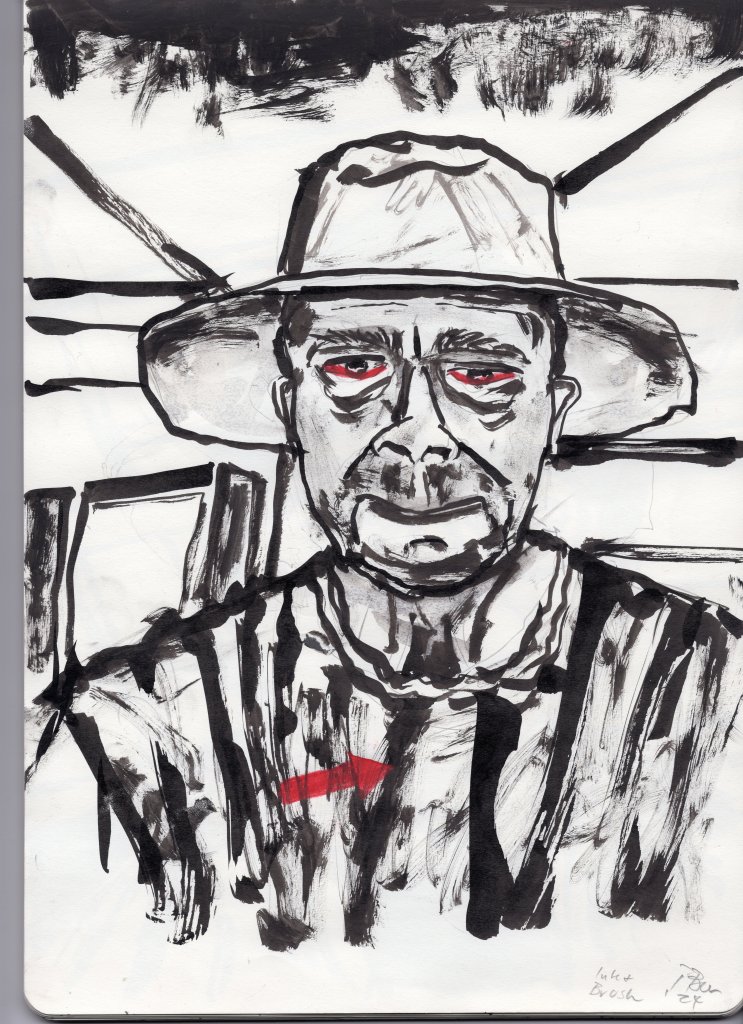
Drawings are emerging from my studio around this theme – Against the Flow of My Constructed Selves. The self portrait below – So Many Words* – is part of a series – 12 Epistles – that are a satirical take on religious icons and new testament stories .

The dyptitch following my self-portrait are the first of the 12 Epistles. Patrick White [ Saint Patrick ]was Australia’s first and only Nobel Prize for Literature awardee [1973] but he had another less newsworthy story highlighted in the late Bishop Bruce Wilson’s book Reasons of the Heart. It is there that Wilson, on sabbatical, recounts his chats and visits with White in his home in Sydney in the mid 1990’s where White tells of his epiphany experience after a fall in a muddy back yard feeding his dogs. It was in that moment, Wilson writes, that White knew and that God became real to him. This conversion – cf St Paul’s experience on the road to Damascus – was soon to be challenged by a far too narrowminded and fundamentalist Anglican vicar in Sydney to the point where White abandoned his “faith”.

Even though I have placed myself outside the 12 Epistles, my piece is as much about how words and the accompanying noise feed my and all of our being and becoming. Patrick White was who he was by the social constructs he was immersed in. Not entirely but significantly. Words make us and mold us to become who we are and how we speak or don’t speak, modulate or excite our behaviour and deeply influence our values. The impact of childhood cocoons – or their absence , capitalism, consumerism, education, religious frameworks and the media make us. As Picasso said of art by children “Every child is an artist. The problem is how to remain an artist once he grows up”. I am not advocating naivity or a non-relfective approach to being of course but that in this second half of life – or just in all of life regardless of our age – we need to foster and encourage others to foster an awareness fed by constant reflection that leads to a fearless and sometimes painfully slow rejection of eroding beliefs and suspect world views that are handed to us but that also leads us to a more restful and determined constant reimagining of living and life. And more silence, stillness and solitude.

So Many Words * Guache, ink, collage, red pencil, pages from 1950 edition of Rev Dr G Campbell Morgan commentary on the Gospel of Matthew.

Saint Patrick Monotype, collage, ink, guache, gesso on Japanese paper.
Saint Patrick [Icon] Graphite, red pencil, collage on Japanese paper.

In Pursuit of Silence – 2016 by Patrick Shen – Only Public Screening in Brisbane at Jugglers Art Space July 2017

* 12 Limited edition copies of this painting are available. Printed on 308 gsm Hahnamule Photo Cotton Rag Paper by Brisbane Digital Images. $175 + postage. Submitted as a self-portrait in the 2024 Art Gallery of NSW Archibald Portrait Prize. One of 1005 entries but unsuccessful as a finalist.
Share this:

  • Share on Facebook (Opens in new window) Facebook
  • Share on LinkedIn (Opens in new window) LinkedIn
  • Email a link to a friend (Opens in new window) Email
  • Share on X (Opens in new window) X
Like Loading...

The beautiful noise

Posted by Peter Breen on May 22, 2024
Posted in: Uncategorized. Leave a comment

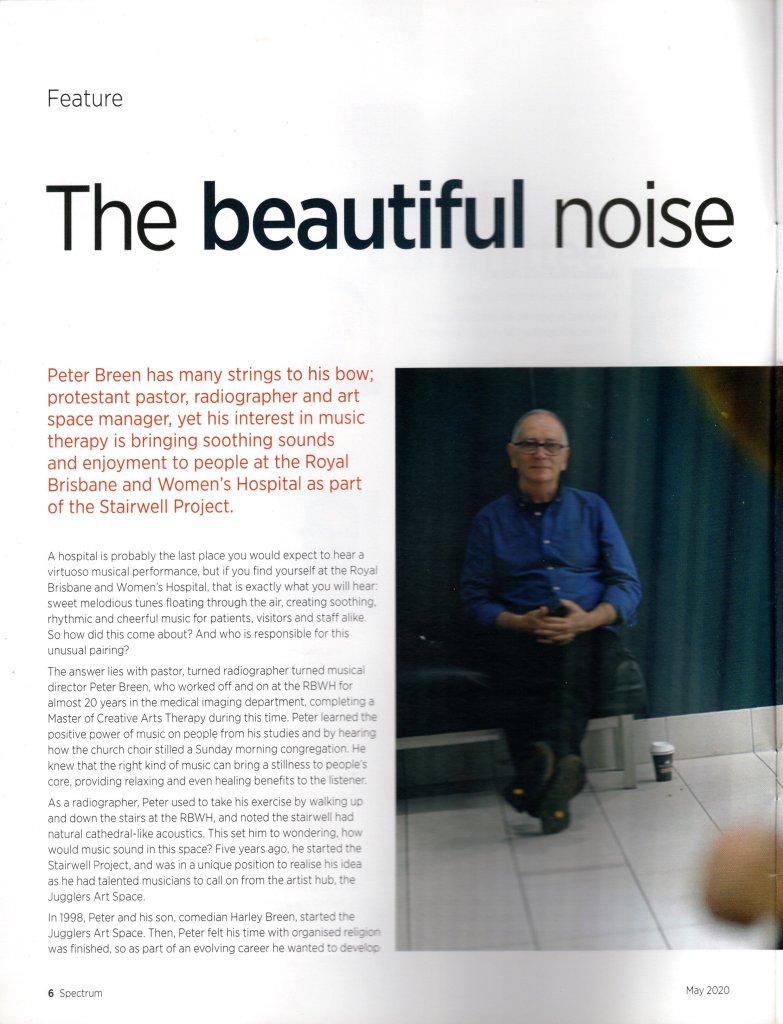
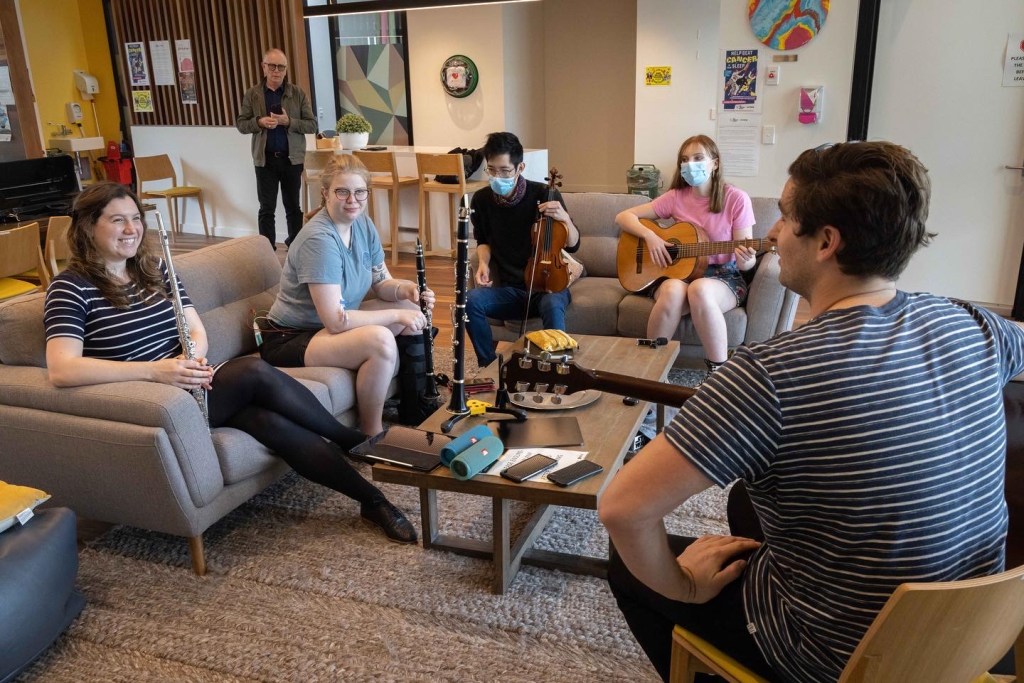
I have begun to declutter and I found this 2020 copy of Spectrum – The official journal of the Australian Society of Medical Imaging and Radiation Therapy. It’s an interesting title for what continues to evolve in The Stairwell Project program and in particular, The You Can Make Some Noise workshops! Maybe the writer – Denise Warmington had a vision of this iteration of Stairwell. My days of working in Medical Imaging are finished now but the experiences, skills developed and people I met over many years in that essential part of diagnostic medicine were rich and have impacted my own non-medical imaging practice.

The You Can Make Some Noise Workshop pilot in 2022 at the Royal Brisbane and Women’s Hospital You Can Centre.

Share this:

  • Share on Facebook (Opens in new window) Facebook
  • Share on LinkedIn (Opens in new window) LinkedIn
  • Email a link to a friend (Opens in new window) Email
  • Share on X (Opens in new window) X
Like Loading...

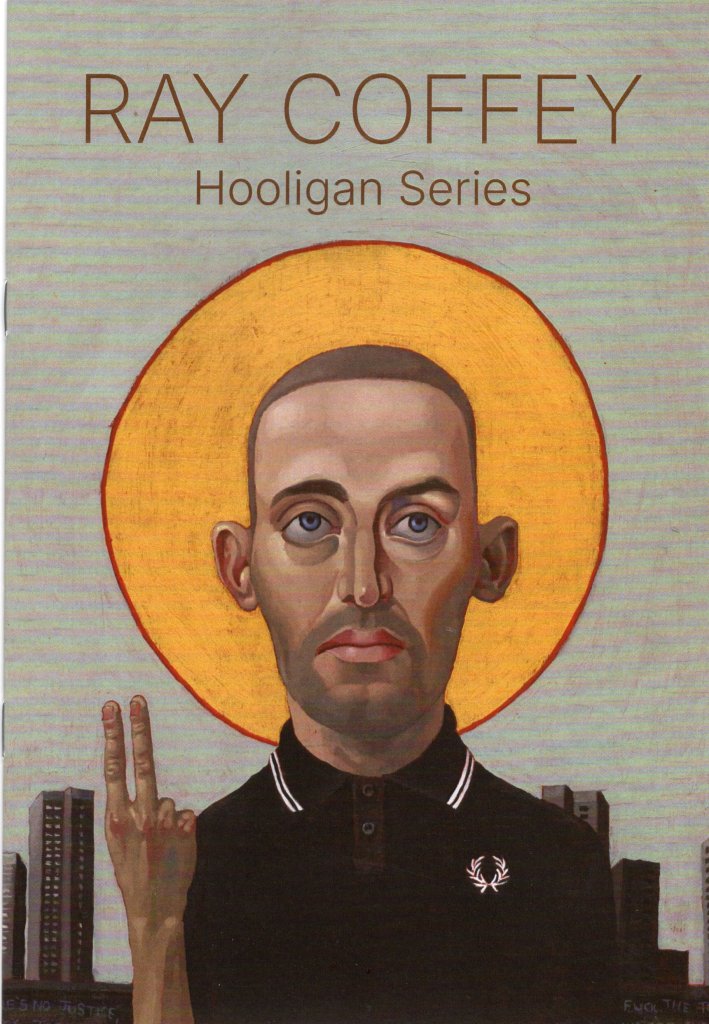
Review: “Ray Coffey – Hooligan Series”

Posted by Peter Breen on May 15, 2024
Posted in: Uncategorized. Leave a comment

Art Love Spirit Oneness

A L S O

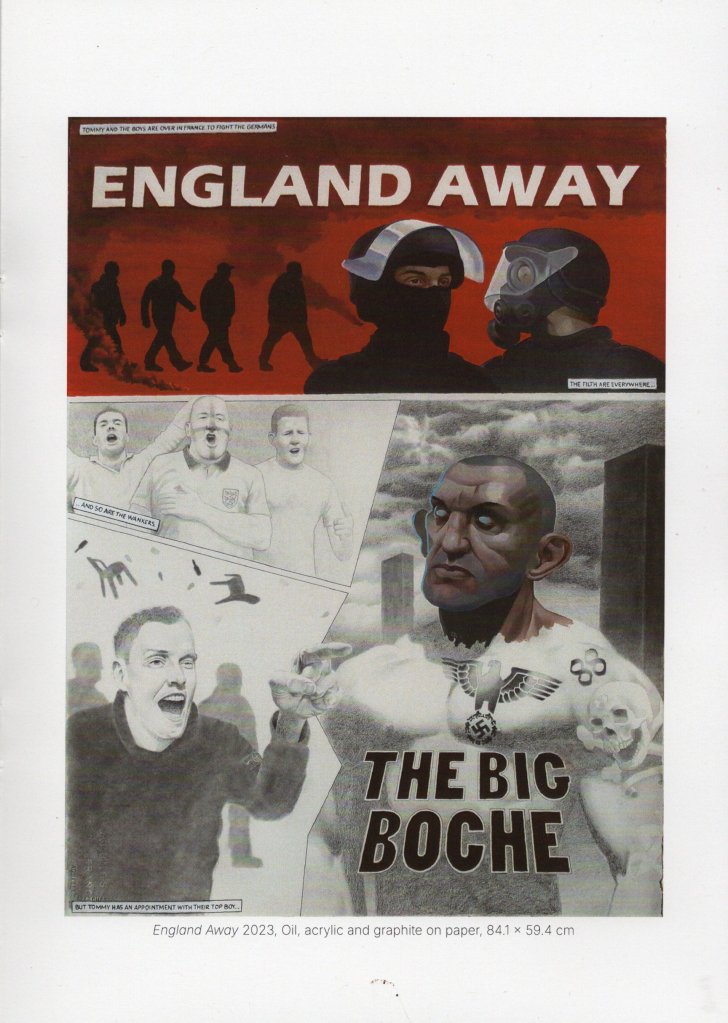
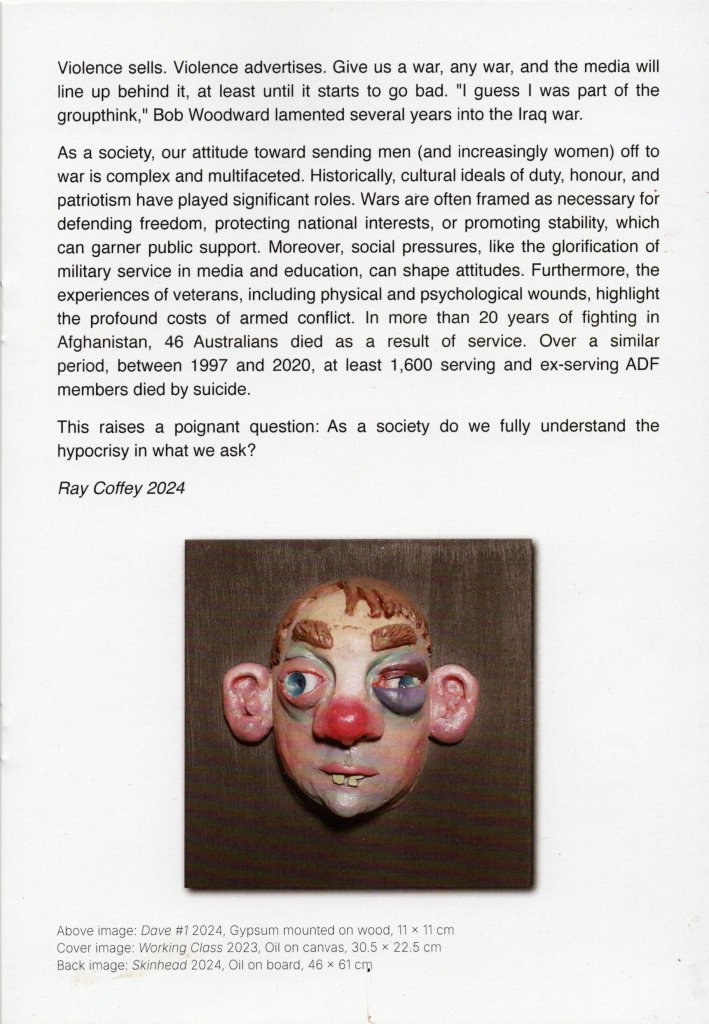
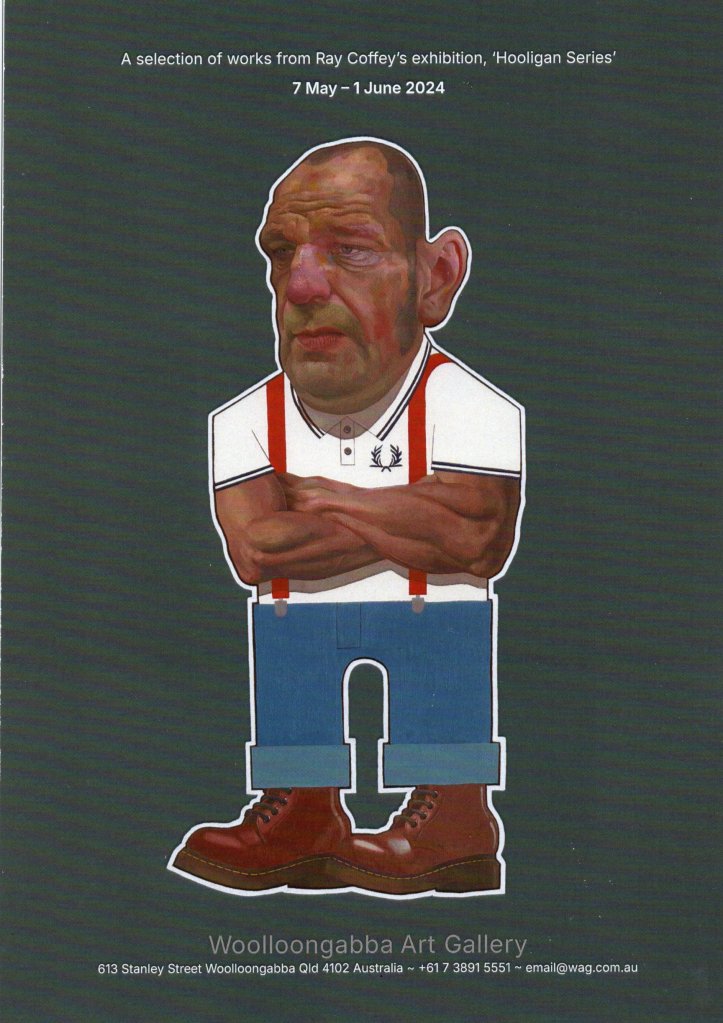
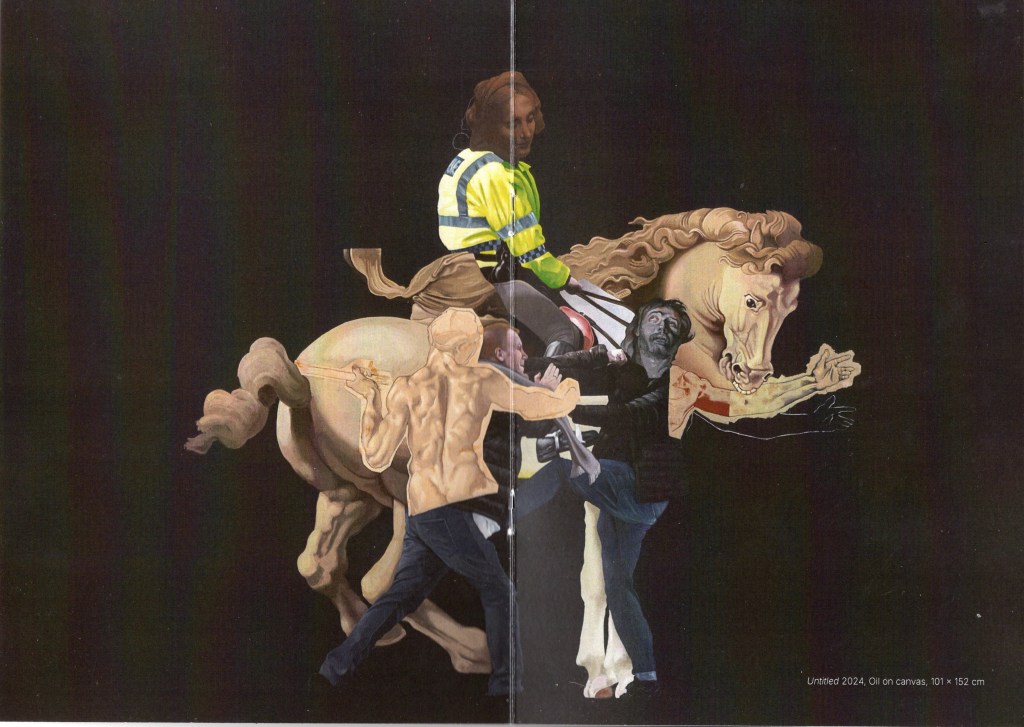
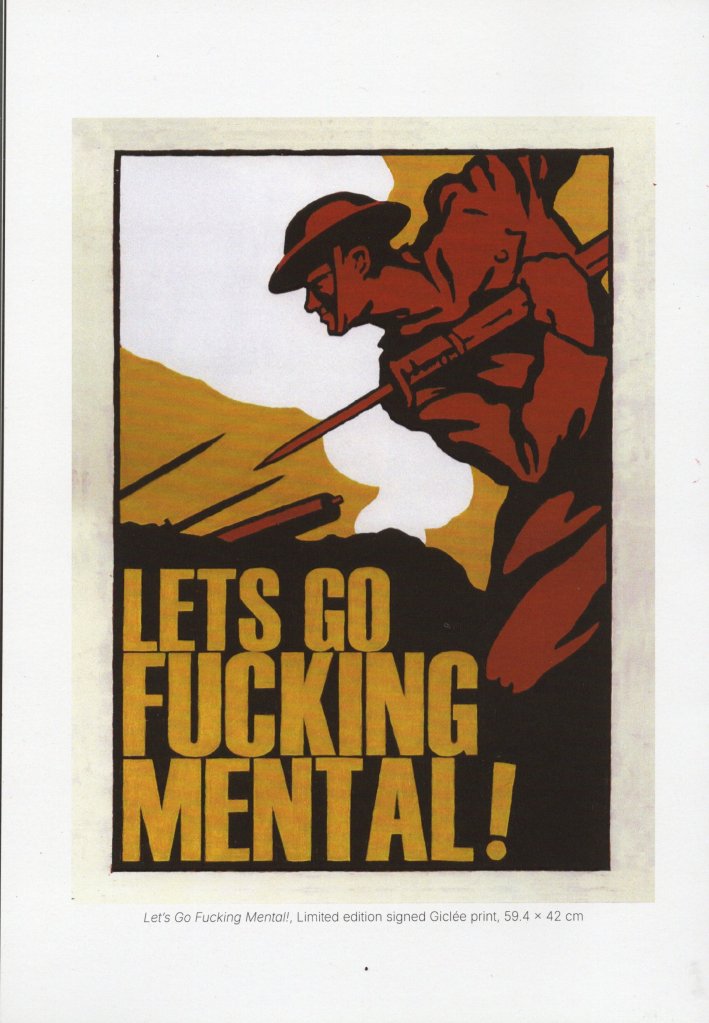
I first met Ray Coffey at Jugglers around 2011. He was a finalist in the Marie Ellis OAM Prize for Drawing – the second year of the prize. He was a finalist at least once more – a significant achievement in our drawing prize that at its end in 2019 had a highly respected and national following. But where we developed our friendship was through the time he spent with us as a drawing coach for the Jugglers’ Emerging Artist Development Program [ EADP] a program developed by Randal Breen in the early 2000’s for young men who were grattifi artists and in some situations in court for a range of “misdemeanours.” Ray’s art, drawing and painting career started out in the gaming machine industry as an illustrator/designer in the UK – my knowledge of this aspect of his career in “sketchy” – and he has progresssed as illustrators and sign writers often do, moving into to a less commissioned and more intutive and creative career. Vernon Ah Kee, Keith Burt and David Bromley come to mind who have similar early career choices. Vernon was on the judging panel for the first and last Marie Ellis OAM Prize for Drawing and is a significant aboriginal artist in Australia and Keith Burt, winner of the MEPD in 2011, has been a finalist in the Archibald Portrait Prize a number of times. My own first career idea at 15 was sign writing but I ended up in Medical Imaging.

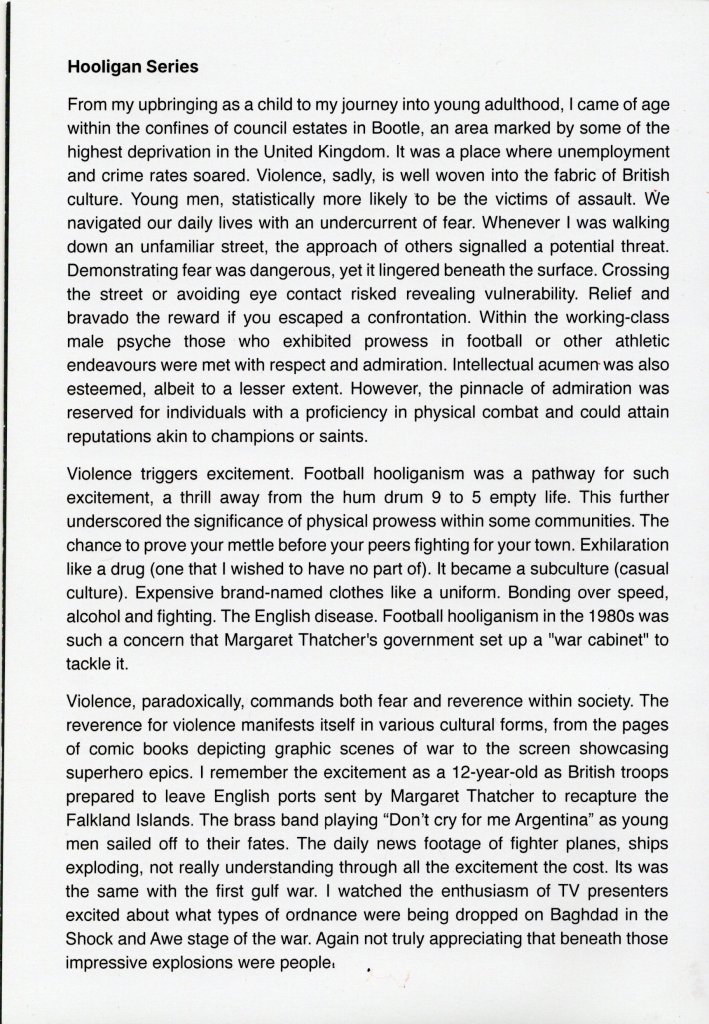
This body of work at the Wooloongabba Art Gallery – WAG that opened last weekend is sensational work. I have included Ray’s own essay from his printed artist statement at WAG to provide context and history around his work. This essay has opened up some new understandings of why he may have connected so well – and he did – with what we were doing at Jugglers in the EADP Workshops.

Congratulations Ray.

Peter Breen.

Share this:

  • Share on Facebook (Opens in new window) Facebook
  • Share on LinkedIn (Opens in new window) LinkedIn
  • Email a link to a friend (Opens in new window) Email
  • Share on X (Opens in new window) X
Like Loading...

A 12 step programme to lower your defences

Posted by Peter Breen on May 9, 2024
Posted in: Uncategorized. Leave a comment

We’re all defensive a fair amount of the time, although we may be better able to observe defensiveness in other people. Just a little bit of anxiety is enough to reduce the listening part of the human brain to the size of a pinto bean. Defensiveness is normal and universal. It is also the archenemy of listening. Once we’re in defensive or reactive mode we can’t take in new information or see two sides of an issue – or better yet, seven or eight sides. Here are the twelve steps that can help us lower our defensiveness. 

NAME IT:  Defensiveness is that immediate, knee-jerk, “But but but…..”response and heightened sense of tension that may be activated when our partner says, “We have to talk” In defensive mode, we automatically listen for the inaccuracies, exaggerations, and distortions in our partner’s complaint so that we can refute errors, make our case, and remind the other party of their wrongdoings. Becoming aware of our defensiveness can give us a tiny, crucial bit of distance from it.

BREATHE:  Defensiveness starts in the body. When we feel threatened, our central nervous system overheats and makes us tense and on guard, unable to take in much new information. So, do what you can to calm yourself. Try slowing down your breathing, exhaling to a slow, silent count of one to ten, and taking a long, deep breath between the time your partner’s voice drops off and yours starts. We will always listen poorly when we’re tense and on guard an overheated central nervous system.

DON’T INTERRUPT:  If you can’t listen without interrupting, it’s a good indication that you haven’t calmed down. Trying to listen when you can’t does more harm than good. Tell your partner that you want to have the conversation and that you recognize its importance, but that you can’t have it right now.

ASK FOR SPECIFICS:  This will help clarify your partner’s point and show that you care about understanding her. (“Can you give me another example where you felt I was putting you down?”) Note: Asking for specifics is not the same thing as nitpicking – the key is to be curious, not to cross-examine. Don’t act like a lawyer even if you are one.

FIND SOMETHING TO AGREE WITH:  You may only agree with 2 percent of what your partners is saying but still find a point of commonality in that 2 percent (“I think you’re right that I’ve been coming home stressed out from work”) This will shift the exchange out of combat into collaboration.

APOLOGIZE FOR YOUR PART:  There’s almost always something to apologize for when we’ve had a difficult experience with a partner. Even making a general and genuine comment like “I’m sorry for my part in all of this” can indicate to your partner that you’re capable of taking responsibility, not just evading it.

NO BUTS:  When we’re defensive, we may begin a slew of sentences with “But”-rebutting what we should be trying to take in. Even if we’re listening with open minds, the word “but” conveys the impression that we are discounting or negating the other person’s perspective. Watch out for this little grammatical sign of defensiveness and temporarily ban it from your vocabulary. Instead, ask “Do I have this right?” and “Is there more you haven’t told me”

DON’T COUNTERCRITICIZE:  There is a time to bring up your own grievances, but that time is not when your partner has taken the initiative to voice her complaints. If your complaints are legitimate, all the more reason to save them for a time when they can be a focus of conversation and not a defense strategy.

LET YOUR PARTNER KNOW HE OR SHE HAS BEEN HEARD:  Even if nothing has been resolved, tell your partner that she’s reached you: “It’s not easy to hear what you’re telling me, but I want you to know that I’m going to give it a lot of thought.” Take a day to genuinely consider her point of view.

SIT WITH YOUR RESPONSE:  When you’re feeling defensive, we try to do everything in one conversation, as if it’s the last one we’re ever going to have. Tell yourself early on that you’re going to take a day to think about your partner’s point of view and that you don’t have to make all your points now. If you decide this in advance, it will free you to listen better and help your partner feel heard.

TRY THANKING YOUR PARTNER FOR INITIATING THE TALK:  Even if you don’t like what your partner is saying, you can thank her for initiating a difficult conversation. Relationships require that we take such initiative and express gratitude when our partner might expect mere defensiveness. In this way we can calm things down and signal our commitment to open communication.

BRING THE CONVERSATION UP IN THE NEXT FORTY EIGHTHOURS:  Show your partner that you are continuing to think about her point of view and that you are willing to revisit the issue. Try saying something like “I’ve been thinking about our conversation, and I’m really glad that we had that talk”

Graphite, pen, avocardo seed ink on ageing dictionary paper. Untitled. Artist: Peter Breen

Copyright © 2024 EapAssist, All rights reserved.

Used with permission
Our mailing address is:

EapAssist

101 Collins Street

Melbourne, Vic 3000

Australia

Share this:

  • Share on Facebook (Opens in new window) Facebook
  • Share on LinkedIn (Opens in new window) LinkedIn
  • Email a link to a friend (Opens in new window) Email
  • Share on X (Opens in new window) X
Like Loading...

Nothing is incosequential but where is meaning?

Posted by Peter Breen on May 8, 2024
Posted in: Uncategorized. Tagged: asia, cambodia, phnom-penh. Leave a comment

I have previously written about my “lucky escapes” in Cambodia in 1974/1975 –The Bomb Went off Before I Arrived – where I worked on a World Vision medical team as a radiographer training two Khmer lads. With them I set up a very basic medical imaging program that with limited knowledge and skill could provide some kind of diagnostic assistance to clinicians. It was short lived and I have no idea what happened to these two after the fall of Phnom Pehn and the sweeping atrocities of the Pol Pot killing fields. After almost 50 years though, I have memories that persist. Some things are clear some things are cloudy. Some things are lost.

I suppose in the light of the horrors of Gaza and Ukraine at the hands of dictators and idealism, the murder of children and the annihilatioin of olive trees, Palestinian culture and more I found myself reflecting on my small involvement in Cambodia. Yesterday I sketched three of my experiences that have stayed etched in my memory.

Making meaning out of these experiences can be easily explained away by a war journalist or a politician. “If you didn’t want these experiences you shouldn’t have volunteered.”

I was given the lifeless body of an orphaned child wrapped in a blanket to take down to the morgue at the orphanage in Phnom Pehn.

I came across the carnage of a family feud exploded onto the streets with a new Vietnamese plastics bomb on my way to the orphanage.

I was with friends and workers on the front steps of our house in Phnom Pehn when a rocket flew over the house we were in and hit the Red Cross house two doors down.

The making of meaning is not an indulgence for me but a pathway to break open the understanding my self and the constructs that have made me and of making a meaning approximation in respect of the essence of the experiences. And continue to.

My parents – the “Builder Generation” – were building, working, making and finding meaning in those constructs. As a “Boomer” I fell under the spell of Freud and Woodstock and free university education not to mention the overwhelming multi-layered Christian views, preachers and church life. Books and films, experiences and friends, loves and conflict, achievements and disappointments, silence and prayer all concoct to make my “selves”. As do the shock of dead infants, exploded families and narrow escapes.

All experiences are the constructs within other frameworks. Some frame works can be dismantled slowly and some are reimagined and rebuilt. The 3 month experiences of war, idealism and colonialisation in my life have stayed as memories that evolve and morph into gratitude, horror and and continue to frame my views and responses to life’s injustices, social injustice and ongoing colonialism. And for that I am thankful.

Share this:

  • Share on Facebook (Opens in new window) Facebook
  • Share on LinkedIn (Opens in new window) LinkedIn
  • Email a link to a friend (Opens in new window) Email
  • Share on X (Opens in new window) X
Like Loading...

Drawing on myself

Posted by Peter Breen on April 30, 2024
Posted in: Uncategorized. 2 Comments

A.L.S.O.

ART

This is not a tattoo

Starting late.

A new path hacked into concrete barriers.

Climbing through thorns.

One of the joys of my life has been spending hours, days and years in the company of remarkable artists at Jugglers Art Space.

Osmotic impact.

Observation companionship.

Resistant to class rooms, nervous of confrontation and assessment after years in all kinds of suspect learning modalities. The long view is shortening now. But determination is DNA inscribed. Starting late means giving up or not giving up.

One of the practice exercises someone suggested is the self-portrait. Books are filled and filling with iterations of the drawings that developed into a painting. I am not a painter and I don’t paint. But this one is a mixed media painting. During the Marie Ellis OAM Prize for Drawing at Jugglers [ 2010 – 2019] the judges would sometimes pontificate on works that were too painterly even though ink and paint are valid drawing media. Maybe mine is a drawing in mixed media or a painting that looks like a drawing in mixed media.

The painting began as my regular graphite drawing exercise – observation/eye hand coordination – every year 12 student does this, and any drawing artist who makes marks I suppose does this. This is at about year 8 standard.

RE-draw with ink and red pencil and guache looks strangely infantile with the red marks indicative of some kind of representation of my emotion and deep affect in respect of the war in Gaza. The painting has evolved into an icon. Collage from found book pages as props for deeper contemplation. Gold ink adding religious attributes with bags under my eyes in ink are my late night anxieties and more. The patriarchal cross with its slanted extra beam and inverted on my shirt – what’s happening there? A nod to the patriachy’s death roll maybe, a joke, a shirt and hat bought at the local St Vinnies. A careful read of the collage pages not selected for their text as much as the overall impact of “So Many Words” reveal implications of my thoughts and intentions: Perpetuity, Persistence, Perseverance.

Share this:

  • Share on Facebook (Opens in new window) Facebook
  • Share on LinkedIn (Opens in new window) LinkedIn
  • Email a link to a friend (Opens in new window) Email
  • Share on X (Opens in new window) X
Like Loading...

Posts navigation

← Older Entries
Newer Entries →
  • Recent Posts

    • Only the glamorous
    • “Jugglers Art Space 1998-2024” The Monograph
    • ART. Love. Spirit. Oneness A.L.S.O.
    • Art. Love. Spirit. Oneness ALSO
    • ALSO Art, Love, Spirit, Oneness
    • ART, Love, Spirit, Oneness
    • An outpost of the kingdom: Art, Love, Spirit, ONENESS
    • The preciousness of children
    • ALSO Art.Love.Spirit.ONENESS
    • Art. LOVE. Spirit. Oneness ALSO
  • Meta

    • Create account
    • Log in
    • Entries feed
    • Comments feed
    • WordPress.com
Create a website or blog at WordPress.com
Peteskibreen's Blog
Create a website or blog at WordPress.com
  • Subscribe Subscribed
    • Peteskibreen's Blog
    • Join 44 other subscribers
    • Already have a WordPress.com account? Log in now.
    • Peteskibreen's Blog
    • Subscribe Subscribed
    • Sign up
    • Log in
    • Report this content
    • View site in Reader
    • Manage subscriptions
    • Collapse this bar
 

Loading Comments...
 

    %d